
A hybrid air qualityAir quality refers to the state of the air we breathe and its composition in terms of pollutants present in the atmosphere. It is considered good when poll...
Read more monitoring network is one of the best ways to extend the reach of environmental monitoring, particularly in such heterogeneous environments as urban areas, where different emission sources are concentrated. Hybrid environmental surveillance networks combine reference stations with near-reference sensor systems, distributed nodes, meteorological measurements, mobile campaigns and modelling to extend spatial and temporal coverage. While reference stations provide traceable measurements for official assessment, sensors and other data sources make it possible to identify hyperlocal variations, close information gaps and, ultimately, obtain a more detailed picture of air pollution.
The value of this technical architecture does not simply come from installing more instruments. It comes from knowing what each data layer can reliably contribute, with what uncertainty and for what use, and from how the different measurements and environmental data products are integrated with one another.
This approach is gaining ground in Europe thanks, among other measures, to Directive (EU) 2024/2881, which tightens ambient air quality standards, a target that must be met by 2030. It takes air quality measurement to another level by setting an annual PM2.5 limit value of 10 µg/m3, down from the previous 25 µg/m3. The directive also gives a more explicit role to modelling applications and indicative measurements alongside fixed measurements, and introduces new requirements on spatial representativeness, broader supersites and emerging pollutants such as ultrafine particlesAt first glance, the air around us may seem clean, but beware, it hides an almost imperceptible danger: ultrafine particles (UFP). With a size so small the...
Read more and black carbon.
As air quality management moves towards higher spatial resolution, the question is no longer whether sensors should complement conventional monitoring. What matters more is working out how to combine measurement density, data quality, traceability and modelling without confusing the role each information source plays.
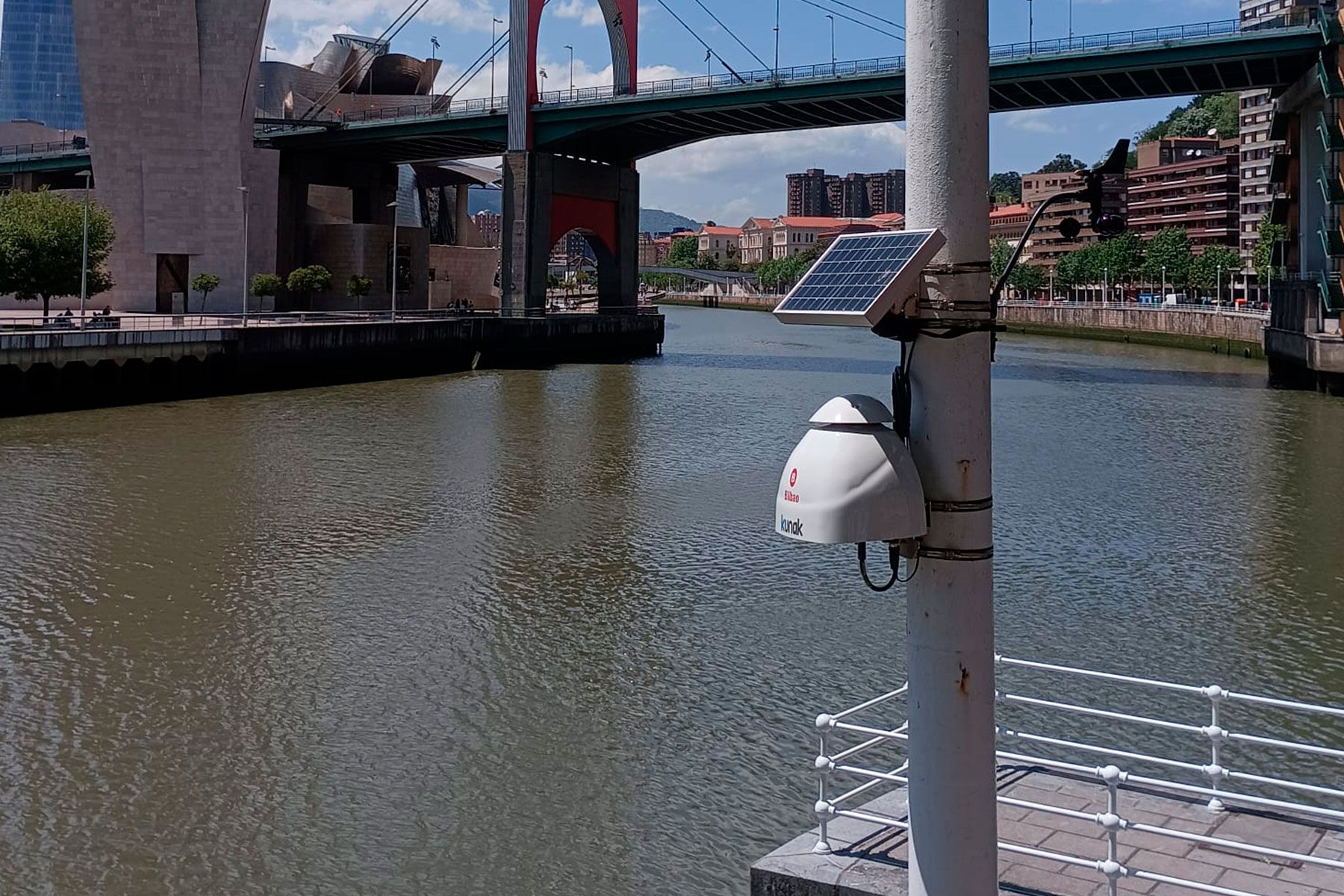
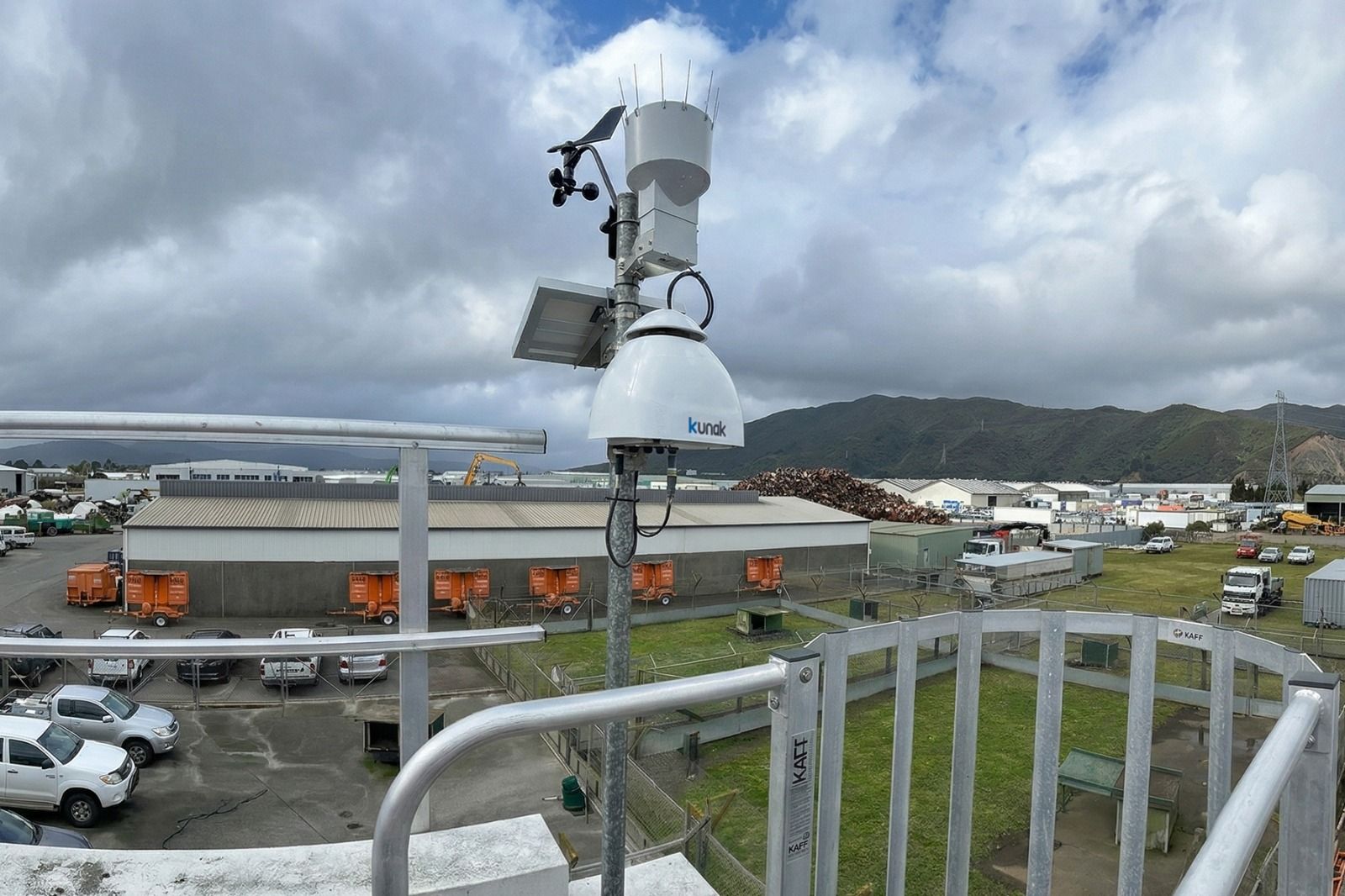
Sensor installed as part of the hybrid air quality monitoring network in Bilbao, Spain.
What is a hybrid air quality monitoring network
A hybrid network integrates several layers of measurement and information that complement, rather than replace, one another. Each layer has a different level of uncertainty, spatial coverage and operational or regulatory function. While a certified reference station operates with minimal margins of error but covers only a single point, a near-reference sensor network multiplies spatial coverage at the cost of greater uncertainty (though bounded, under the CEN/TS 17660 standard, at under 25% for gases and 50% for particulate matter). That traceability is what distinguishes a measurement from an estimate.
Depending on the monitoring objective, a hybrid network can combine:
Air Quality Innovation in Just 1 Click
Stay informed about the air you breathe!
Subscribe to our newsletter to receive the latest updates on environmental monitoring technology, air quality studies, and more.
- Regulated reference stations.
- Near-reference sensor systems for air quality.
- Other distributed sensor nodes.
- Mobile or temporary monitoring stations.
- Meteorological measurements.
- Traffic or operational data.
- Emissions inventories.
- Dispersion and chemical transport models.
- Satellite products or other remote sensing sources.
The aim is not to treat all these sources as equivalent, but to make use of the information each can reliably offer. A reference analyser, a sensorised station and a model answer different questions, and the new European Air Quality Directive 2024/2881 reinforces precisely that logic by requiring higher spatial resolution in characterising real exposure. A robust hybrid architecture uses each one where it provides useful information and keeps the distinction between what has been physically measured and what has been estimated or modelled.
Reference stations, sensors and complementary data sources
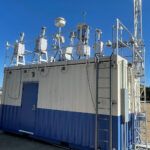
Reference stations remain fundamental for the regulatory assessment of air quality and for long-term trend analysis. Their instrumentation and quality assurance procedures are designed to meet demanding measurement uncertainty requirements, but their infrastructure, operation and maintenance limit the density at which they can be deployed.
Distributed sensor stations can cover part of that spatial gap by providing measurements at many more locations. Meteorological observations add information on atmospheric transport, while models help interpret concentrations between measurement points and investigate how emissions might disperse over a wider area.
Mobile monitoring adds a further level of flexibility. Temporary or relocatable stations make it possible to investigate potential air pollution hotspots, characterise an area before committing to permanent monitoring locations, or respond to changing operational needs.
The World Meteorological Organization (WMO) also highlights the potential of sensor systems to close gaps in existing networks and to integrate with reference measurements, satellite observations and models, provided the data quality of the sensors is properly assessed.

A hybrid air quality monitoring network is one of the best ways to extend the reach of environmental surveillance.
Why traditional air quality networks have spatial limitations
Conventional reference monitoring networks are designed around highly characterised measurement locations, rather than around high node density, because that is the approach regulatory assessment requires. The result is excellent data infrastructure at the points where it exists, and practically blind everywhere else, since the number of sampling points across a territory is, by design, limited.
The spatial representativeness problem
Air pollution does not behave uniformly across a city or an industrial area. Concentrations can vary considerably over relatively short distances due to traffic, industrial activity, street geometry, terrain, wind conditions, construction works and other local factors.
A reference station can accurately describe air quality at its location and across the area it represents, and still fail to detect an air pollution hotspot next to a busy road, a school, an industrial boundary or a logistics area.
This is not a limitation in the reference analyser’s accuracy. It is a limitation in how much territory a finite number of measurement points can represent.
Why hyperlocal air quality data matters
Higher spatial resolution reveals differences that disappear when pollution is represented through a handful of monitoring locations or city-wide averages.
Additional measurement points can help to:
- Identify local air pollution hotspots.
- Compare exposure between neighbourhoods.
- Investigate pollution around schools and hospitals.
- Characterise the influence of major roads.
- Assess Low Emission Zones and mobility measures.
- Monitor industrial perimeters.
- Assess temporary emissions from construction works or other activities.
- Identify where further investigation is warranted.
The goal of higher-resolution air quality monitoringControlling air quality is an essential task in order to enjoy optimal environmental conditions for healthy human development and to keep the environment i...
Read more is not, therefore, simply to create a denser map. It is to close specific information gaps that matter for environmental management.

The Pure Cities project, in Belgium, combines technological innovation and sustainability based on hybrid environmental monitoring networks.
How hybrid air quality monitoring networks work
Reference stations as the basis of regulatory assessment
Reference stations provide measurements based on prescribed or recognised methods and on demanding air quality assurance procedures. They remain indispensable where regulation requires fixed measurements and provide stable historical series against which real changes in ambient air quality are assessed.
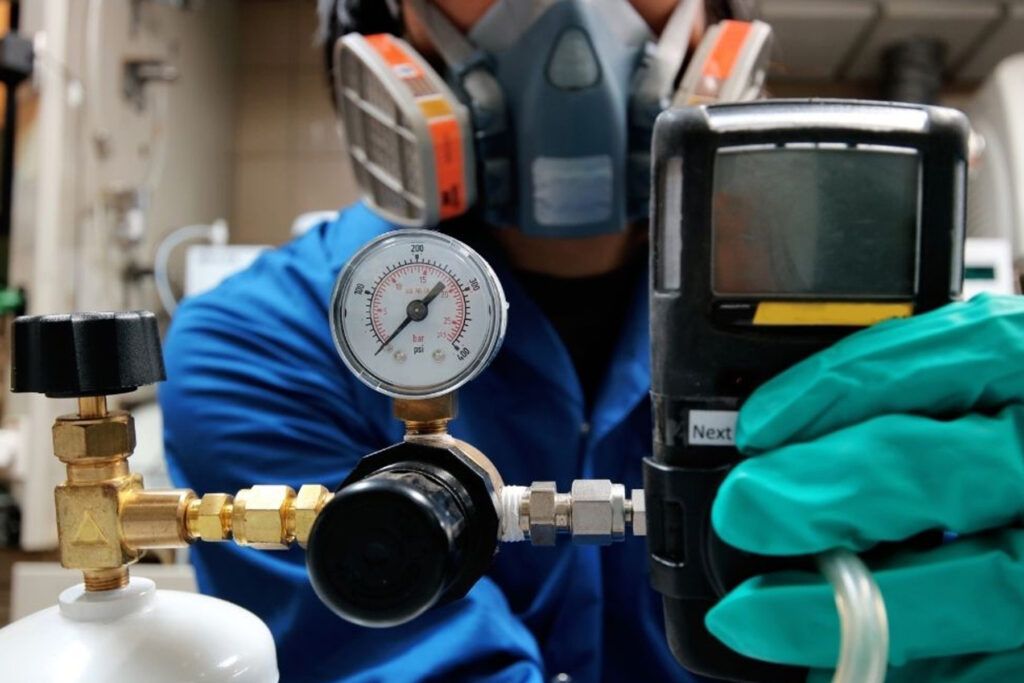
They can also act as valuable benchmarks for evaluating other network technologies, the same calibration-standard role they play for near-reference sensors. But this does not mean every sensor must permanently depend on a nearby reference station. Depending on the technology and the application, calibration and verification can also rely on laboratory procedures, transfer standards, certified reference gases or other traceable methods. Trust in the data is not declared; it is earned by demonstrating that traceability.
Distributed sensor networks to extend spatial coverage
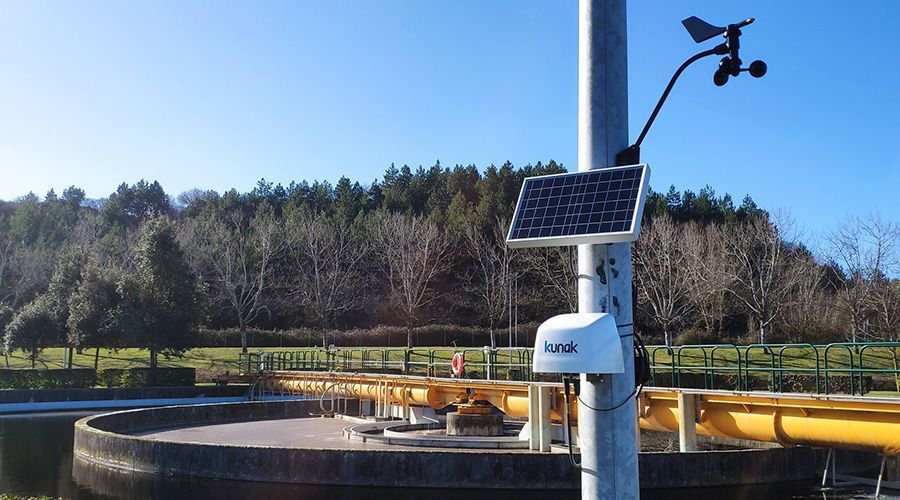
Professional sensor stations can be installed in locations where a full reference station would be impractical or disproportionate to the monitoring objective. They allow operators to increase measurement density around roads, neighbourhoods, industrial areas, ports, airports, construction sites and sensitive receptors, precisely the blind spots that conventional networks cannot cover by design.
They can also be relocated as monitoring priorities change, which makes them useful in both permanent networks and temporary measurement campaigns.
From measurement to environmental information
A hybrid network is more than the sum of its instruments. Each observation goes through a controlled process before it becomes information fit for decision-making:
- Measurement: instruments capture signals from the pollutant and the environment.
- Quality control: invalid, anomalous or technically compromised observations are identified.
- Calibration and verification: performance is checked through a suitable traceable procedure.
- Contextualisation: concentrations are analysed alongside meteorology, traffic, emissions or operational information.
- Integration: observations can be combined with models or other data sources when the application requires it.
- Interpretation: maps, alerts, reports and analytical tools turn the resulting information into environmental decisions.
A network with more sensors is not, therefore, automatically a better network. More measurements only generate more useful information when their quality, provenance and limitations are understood.
Differences between reference stations, near-reference sensors and low-cost sensors
These three terms describe different measurement approaches and should not be interpreted as three universal regulatory categories.
Reference monitoring uses established instruments and methods for the official assessment of air quality, together with defined calibration, uncertainty and quality assurance and quality control (QA/QC) requirements.
Near-reference monitoring is not a harmonised legal category. The term is generally used for sensor-based monitoring systems that have demonstrated, under defined test conditions, performance close to that of reference instrumentation. Independent evaluation and transparent performance metrics are especially valuable when this term is used.
The low-cost sensor label mainly describes an instrument’s economics and technological design. On its own, the term does not establish a level of measurement quality, since two devices in a similar price category can have very different accuracy, stability, calibration and traceability.
This distinction matters because the relevant question is not what label an instrument carries, but whether its demonstrated measurement performance is adequate for the intended application.

As air quality management moves towards higher spatial resolution, it becomes more relevant to work out how to combine measurement density, data quality, traceability and modelling.
Data quality is the foundation of a hybrid network
Start with fitness for purpose
Not every measurement point needs to meet the same data quality objective, because not all of them respond to the same need. For example, a sensor intended to detect a sudden increase in industrial emissions may have different performance requirements from an instrument used for regulatory compliance. A network designed to locate NO2 hotspots in an urban setting may prioritise spatial consistency differently from a research programme focused on long-term trends.
Before selecting the technology, operators must define:
- What decision the data will support.
- Which pollutants need to be measured.
- The expected concentration ranges.
- The required uncertainty.
- The necessary temporal resolution.
- The acceptable data integrity.
- The project’s duration.
- The calibration and verification strategy.
This concept is usually described as fitness for purpose: measurement quality must be assessed according to the eventual use of the data, not in the abstract.
Calibration and co-location
Co-location with reference instrumentation is widely used to assess a sensor’s behaviour under real atmospheric conditions. It makes it possible to quantify agreement, identify bias and investigate how environmental factors affect the system; it is, in essence, how a sensor earns its reliability against the reference standard, rather than having it assumed.
US EPA guidance recommends periodic verifications and co-location where relevant, because a sensor’s performance can change over time and with environmental conditions. Effective co-location also requires proper planning, representative pollutant concentrations and sufficient data recovery.
Co-location is not the only approach. Calibration can also rely on certified reference gases, transfer instruments, laboratory procedures and factory calibration. The right method depends on the pollutant, the measurement principle and the required uncertainty.
The key requirement is that the process be documented, technically sound and traceable.
Drift, ageing and environmental interference
Sensor systems are affected by physical and chemical processes that can alter their response. Depending on the technology, these can include:
- Long-term drift.
- Sensor ageing.
- Temperature effects.
- Humidity effects.
- Cross-interference with other gases.
- Sensor fouling.
- Changes in sensitivity or zero response.
The CEN/TS 17660 specification assesses factors such as long-term drift, cross-interference and the effects of temperature and humidity as part of evaluating sensor system performance, the same standard that already sets the uncertainty thresholds for a near-reference network.
Initial calibration is, therefore, only the starting point. A professional monitoring programme must also establish how sensor performance will be maintained throughout the deployment, because reliable data is not data that is calibrated well once, but data that remains defensible over time.

A hybrid network integrates several layers of measurement and information that complement, rather than replace, one another.
From measurement to data product: why transparency matters
One of the most important advances air quality sensorMeasuring air quality is essential for improving human and environmental health. Changes in the natural composition of the air we breathe are common in ind...
Read mores have undergone is, beyond the growing attention paid to sensor accuracy, also how the final concentration value is generated.
Measurement, correction and prediction are not the same thing
A value shown on an air quality platform can come from a direct measurement, a corrected measurement, a statistical model, a data fusion process or a prediction. These products can all be useful, but they are not equivalent.
Recent scientific work has proposed the concept of the data generating process (DGP) to describe the chain of procedures and inputs that transforms sensor signals into a final data product. This framework distinguishes independent sensor measurements from increasingly dependent or predictive outputs, and argues that greater transparency is needed so users understand exactly what information they are working with.
Independent sensor measurements
These advances include the concept of independent sensor measurements (ISM). Within this framework, an independent measurement depends fundamentally on the signals from the sensor system itself, with corrections limited to demonstrated measurement artefacts, rather than on a continuous dependence on external site information to generate the concentration.
This distinction matters in hybrid networks because a correction model trained on local reference data can perform excellently at one location and become less transferable when meteorology, the pollutant mix or environmental conditions change.
This does not mean modelling or data fusion have less value. It means that measurement quality and processing dependence must be described separately. A modelled product can provide very useful information without being presented as an independent physical measurement.
Distinguishing raw, corrected, validated and modelled data
A transparent monitoring architecture should make it possible to understand, at any given moment, what level of processing the concentration being viewed has undergone. It is not the same to show:
- The sensor’s raw output: the physical signal with no adjustment, useful for technical diagnostics but not directly comparable with a reference value.
- A calibrated measurement: the signal corrected using the factor obtained through co-location or with certified reference gases, already comparable with the traceable standard.
- A corrected measurement: the value further adjusted for environmental factors such as temperature or humidity, which can alter the sensor’s response.
- A validated measurement: data that has passed quality control and excludes anomalous or technically compromised observations.
- A fused data product: the combination of several sources (sensors, meteorology, traffic) to describe a phenomenon with more context than a single measurement can offer.
- A modelled or predicted concentration: an estimate generated by a dispersion or chemical transport model, not a direct observation.
This distinction is not a minor technical nuance. It separates a network that can defend its data in an audit from one that cannot. Each level answers a different question and provides a different type of confidence, and confusing them (presenting a modelled estimate as a calibrated reading, for example) undermines the credibility of the whole network. A robust hybrid architecture labels every piece of data according to its real provenance.
Traceability only works if the end user can tell, at any moment, whether they are looking at a measurement or an estimate.

Characterisation of air pollution sources in Kunak Cloud.
From sensor networks to integrated air quality information
Hybrid monitoring is especially effective when measurements are interpreted alongside complementary environmental information, rather than read in isolation.
Meteorological data
Wind speed and direction help explain where a pollutant may have come from and how it is dispersing. Temperature, humidity and atmospheric pressure also help interpret environmental conditions and assess sensor behaviour, which is especially relevant since those same variables can introduce drift or interference into the measurement.
Emissions and activity data
Traffic counts, industrial operating conditions, vessel movements, construction activity or emissions inventories can reveal whether changes in measured concentrations coincide with changes in potential sources, in other words, whether what the sensor detects has an identifiable explanation on the ground.
Air quality modelling
A measurement describes conditions at a specific location. A model can estimate conditions between measurement points and investigate how pollutants move across a wider area.
The strongest applications use both approaches: observations constrain and verify the models, while models provide spatial context that isolated measurements cannot offer on their own. Neither replaces the other; they need each other to be defensible.
Satellite and remote sensing data
Satellite observations can add spatial information at regional and global scale, although their spatial resolution, vertical sensitivity and retrieval characteristics differ from ground-level measurements.
The World Meteorological Organization recommends making joint use of these complementary datasets, rather than treating sensors, reference monitors, models and satellite observations as competing technologies, the same external validation that supports the hybrid approach over any single source.
A useful principle is to preserve the function of each layer, without expecting one to replace another:
- Surface measurements provide observations at specific locations.
- Meteorology helps interpret transport and dispersion.
- Emissions information characterises potential sources.
- Models estimate spatial patterns between measurement points.
- Remote sensing adds broader spatial context.
- Data fusion combines these inputs into higher-level information products.

Urban hybrid air quality monitoring networks are one of the best ways to control urban air pollution, since these are areas with different emission sources.
Benefits of hybrid air quality monitoring networks
Higher spatial resolution
Distributed measurement points can reveal pollution gradients and local hotspots that would be difficult to identify from a sparse network alone. This is not about having more data simply for its own sake, but about closing the information gaps that a conventional network, by design, cannot cover.
Better understanding of population exposure
People experience air pollution where they live, work, travel and study, not at the point where a reference station happens to be. Measurements closer to roads, schools, hospitals and residential areas improve understanding of the real differences in exposure between one place and another, the basis on which people can then be protected.
Faster detection of local pollution episodes
Construction dust, traffic congestion, fires or industrial emissions can be highly localised and relatively brief. Additional monitoring points increase the likelihood of detecting these episodes close to where they occur, while there is still time to act.
More efficient use of reference infrastructure
Hybrid monitoring does not require a reference analyser at every point of interest. Reference infrastructure provides the metrological foundation, while other characterised technologies extend coverage according to the data quality each application actually requires.
Greater support for modelling and network design
Additional observations can reveal where a model falls short, identify unexpected hotspots and provide evidence for relocating or adding permanent monitoring points. Each new data point does not just inform a single decision, it improves the network’s own architecture over time.
Taken together, these five benefits share the same underlying logic: to manage properly we first need to measure, and a well-designed hybrid network is, ultimately, the most rigorous way to know what is really happening in the air we breathe.
The value proposition of near-reference monitoring systems lies in the calibration of their sensors, which closely links them to international standards.
Main applications of hybrid air quality networks
Urban air quality and smart cities
Cities can combine regulated stations with distributed monitoring to investigate traffic-related pollution, differences between neighbourhoods, school exposure, Low Emission Zones and the effectiveness of mobility measures. The official network still provides the metrological foundation and the historical record against which any change is compared, while distributed sensors make it possible to answer questions a city cannot resolve with four or five fixed stations, for example whether a specific street exceeds thresholds that the urban average conceals, or whether a newly implemented mobility measure is having the expected effect in the neighbourhood where it was applied, and not only in the overall statistics.
Industrial monitoring and fenceline surveillance
Industrial facilities can combine sensor networks, meteorology and existing environmental measurements to assess concentrations around the facility’s boundaries. This type of industrial fenceline monitoring can help detect anomalous pollution episodes, analyse dispersion patterns and investigate whether measured concentrations are consistent with likely emission areas.
The case of the Valdemingómez Technology Park, in Madrid, illustrates the impact this approach can have. Faced with chronic odour episodes linked to its biomethanisation plants and active landfills, the City Council deployed a network of 15 remote stations around the perimeter and surroundings of the facility, with an investment of €1.4 million, to measure compounds such as hydrogen sulphide (H2S)Hydrogen sulphide (H2S), also known as hydrosulphuric acid or sewer gas, is a gas unmistakable due to its characteristic rotten egg smell, noticeable even ...
Read more in real time. The network made it possible to correlate concentration peaks with weather conditions and act before the odour reached nearby residents. Complaints fell from 4,806 in 2018 to 601 in 2025, an 87% reduction that cannot be explained by deodorisation works alone, but by the ability to know at any given moment what is happening, where and with what intensity.
Ports, airports and transport infrastructure
Ports and airports bring together numerous distributed and mobile sources, such as ships, aircraft, trucks, auxiliary equipment and access traffic. Dense monitoring can provide a more detailed picture of how these activities affect air quality in the surrounding area, which is especially relevant when several mobile sources overlap in time and space and a single reference station cannot attribute a concentration peak to a specific activity.
Construction and mining
Emission sources can shift over the course of a project. Relocatable sensor networks are therefore useful for monitoring dust and gases around changing operational areas and sensitive receptors, allowing monitoring coverage to move at the same pace as the project itself, rather than remaining fixed at a site that is no longer representative of the active work front.
Research and environmental studies
Research programmes benefit from the same hybrid logic, but with a different objective from operational monitoring. The aim is not to monitor a limit or meet a regulatory threshold, but to generate scientific evidence on how pollution behaves under real conditions. Temporary measurement campaigns using relocatable sensors make it possible to characterise exposure gradients, test hypotheses about sources and pollutant transport, or feed and validate dispersion models with field observations. In this context, fitness for purpose again becomes the central criterion; a study focused on long-term trends prioritises data stability and traceability, while an exploratory campaign may prioritise spatial density and speed of deployment.

Near-reference air quality monitoring makes it possible to move from static, limited surveillance models to proactive environmental management strategies based on continuous, granular and operationally useful information.
How to design a hybrid air quality monitoring network
Define the objective before selecting the equipment
A hybrid network must start from a specific need, not from a device count. The decision that needs to be supported may involve:
- Assessing regulated air quality.
- Identifying hotspots.
- Characterising population exposure.
- Monitoring an industrial perimeter.
- Evaluating an intervention.
- Detecting emission episodes.
- Supporting modelling.
- Carrying out a research campaign.
The objective determines the data quality that will be needed later. It makes no sense to specify uncertainty, temporal resolution or the calibration strategy before knowing what decision that measurement will support.
Selecting pollutants and measurement ranges
Pollutants must reflect the sources and risks relevant to the project. Urban networks tend to focus on NO2, O3, PM2.5 and PM10. Industrial applications may require SO2, H2S, NH3, VOCs, CH4 or other specific gases, depending on the process being monitored.
The expected concentration range is equally important. Measuring background ambient concentrations is very different from monitoring near an industrial source, where concentrations can be substantially higher and where a sensor calibrated for urban background levels can saturate or lose accuracy.
Designing the network around spatial representativeness, not uniform spacing
Placing a sensor every few metres is rarely, on its own, an adequate design strategy. Monitoring locations must take into account:
- Emission sources.
- Sensitive receptors.
- Traffic intensity.
- Prevailing wind patterns.
- Building geometry.
- Topography.
- Background conditions.
- Access, power supply and communications.
A well-designed network does not necessarily seek uniform density. It places each measurement point where it reduces a specific uncertainty or information gap, the same logic that sets a hybrid network apart from a simple map of sensors spread evenly across a territory.
Using temporary monitoring to optimise permanent networks
When the best permanent location is not clear, mobile or relocatable sensors can be used first to characterise spatial variability. The resulting information can then guide the placement of permanent stations, avoiding fixing costly infrastructure at a point that later proves unrepresentative.
The revised European air quality framework (Directive 2024/2881) gives modelling and indicative measurements a greater role in identifying possible exceedances and determining the spatial representativeness of sampling points. This is the same direction already indicated by years of accumulated monitoring data, allowing the network to be designed where it is really needed, not where it is more convenient to install it, because measuring late or in the wrong place is, in practice, not measuring at all.
Defining a data quality plan before deployment
One of the most common mistakes in sensor projects is deciding how data will be validated only after the network is already up and running. By then, any gap in calibration documentation or any ambiguity over what counts as valid data is, in practice, irreversible. Traceability that was not planned from the outset cannot be reconstructed afterwards. A professional project must therefore establish a data quality plan before deployment, not as a paperwork exercise, but as part of the network’s technical architecture.
The US Environmental Protection Agency (EPA) recommends a Quality Assurance Project Plan, or an equivalent planning process, covering the purpose of the monitoring, data quality objectives, site selection, equipment testing, calibration or correction, additional datasets, quality control procedures, data processing, and data access and ownership.
For a hybrid network, where measurement layers with different levels of uncertainty coexist, that plan must precisely define:
- Which data quality objective applies to each measurement layer.
- Which observations will be considered valid.
- How anomalies will be detected.
- How calibration and maintenance actions will be documented.
- What level of data integrity is required.
- How raw, corrected and validated datasets will be distinguished.
- Who can modify or validate the data.
- How measurement traceability will be preserved.
- How external data sources and models will be incorporated.
Each of these points serves a purpose that, if not resolved in advance, ends up being resolved on an improvised basis during operation, precisely when environmental decisions are already resting on that data. This is the case, for example, with defining who can validate a measurement or how a calibration is documented. This is not bureaucracy, it is what makes it possible, months or years later, to defend that data before an audit, a regulator or an affected community.
This planning turns QA/QC from a reactive maintenance task into part of the network’s architecture, consistent with the same rigour that runs through the whole hybrid design and based on the fact that the reliability of a piece of data is not declared at the end, it is built from the first day of deployment.

One of the most common mistakes in sensor projects is deciding how data will be validated only after the network is already up and running.
How to validate a hybrid network over time
Validating a sensor before deployment is not enough when dozens or hundreds of units must operate consistently for years. Flawless initial calibration guarantees nothing about how the system will behave in 12, 24 or 36 months’ time. The reliability of a hybrid network is not a state reached once, but a condition that must be actively sustained throughout the entire deployment.
Establishing initial performance
Before deployment, it is worth checking that each unit’s behaviour is consistent with the system’s expected performance. Where relevant, several units can be operated together to identify variability between them, so that any later deviation can be attributed to a real change rather than to a difference that already existed from day one between two nominally identical sensors.
Carrying out periodic verifications
Network operators can use periodic co-location, certified gases, transfer standards or other traceable checks to determine whether measurement performance is changing. These checks are the practical way of responding to a fact already noted earlier: drift, ageing and environmental interference. None of these is a theoretical risk, they are processes that affect sensors with use, and they are only detected if actively looked for, not once they have already distorted months of data.
Comparing neighbouring nodes
Spatial networks offer an additional quality control opportunity that a network of isolated stations does not have. Stations exposed to similar conditions can be statistically compared to identify a unit that starts behaving differently from its neighbours, an early warning signal that often appears before a scheduled check detects it, and that turns the network’s own density into a quality control tool.
Recording maintenance and configuration changes
Calibration, sensor replacement, firmware changes, relocation and maintenance can all affect a series of measurements. These events must be linked to the historical data so that later analyses can distinguish real environmental changes from changes in the measurement system, because without that record, a jump in the time series is indistinguishable from a genuine pollution episode, and neither interpretation can be defended in an audit.
None of these four steps, therefore, replaces the others. Together they form the complete data quality life cycle, from the first time a sensor is switched on to the last day of its deployment.

The reliability of a hybrid network is not a state reached once, but a condition that must be actively sustained throughout the entire deployment.
How to know whether a hybrid air quality network is working properly
The number of devices is a poor performance indicator. A network can have hundreds of units deployed and still produce data that is difficult to defend, or have a modest number of points and deliver technically sound information. What really determines whether a hybrid network is working is its quality metrics, not its size:
- Measurement uncertainty: whether data quality is sufficient for the intended use, a criterion that should already have been set at the design stage.
- Bias: whether a system systematically reads above or below a suitable reference, a mismatch that periodic co-location is designed to detect.
- Reproducibility between units: whether equivalent stations behave consistently, or whether they start to diverge from one another without anything having changed in the environment.
- Data integrity: the proportion of expected measurements that remain valid and available, with no gaps that compromise the time series.
- Operational availability: whether stations remain operational throughout the monitoring period, beyond whether they work well on installation day.
- Drift: whether the measurement response changes over time, the same process that already requires an ongoing verification programme.
- Detection limit: whether the system can resolve concentrations relevant to the application, not just detect that pollution exists.
- Response time: whether brief pollution episodes can be detected quickly enough, a critical factor for locating intermittent or short-lived sources.
- Spatial representativeness: what area each measurement point can reasonably characterise, the criterion that already guided the network’s design from the outset.
- Maintenance burden: the resources needed to keep the network producing usable data, the real cost of sustaining reliability over time.
A successful hybrid network must, therefore, be assessed as both a measurement system and an operational infrastructure at the same time. Neither dimension is sufficient on its own. A technically accurate network that is difficult to maintain ends up degrading, and a network that is easy to operate but has poorly characterised uncertainty produces data that no one can defend in an audit. The success of a hybrid network is not measured on the day of deployment, but in its ability to remain reliable year after year.
What a hybrid air quality network cannot do
Hybrid networks resolve important spatial and operational limitations, but they do not remove the fundamental constraints of atmospheric measurement. Acknowledging those limits is not a routine legal disclaimer. It is part of what makes a piece of data technically defensible.
A hybrid network cannot:
- Automatically turn any sensor into a regulatory reference instrument, however many units are deployed.
- Compensate for poorly chosen monitoring locations, because no amount of downstream processing corrects a measurement point that was never representative.
- Eliminate measurement uncertainty, only bound and document it within the margins each application requires.
- Guarantee source attribution from concentration data alone, without the support of meteorology, emissions inventories or other contextual information.
- Replace reference methods where regulation explicitly requires them, because that is precisely the function no other technology can take on.
- Make a poorly characterised sensor reliable simply by installing many identical units. Multiplying an error does not turn it into valid data.
- Turn a modelled concentration into a physical measurement, however much both end up displayed on the same map.
This is why density must never be used as a substitute for measurement quality. A dense network of poorly characterised devices can produce a visually convincing map and still support the wrong conclusion. The sense of coverage is not the same as the reliability of the data behind each point.
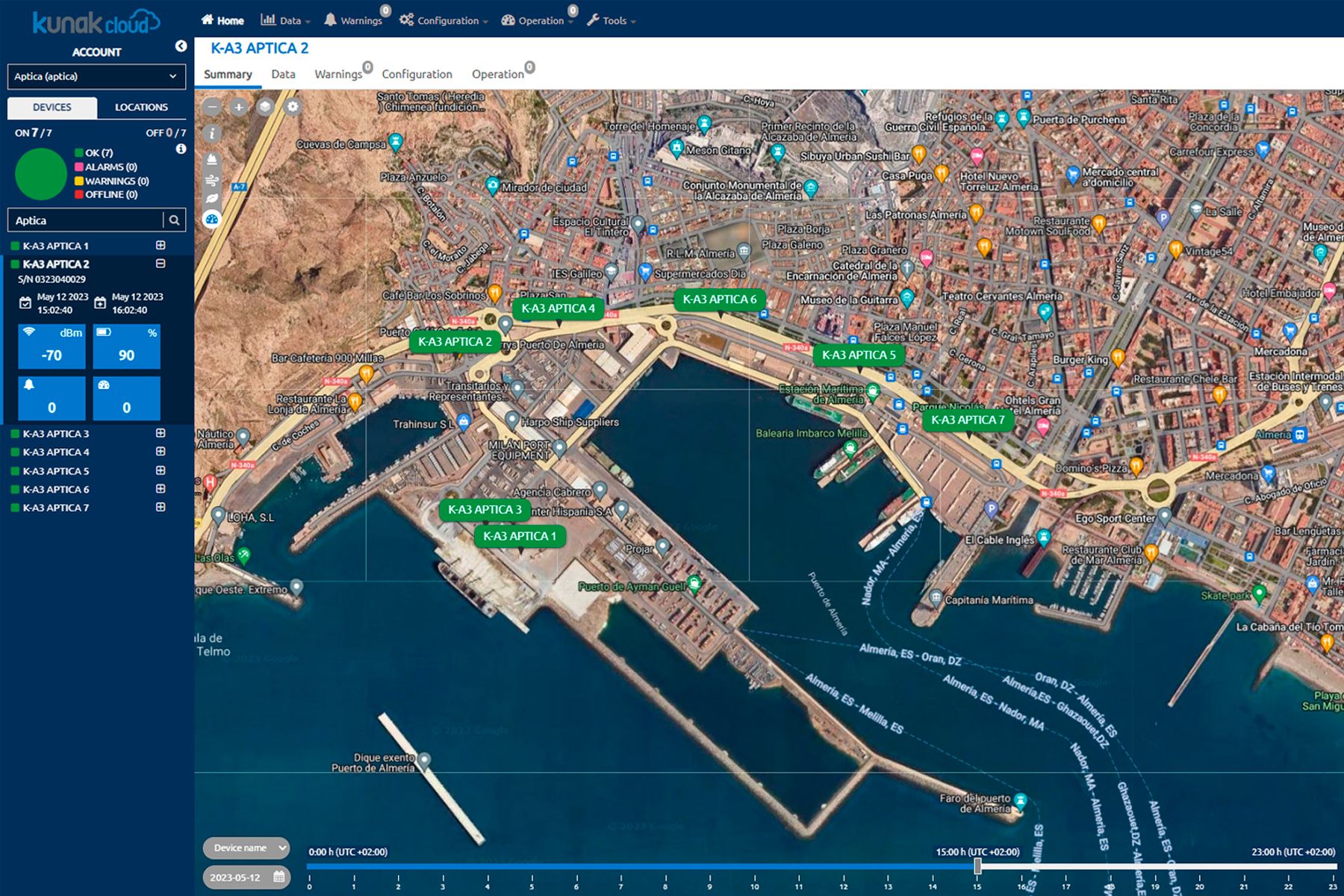
Hybrid monitoring is especially effective when measurements are interpreted alongside complementary environmental information, rather than read in isolation.
Hybrid air quality networks and current regulation
Directive (EU) 2024/2881
The recast European ambient air quality directive substantially changes the context in which monitoring networks are designed.
As well as tightening pollutant limit values, the directive gives modelling applications and indicative measurements a more explicit role alongside mandatory fixed measurements, and sets data quality objectives for the different assessment methods.
The directive also strengthens the concept of spatial representativeness. Authorities increasingly need to understand what area each sampling point represents, rather than treating each monitoring station as an isolated coordinate.
Control supersites, ultrafine particles and black carbon
The new directive also introduces control supersites, long-term stations designed to characterise a wider range of pollutants at urban and rural background locations.
These provisions illustrate an important trend in modern air quality monitoring: reference networks themselves are becoming richer, while complementary networks provide the spatial density needed between the most highly characterised monitoring sites. Two layers that reinforce each other rather than compete.
CEN/TS 17660
The European specification CEN/TS 17660 provides a European framework for evaluating air quality sensor systems through prescribed laboratory and field tests. Part 1 covers gaseous pollutants, while Part 2 covers particulate matter.
The framework assesses performance parameters that can include repeatability, drift, interfering compounds, and the effects of temperature and humidity, among other characteristics relevant to measurement quality.
Standardisation in this area continues to evolve as sensor systems become an increasingly common component of professional air quality monitoring.
EPA Air Sensor Toolbox
In the United States, the EPA’s Air Sensor Toolbox provides performance evaluation protocols and target values for outdoor, fixed-site, non-regulatory, supplemental and informational monitoring applications.
The current protocols cover several key pollutants and provide standardised metrics designed to make it easier to evaluate and compare sensor performance. The EPA distinguishes these applications from regulatory monitoring through the Federal Reference Method (FRM) and Federal Equivalent Method (FEM).
WMO recommendations
On a global scale, the World Meteorological Organization (WMO) increasingly treats sensor networks as a component of a broader air quality information system. Its recommendations highlight the potential of these networks to extend monitoring coverage and support source analysis and forecasting, while stressing that data quality assessment remains essential before integrating sensor data with reference monitors, models or satellite observations.
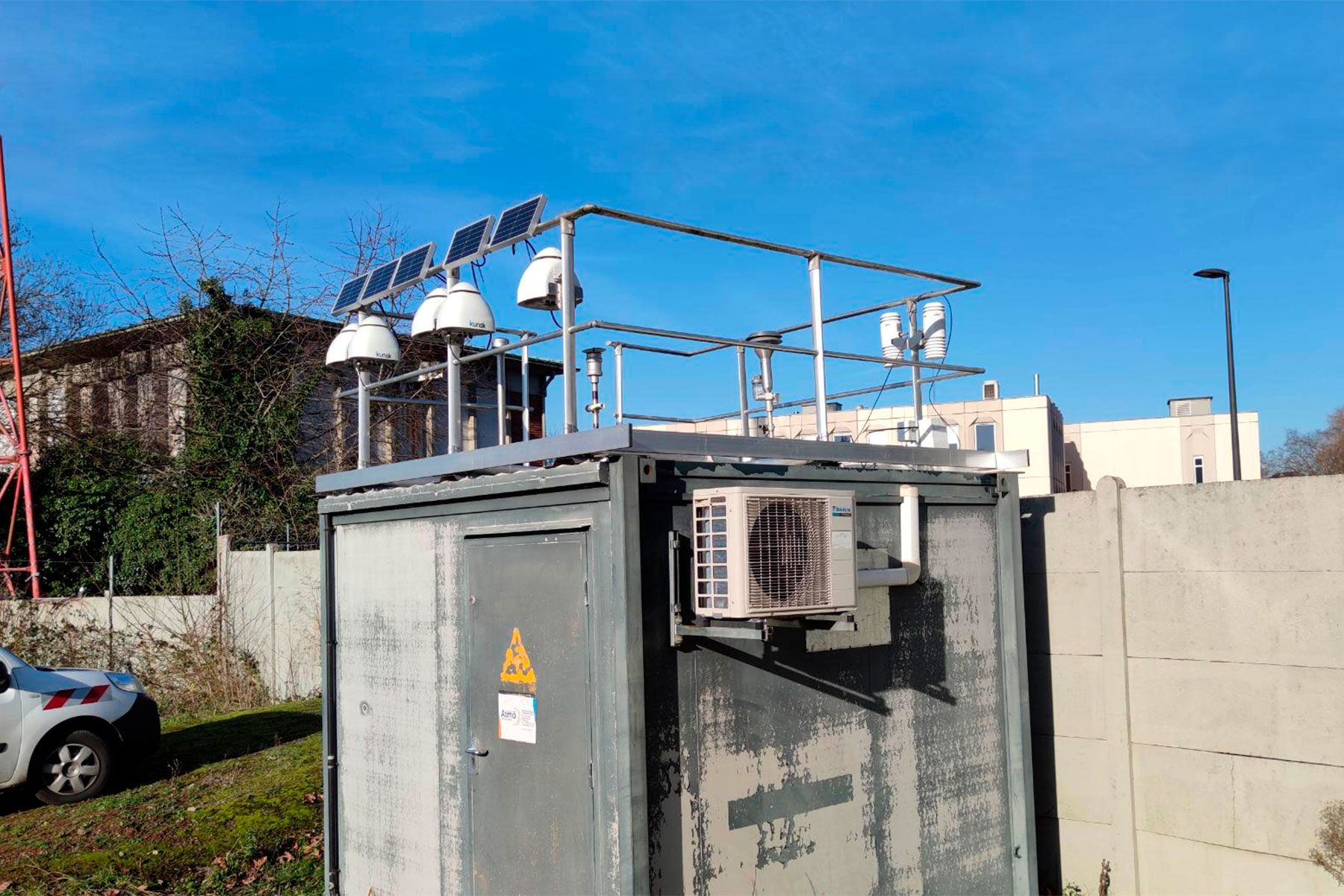
The World Meteorological Organization highlights the potential of hybrid networks to extend monitoring coverage and support source analysis and forecasting.
Real-world examples of hybrid air quality networks
Atmo Hauts-de-France
Atmo Hauts-de-France offers a clear example of how sensorised stations can complement an already well-established air quality monitoring infrastructure.
This organisation, part of the Atmo France federation, deployed 25 Kunak AIR Pro stations across the Nord-Pas-de-Calais region to increase the spatial resolution of its existing monitoring system. The stations measure NO2, O3 and several particulate matter fractions, along with environmental variables, and provide continuous local information that complements the data supplied by official stations.
The aim is not to duplicate the regulatory network, but to add hyperlocal information that helps Atmo Hauts-de-France monitor pollution patterns and communicate and issue alerts during episodes of high air pollution.
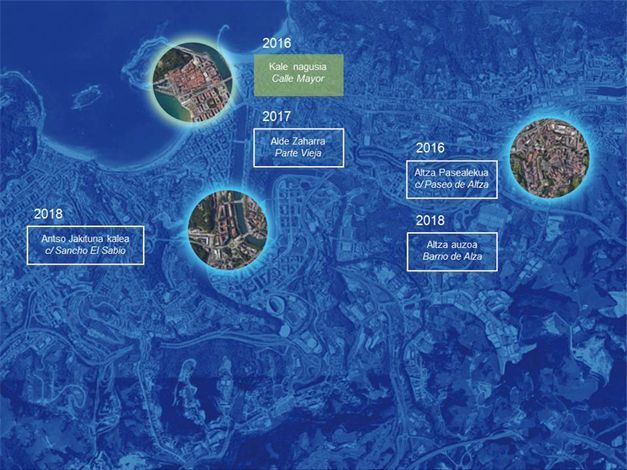
In the SmartKalea project, in San Sebastián, Basque Country (Spain), the combination of sensorised stations with the city’s existing public air quality infrastructure is providing additional information on the influence of traffic and nearby industrial activity.
SmartKalea in Donostia-San Sebastián
The SmartKalea project in Donostia-San Sebastián, driven by Fomento de San Sebastián, followed the same principle of complementarity. Sensorised stations were added to the city’s existing public air quality infrastructure, to provide additional information on the influence of traffic and nearby industrial activity.
The system measured pollutants such as CO, H2S, NO2, SO2, O3 and particulate matter, along with meteorological variables, while the data was fed into the SmartKalea platform through a REST API, which made it possible to detect specific high-pollution episodes thanks to the alert systems in place, and to provide the public with real-time air quality information.
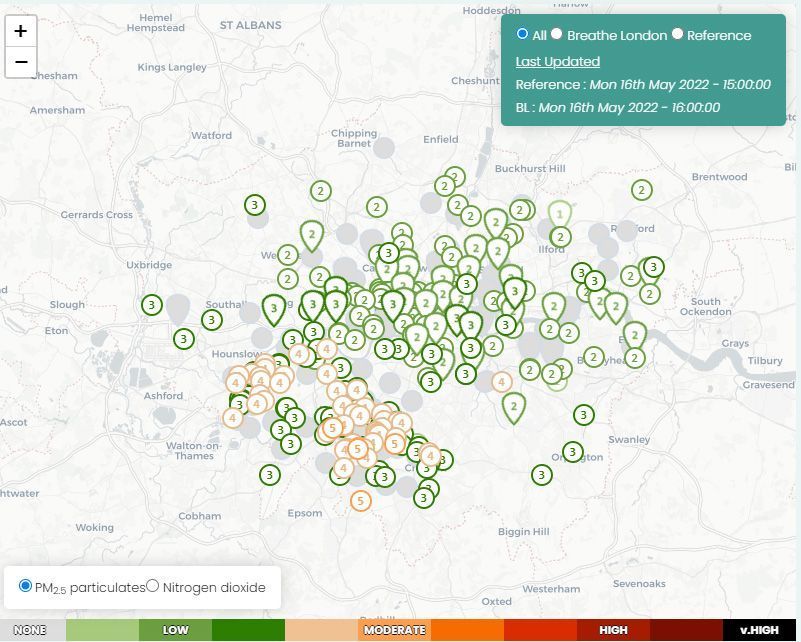
In the Breathe London project, the software and QA/QC layer matters just as much as the physical deployment of the hybrid networks itself.
Breathe London
Breathe London is one of the best-known European examples of high-resolution urban air quality monitoring. The project combines a dense network of sensorised stations with well-established reference monitoring, and applies quality assurance, quality control and calibration processes before making the data public.
The case demonstrates why the software and QA/QC layer matters just as much as the physical deployment itself. Without that prior validation process, not even the densest network guarantees defensible data.
How Kunak contributes to hybrid air quality networks
Within a hybrid architecture, Kunak provides distributed measurement stations and the software needed to operate and analyse the resulting monitoring network. The technology only makes sense in relation to the decision it will support.
Kunak AIR Pro
Kunak AIR Pro is a multi-pollutant air quality monitoring station, capable of combining up to five gaseous pollutants simultaneously from a wider catalogue of available sensors, together with particulate matter and environmental variable monitoring.
Its interchangeable cartridge architecture makes it possible to adapt the gas configuration to different monitoring objectives without replacing the entire station. The same unit can be reconfigured as the questions the network needs to answer change.
Kunak AIR stations are factory-calibrated and evaluated against recognised performance frameworks for the applicable pollutants. Kunak AIR Pro also incorporates a particulate matter monitoring system with MCERTS certification, external validation that confirms the evidence.
Kunak AIR Lite
Kunak AIR Lite offers a more compact configuration for networks that need to simultaneously monitor particulate matter and up to two gaseous pollutants. This makes it especially suitable for distributed deployments where network density is the priority, but the full multi-pollutant configuration of AIR Pro is not required. It answers exactly the kind of design decision that requires distinguishing, for each point in the network, what data quality objective is actually needed.
Calibration, correction and traceability
Kunak distinguishes between calibration and correction. Calibration adjusts the measurement response using a traceable external reference, while correction seeks to compensate for known sensor behaviour without establishing measurement uncertainty through an external reference.
This distinction matters in a hybrid network, because operators need to know whether a value has been calibrated against a traceable reference, corrected internally, or further processed through another analytical layer.
Kunak AIR Cloud as a network management platform
Kunak AIR Cloud provides remote configuration of devices, alarms, calibration tools, data validation, device monitoring, maintenance management and analytical tools for distributed monitoring networks. The data can also be integrated with external platforms, so that sensor measurements become part of broader environmental management systems.
In a hybrid network, this software layer is essential because the goal is not simply to display concentrations. It is to maintain the operational history, quality status and context needed to know whether the measurements remain fit for their intended use.
Independent performance evaluations
A sensor’s performance is more defensible when it has been evaluated outside the manufacturer’s own laboratory. Kunak systems have taken part in independent evaluation programmes such as AQ-SPEC and AIRLAB, which provide additional evidence of their behaviour under field conditions.
For organisations selecting the sensor layer of a hybrid network, these evaluations should be considered alongside the full methodology, environmental conditions, pollutants assessed and measurement uncertainty, and not judged solely on a certification logo or a single headline performance figure.
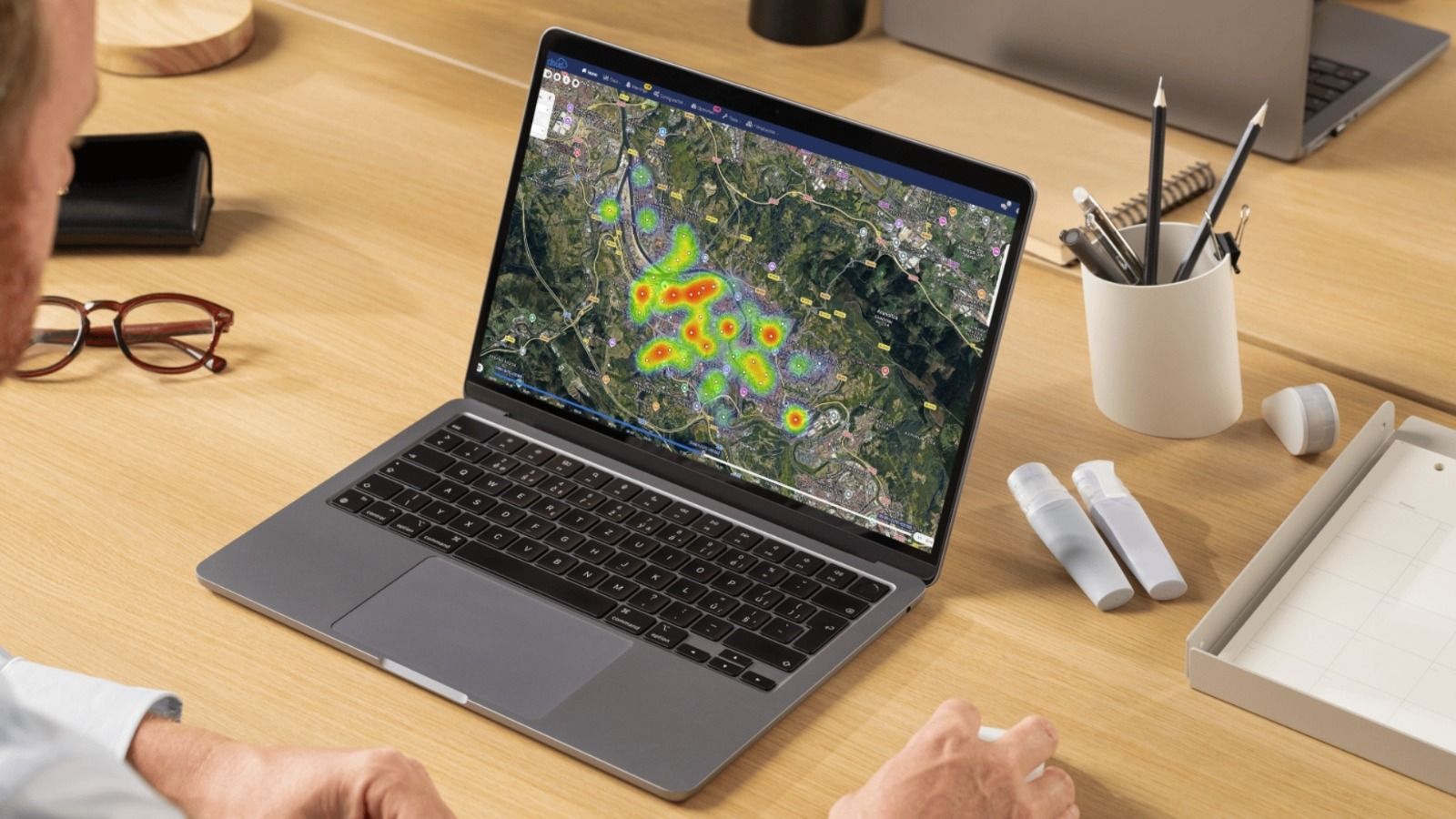
Sensor systems can complement reference stations by increasing spatial coverage, identifying pollution hotspots and supporting indicative, supplementary, operational or research applications.
Frequently asked questions about hybrid air quality networks
What is a hybrid air quality monitoring network?
A hybrid air quality monitoring network combines different measurement technologies and data sources, usually reference stations, sensor-based monitoring, meteorology and modelling. The aim is to maintain traceable, high-quality measurements while gaining more detailed spatial and temporal information about pollution.
Can air quality sensors replace reference stations?
Not generally. Reference stations remain necessary where regulation requires prescribed measurement methods and uncertainty levels. Sensor systems can complement them by increasing spatial coverage, identifying pollution hotspots and supporting indicative, supplementary, operational or research applications, provided their performance is adequate for the intended use.
What is near-reference air quality monitoring?
Near-reference monitoring describes sensor-based systems whose performance has been demonstrated to be close to that of reference measurements under defined conditions. It is not a universal regulatory category, so it is always worth assessing the performance evidence, independent testing and the applicable data quality objective.
How many sensors does a hybrid air quality network need?
There is no universal number. Network density depends on the monitoring objective, pollutant sources, spatial variability, sensitive receptors, topography and the resolution required. A good design starts by identifying information gaps and places additional nodes where they close those gaps.
Do all sensors need to be co-located with a reference station?
No. Co-location is a valuable evaluation and verification tool, but the right QA/QC strategy depends on the technology and the application. Calibration can also rely on certified reference gases, transfer standards, laboratory tests or other traceable procedures. Large networks tend to combine several quality control approaches.
What is the difference between a measurement and modelled air quality data?
A measurement comes from a physical measurement system at a specific location. Modelled data is calculated using a mathematical representation of atmospheric processes and can incorporate emissions, meteorology and measured concentrations. Both can be useful, but they must be kept clearly distinct because they have different origins, uncertainties and spatial meaning.
Can hybrid networks be used outside cities?
Yes. Hybrid monitoring can also be applied to industrial facilities, ports, airports, mines, construction sites and other complex environments. The underlying principle is the same: combining complementary measurement and information layers according to the environmental question being investigated.
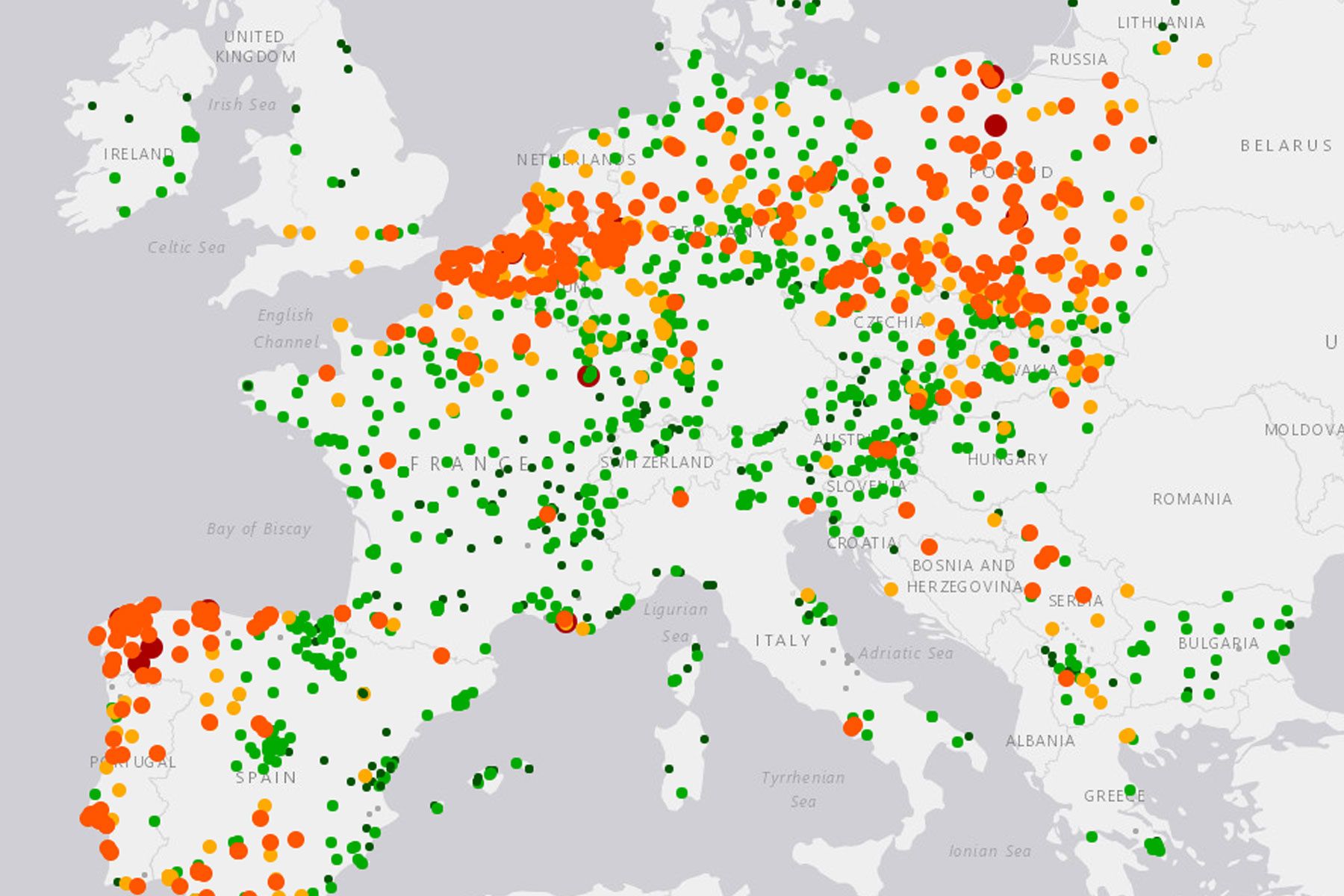
Air quality monitoring networks: key to environmental monitoring and protection.
Hybrid networks: towards more complete air quality monitoring
A hybrid air quality monitoring network should not be understood as a trade-off between accuracy and density. Its purpose is to combine different types of environmental information without losing sight of what each one represents.
Reference instruments provide the regulatory and metrological foundation. Distributed sensors of demonstrated quality extend spatial coverage. Mobile stations help investigate uncertain locations. Meteorology explains transport and dispersion. Models estimate what happens between measurement points. Satellite observations add wider spatial context. QA/QC, calibration and transparent data processing determine whether these layers can be interpreted together with confidence.
The central question when designing a network is not, therefore, simply how many sensors can be deployed. It is what information the project needs, what level of measurement quality is required to obtain it, and how each data layer can be made traceable enough to support the decisions that will follow.
That is where the real value of hybrid air quality monitoring lies. It is not about simply combining technologies, but about building an air quality information system in which the origin, uncertainty and role of each measurement are understood.
Sources consulted
- European Parliament and Council. Directive (EU) 2024/2881 on ambient air quality and cleaner air for Europe. 2024.
- World Meteorological Organization. Integrating Low-Cost Sensor Systems and Networks to Enhance Air Quality Applications. 2024.
- US Environmental Protection Agency. Quality Assurance for Air Sensors.
- US Environmental Protection Agency. Air Sensor Performance Targets and Testing Protocols.
- US Environmental Protection Agency. Air Sensor Collocation.
- CEN. CEN/TS 17660-1: Air quality, performance evaluation of air quality sensor systems, Part 1: Gaseous pollutants in ambient air.
- CEN. CEN/TS 17660-2: Air quality, performance evaluation of air quality sensor systems, Part 2: Particulate matter in ambient air.
- Diez S, Bannan TJ, Chacón-Mateos M, et al. A framework for advancing independent air quality sensor measurements via transparent data generating process classification. npj Climate and Atmospheric Science. 2025;8:285.