Case Study

Running for Clean Air: healthier cities through sport and environmental monitoring

World Athletics
Sector:

Need

Running for Clean Air is a World Athletics initiative, funded by Clean Air Fund, that uses athletics as a meeting point between public health, urban sport and air quality.

Air pollution directly affects people exercising outdoors. During a run, increased respiratory rate raises exposure to pollutants such as PM2.5, PM10, NO2, CO and O3. This not only influences athletic performance, but can also worsen respiratory and cardiovascular risks in athletes, recreational runners and urban populations.

The project’s first phase was carried out in Lagos (Nigeria) and Warsaw (Poland), two cities linked to urban marathons and selected to study actual runner exposure. Marathons traverse wide areas of the city, cross neighbourhoods with different traffic and ventilation profiles and mobilise thousands of people. For this reason, they offer an uncommon opportunity to measure, compare and communicate air quality in real-world conditions of physical activity.

Phase 2 broadens the project scope. World Athletics has announced the expansion of Running for Clean Air across three continents, with five events over two years. This new stage incorporates competitions in Gaborone (Botswana), Bangkok (Thailand) and Valencia (Spain), strengthening the role of environmental monitoring in international sporting events.

The challenge was not merely measuring pollutants. World Athletics needed comparable, continuous and comprehensible data to connect organisers, athletes, local authorities, NGOs and citizens. The information had to serve to interpret when and where highest exposure levels occur, how meteorological conditions affect them and what measures can reduce risk during sporting activity.

World Athletics has previously collaborated with Kunak Technologies, for example, to monitor air quality and heat stress during a world championship. This collaboration is part of their efforts to improve air quality.

Running for Clean Air turns marathons and urban races into a tool for measuring athletes’ actual exposure and sparking a public dialogue on air quality.

Solution

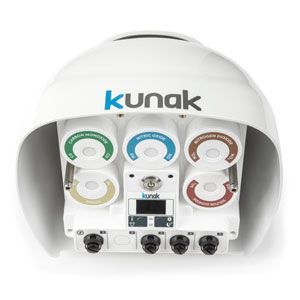
To address this need, World Athletics deployed Kunak AIR Pro stations in Lagos and Warsaw during the first project phase. One station was installed in each city for six months, at locations selected for their accessibility and regular use by runners and physically active people.

The stations remained in fixed locations during the measurement period to obtain comparable time series. This configuration made it possible to observe the daily evolution of air quality and relate it to meteorological variables such as temperature, humidity, pressure, dew point, wind speed and direction.

The project also incorporated dynamic monitoring during the urban marathons. For this purpose, a Kunak AIR Pro station was installed on the back of a bicycle that followed runners along the course. This configuration allowed for collection of data in motion and detection of variations between different race segments.

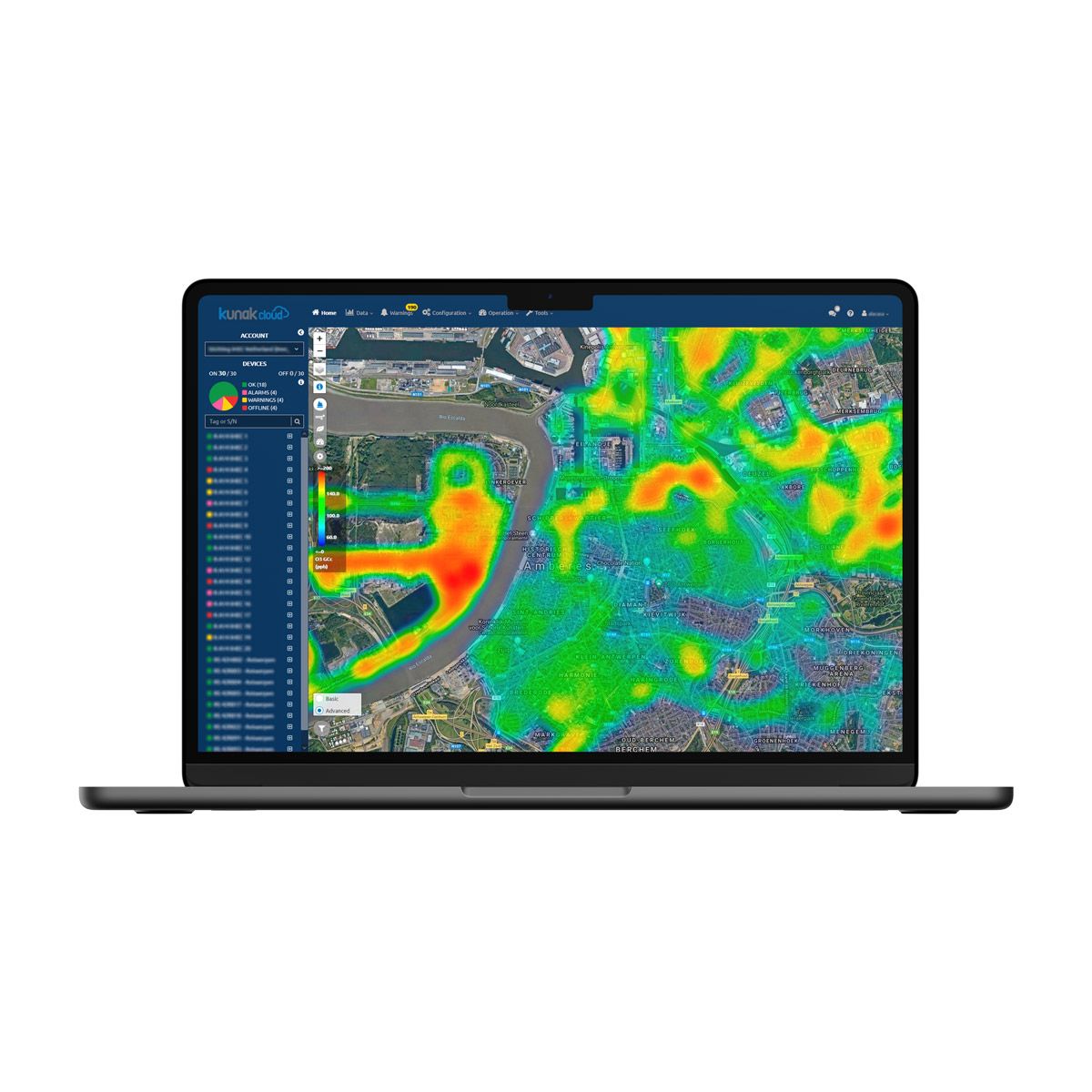
Data generated by the stations were made available to stakeholders through online access and monthly reports. This facilitated interpretation of results by World Athletics, race organisers, municipal authorities and local entities.

In phase 2, the project increases its technical and geographical scale. The initiative will deploy static and dynamic air quality monitoring equipment at international competitions, measuring pollutants of public health interest such as PM2.5, PM10, CO, NO2 and tropospheric O3. Data will be made available through real-time dashboards accessible to athletes, organisers and the public.

The events scheduled for this second phase are:

  • World Athletics Relays, Gaborone (Botswana), 2 and 3 May 2026.
  • Amazing Thailand Marathon Bangkok (Thailand), November 2026 and December 2027.
  • Valencia Marathon Trinidad Alfonso Zurich (Spain), December 2026 and December 2027.

Phase 2 is led by World Athletics’ health and science department, in collaboration with Arup, Kunak and UrbanBetter. Beyond data collection, the project encompasses educational programmes for athletes, volunteer training on air quality awareness, community engagement activities and peer-reviewed scientific research.

Value for cities and sporting event organisers

Running for Clean Air demonstrates that sporting events can provide useful information for urban environmental management. Marathons, popular races and international competitions bring together thousands of people in open spaces, often in areas exposed to traffic, heat, poor urban ventilation or pollution episodes.

Measuring air quality during these events enables better decisions before, during and after competition. Organisers can anticipate risks, local authorities can identify exposure zones and athletes receive more useful information to protect their health.

For cities, the project provides a practical way to bring air quality closer to citizens. Data ceases to be a technical matter reserved for official stations and becomes visible information, connected to everyday activities such as running, training or moving around the city.

Running for Clean Air shows how environmental monitoring can help protect athlete health whilst simultaneously generating useful information for healthier cities.

Results

The first phase made it possible to gather hyperlocal data on runner exposure in Lagos and Warsaw. By measuring at a height close to human breathing and in areas frequented by physically active people, the stations better reflected the actual air quality inhaled during exercise.

Continuous monitoring facilitated dialogue between municipal governments, athletes, recreational runners, race organisers and local NGOs. Rather than relying on general perceptions about urban pollution, the project provided concrete data to identify time periods, zones and environmental conditions with lower or higher risk.

Dynamic monitoring during marathons added a particularly useful layer of information for organisers. By following the race course, it made it possible to observe differences between segments and assess potential mitigation measures, such as schedule adjustments, preventive communication to participants or specific recommendations on days of higher exposure.

Phase 2 strengthens this approach and converts it into a broader international programme. By extending Running for Clean Air to three continents and five events, World Athletics consolidates a replicable methodology for measuring air quality at high-profile competitions. This expansion will also enable comparison of data across climates, cities, seasons and event types.

The project is not limited to generating technical data. Its value lies in converting that information into public health actions, environmental education and risk management. World Athletics expects the results to feed into training programmes, community activities and a position paper on air quality thresholds and risk management, to be shared with its 214 member federations.

Key benefits

  • Measurement of actual exposure of athletes and runners in urban environments.
  • Continuous, hyperlocal data at locations used for physical activity.
  • Dynamic monitoring of routes during marathons and competitions.
  • Real-time dashboards for athletes, organisers and the public.
  • Useful information to adjust schedules, communicate risks and reduce exposure.
  • Greater dialogue between sport, public health, local authorities and citizens.
  • International scalability with deployments in Africa, Asia and Europe.
  • Technical foundation for education, research and future risk management guidance.

Phase 2 confirms that air quality is already part of the conversation about sport, performance and urban wellbeing. Measuring it in real time, in real conditions and close to the people exposed enables transition from general awareness to data-driven decisions.

Project details

Customer: World Athletics

User: World Athletics

Location: Lagos (Nigeria) and Warsaw (Poland)

Sector:

Year: 2024

Parameters:

  • NO, NO2 , CO, CO2 , O3
  • PM2.5, PM10
  • Temperature, humidity, pressure and dew point
  • Heat streess (WBGT)
  • Wind speed and direction

Solutions

  • AIR ProProfessional air quality monitoring station
    Air quality monitor

    AIR Pro

    The most accurate air quality monitoring station

    SENSOR-BASED | BEST AVAILABLE ACCURACY

    Benefits

    • Multi-pollutant
    • Smart cartridge system
    • Fully autonomous
    • Real-time data
    • Proven accuracy
    See more
  • AIR CloudAir quality software
    Air quality software - Kunak AIR Cloud

    AIR Cloud

    Multipurpose air quality software for professionals

    REAL-TIME DATA | ALWAYS UPDATED

    Benefits

    • Secure and condifential
    • Air quality reporting
    • Advanced data analysis and visualisation
    • Reliable data guaranteed
    • Data sharing and integration
    See more
  • Nitric oxideReliable real-time data on NO
    Nitric_oxide_cartucho

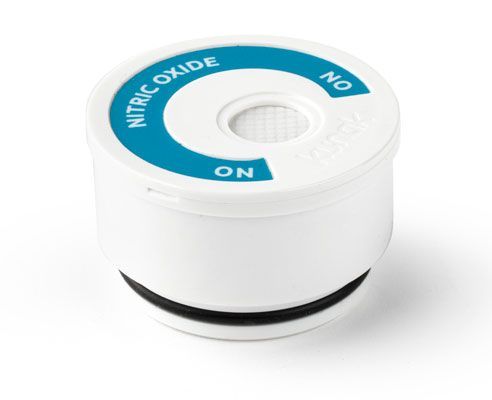
    Nitric oxide

    Reliable information about nitric oxide

    GASPLUG TECHNOLOGY | PATENTED DESIGN

    Specs

    • Electrochemical
    • R2 >0.9
    • Range: 0-5,000 ppb
    • Resolution: 1 ppb
    • 24 months of operating life
    See more
  • Nitrogen dioxideReliable real-time data on NO2
    Nitreogen_dioxide

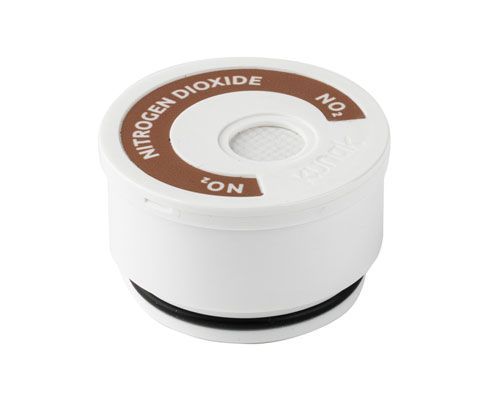
    Nitrogen dioxide

    Reliable information about nitrogen dioxide

    GASPLUG TECHNOLOGY | PATENTED DESIGN

    Specs

    • Electrochemical
    • R2 >0.85
    • Range: 0-12,000 ppb (Type A) | 0-500 ppm (Type B)
    • Resolution: 1 ppb (Type A) | 0.01 ppm (Type B)
    • 24 months of operating life
    See more
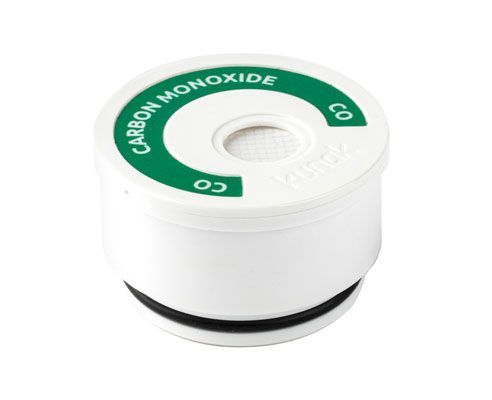
  • Carbon monoxideReliable real-time data on CO
    Carbon-monoxide

    Carbon monoxide

    Reliable information about carbon monoxide

    GASPLUG TECHNOLOGY | PATENTED DESIGN

    Specs

    • Electrochemical
    • R2 >0.85
    • Range: 0-12,000 ppb (Type A) | 0-500 ppm (Type B)
    • Resolution: 1 ppb (Type A) | 0.01 ppm (Type B)
    • 24 months of operating life
    See more
  • Carbon dioxideReliable real-time data on CO2
    Carbon_dioxide_cartucho

    Carbon dioxide

    Reliable information about carbon dioxide

    GASPLUG TECHNOLOGY | PATENTED DESIGN

    Specs

    • NDIR
    • Typical accuracy (MAE): ±30 ppm
    • Range: 0-5,000 ppm
    • Resolution: 1 ppm
    • > 7 years of operating life
    See more
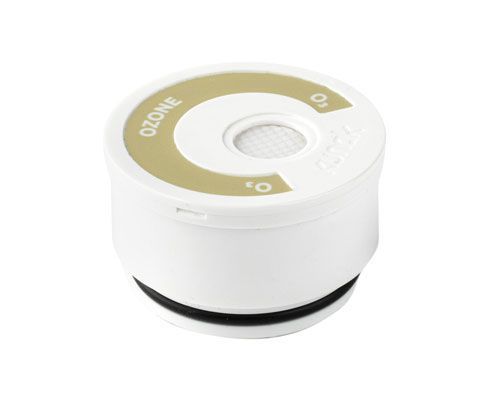
  • OzoneReliable real-time data on O3
    Ozone

    Ozone

    Reliable information about ozone

    GASPLUG TECHNOLOGY | PATENTED DESIGN

    Specs

    • Electrochemical
    • R2 >0.9
    • Range: 0-2,000 ppb
    • Resolution: 1 ppb
    • 24 months of operating life
    See more
  • Particulate MatterReliable real-time data on suspended particles

    Particulate Matter

    Reliable information about particulate matter

    GASPLUG TECHNOLOGY | PATENTED DESIGN

    Specs

    • Optical particle counter
    • Up to R2 >0.9
    • Range: 0-1,000 | 0-2,000 | 0-10,000 ppb
    • Resolution: 1 μg/m3
    • 24 months of operating life
    See more
Air quality monitor

AIR Pro

The most accurate air quality monitoring station

SENSOR-BASED | BEST AVAILABLE ACCURACY

Benefits

  • Multi-pollutant
  • Smart cartridge system
  • Fully autonomous
  • Real-time data
  • Proven accuracy
See more
Air quality software - Kunak AIR Cloud

AIR Cloud

Multipurpose air quality software for professionals

REAL-TIME DATA | ALWAYS UPDATED

Benefits

  • Secure and condifential
  • Air quality reporting
  • Advanced data analysis and visualisation
  • Reliable data guaranteed
  • Data sharing and integration
See more
Nitric_oxide_cartucho

Nitric oxide

Reliable information about nitric oxide

GASPLUG TECHNOLOGY | PATENTED DESIGN

Specs

  • Electrochemical
  • R2 >0.9
  • Range: 0-5,000 ppb
  • Resolution: 1 ppb
  • 24 months of operating life
See more
Nitreogen_dioxide

Nitrogen dioxide

Reliable information about nitrogen dioxide

GASPLUG TECHNOLOGY | PATENTED DESIGN

Specs

  • Electrochemical
  • R2 >0.85
  • Range: 0-12,000 ppb (Type A) | 0-500 ppm (Type B)
  • Resolution: 1 ppb (Type A) | 0.01 ppm (Type B)
  • 24 months of operating life
See more
Carbon-monoxide

Carbon monoxide

Reliable information about carbon monoxide

GASPLUG TECHNOLOGY | PATENTED DESIGN

Specs

  • Electrochemical
  • R2 >0.85
  • Range: 0-12,000 ppb (Type A) | 0-500 ppm (Type B)
  • Resolution: 1 ppb (Type A) | 0.01 ppm (Type B)
  • 24 months of operating life
See more
Carbon_dioxide_cartucho

Carbon dioxide

Reliable information about carbon dioxide

GASPLUG TECHNOLOGY | PATENTED DESIGN

Specs

  • NDIR
  • Typical accuracy (MAE): ±30 ppm
  • Range: 0-5,000 ppm
  • Resolution: 1 ppm
  • > 7 years of operating life
See more
Ozone

Ozone

Reliable information about ozone

GASPLUG TECHNOLOGY | PATENTED DESIGN

Specs

  • Electrochemical
  • R2 >0.9
  • Range: 0-2,000 ppb
  • Resolution: 1 ppb
  • 24 months of operating life
See more

Particulate Matter

Reliable information about particulate matter

GASPLUG TECHNOLOGY | PATENTED DESIGN

Specs

  • Optical particle counter
  • Up to R2 >0.9
  • Range: 0-1,000 | 0-2,000 | 0-10,000 ppb
  • Resolution: 1 μg/m3
  • 24 months of operating life
See more