
Near-reference air qualityAir quality refers to the state of the air we breathe and its composition in terms of pollutants present in the atmosphere. It is considered good when poll...
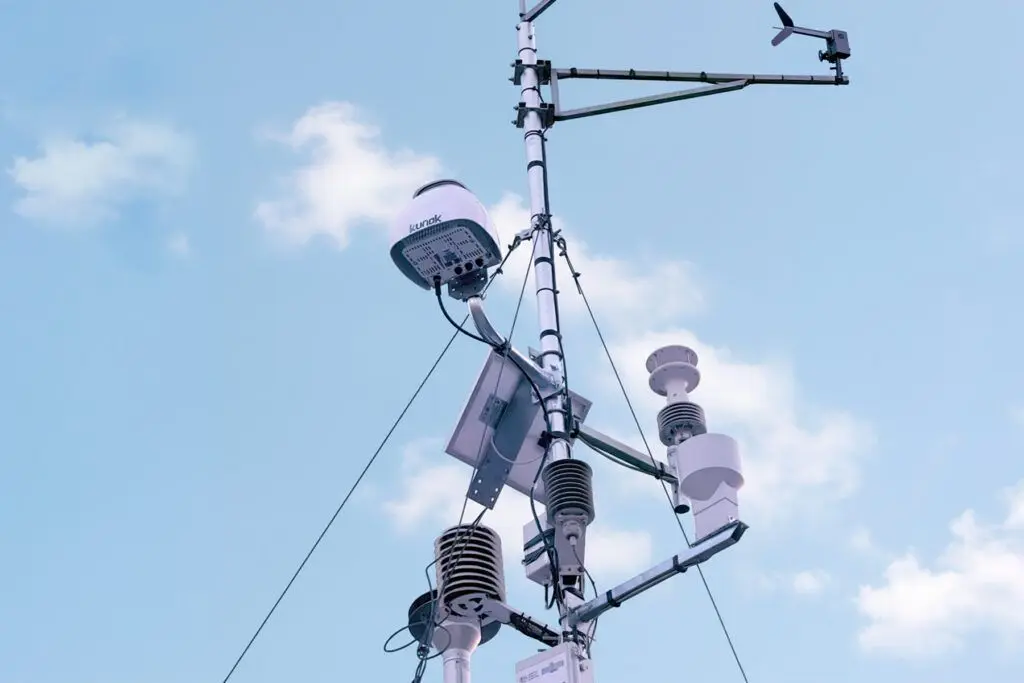
Read more monitoring is a method of measuring air quality that combines measurement accuracy approaching that of regulatory reference stations with the flexibility of professional sensors such as Kunak AIR stations. This approach enables hyperlocal and traceable data generation for atmospheric pollutants such as PM2.5, NO2, O3, H2S and volatile organic compounds, among many others, in urban, industrial and areas of high human activity. The information obtained is useful for assessing population exposure, identifying critical points of contamination and supporting real-time decision-making for local and regional air quality policies, contributing to public health protection and international regulatory compliance. Thanks to its reduced cost and ease of deployment, near-reference monitoring is a key tool for obtaining reliable data in areas with limited coverage of official networks, whether in Europe or the USA, as well as in Latin America and other regions of the world.
Near-reference air quality monitoringControlling air quality is an essential task in order to enjoy optimal environmental conditions for healthy human development and to keep the environment i...
Read more emerges as an effective technological response to the need for expanding spatial coverage without sacrificing the precision of systems employed in reference stations. This approach relies on professional monitoring systems based on sensors that provide complete solutions for characterizing atmospheric pollutant data, delivering performance equivalent to that of official systems regulated under international standards yet more economical, and offering greater spatial and temporal resolution.
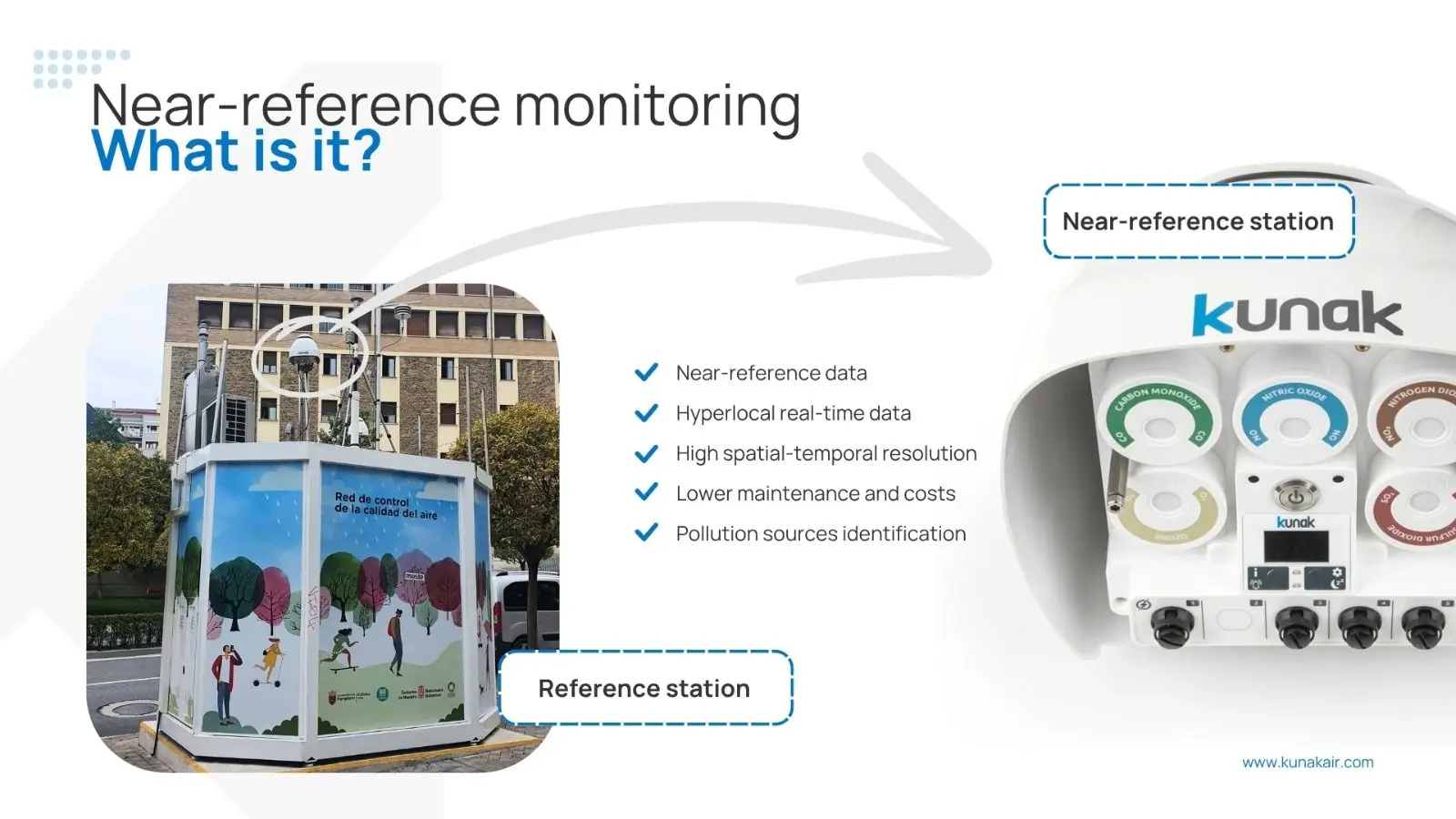
Near-reference monitoring is a method of measuring air quality that combines accuracy close to that of regulatory reference stations with the flexibility of professional sensors.
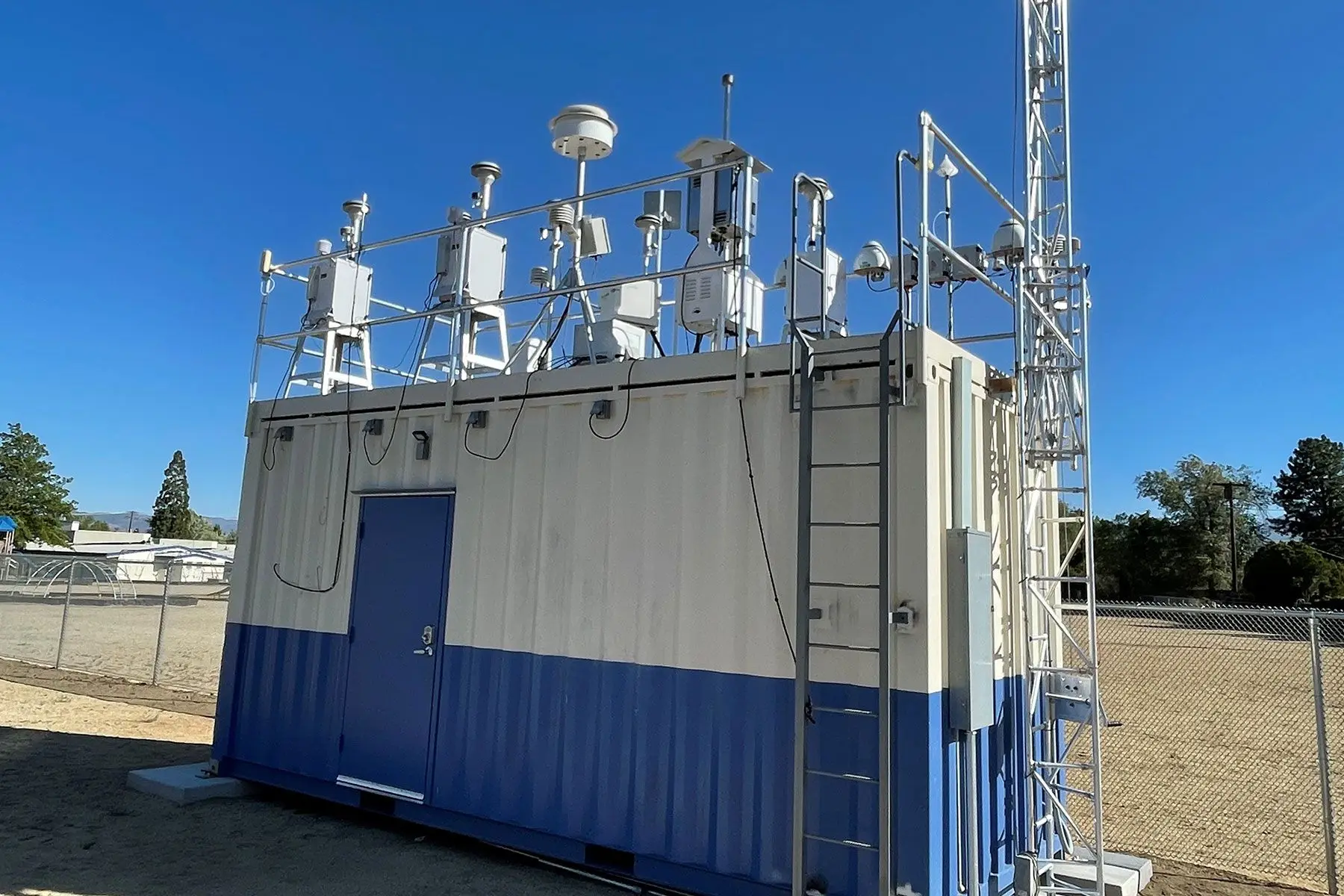
For decades, environmental surveillance has been based almost exclusively on networks of fixed reference stations, equipped with high-precision instrumentation and operated under strict safety and quality control protocols. These systems use methods recognized by different regulatory frameworks across countries, such as harmonized European standards in the European Union, or FRM (Federal Reference Monitoring) and FEM (Federal Equivalence Monitoring) methods in the USA. These constitute the regulatory foundation for official assessment of atmospheric pollutants and are ideal for long-term trend analysis.
However, the high cost of installation, operation and maintenance, which requires specialized technical support, limits the expansion and territorial coverage of environmental monitoring. This situation creates insufficient spatial coverage and complicates the selection of representative locations to capture the actual variability of exposure to air pollution. As a result, the infrastructure becomes rigid, leaving blind spots without surveillance, especially in critical areas or in rapidly growing industrial zones.
Air Quality Innovation in Just 1 Click
Stay informed about the air you breathe!
Subscribe to our newsletter to receive the latest updates on environmental monitoring technology, air quality studies, and more.
The implementation of hybrid monitoring networks represents the most innovative approach in environmental management, by combining scientific precision certainty in data capture from reference stations with the extreme spatial granularity of near-reference sensor-based systems. A technical synergy that allows the official station to act as a master calibration and legal validity standard, while the dense deployment of near-reference sensors maps reality street by street, capturing phenomena at the microclimatic level and local emission peaks that traditional networks, due to their dispersion, typically ignore. The result is a high-resolution data infrastructure that not only meets regulatory standards, but empowers managers with a 360-degree vision, enabling hyperlocal interventions and validating public policies with scientific precision and operational agility unprecedented.
In this context, near-reference air quality monitoring systems position themselves as a strategic solution occupying the intermediate space between the scientific precision of reference methods and the growing need for denser, more flexible and economically accessible networks. Their ability to provide high-quality data, with precision approaching reference methods, allows reducing the gap between rigor in measurement comparable to official standards and operational scalability. The accuracy of near-reference sensor data, useful for comparisons and validations, opens new possibilities for industrial and urban applications, and supports decision-making in line with the current regulatory framework for air quality.
Hybrid monitoring networks combine the precision of reference stations with the granularity of near-reference sensors, generating high-resolution data for hyperlocal interventions and regulatory validation.

Graphical representation of a hybrid air quality monitoring network using reference stations and near-reference stations.
What we understand by near-reference air quality monitoring
The evolution of air quality monitoring points towards denser and more flexible networks, capable of complementing fixed reference stations with instruments based on high-quality sensors. In this context, the near-reference approach emerges, seeking to combine the reliability and traceability of regulatory measurements with greater spatial coverage, lower cost and real-time data availability. These systems do not replace reference stations, but can reinforce them by providing reliable information with greater granularity regarding the local variability of specific pollutants.
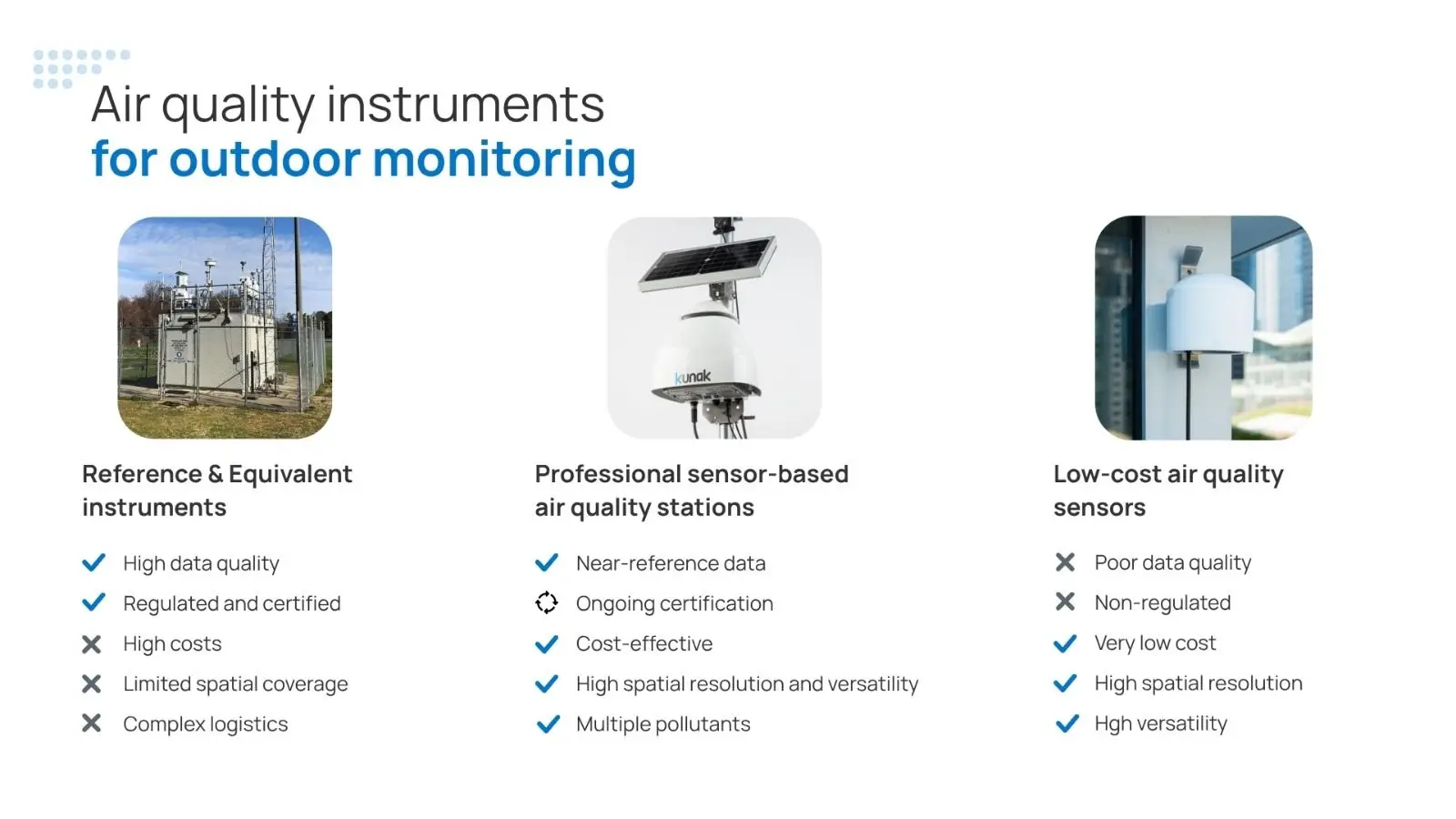
The implementation of hybrid monitoring networks represents the most innovative approach to environmental management.
Technical definition of near-reference monitoring
Near-reference monitoring is positioned between fixed reference stations and low-cost sensor networks, with the aim of complementing regulatory surveillance using more flexible and deployable instruments. In line with the concept of indicative measurement included in European regulations, these systems seek to provide data with known and controlled uncertainty (typically below 20–30% depending on pollutant), sufficient to support environmental applications requiring high data quality, but where reference methods may be impractical due to cost, maintenance or logistics.
Although near-reference monitoring systems for air quality do not replace official methods, they can approach their performance through robust calibrations, correction algorithms, drift control and continuous data validation. The result is monitoring that combines reliability with high precision, greater spatial density and operational sustainability, enabling detection of local variations that traditional networks struggle to resolve due to their limited coverage.
The value proposition of near-reference monitoring systems lies in the calibration of their sensors that allows them to be closely linked with international standards. In this way, pollutant measurement with near-reference precision can achieve a level of performance superior to conventional commercial sensors and approach, depending on the pollutant and context of use, the quality requirements associated with reference methods and equivalent methods recognized by regulatory frameworks.
This combination of data quality, flexible deployment and reduced operational complexity allows administrations, environmental agencies and industries to complement traditional networks, detect local variations, anticipate pollution episodes and evaluate in greater detail the impact of their decisions.
Its contribution can be summarized in three main areas:
- Optimization of operational costs and action validation: the high fidelity of data and lightweight infrastructure significantly reduce TCO (Total Cost of Ownership) compared to fixed stations. Real-time alerts enable detection of anomalies and prevention of costly penalties or shutdowns. These systems also help evaluate the effectiveness of environmental interventions, such as pedestrianization, changes in urban mobility, industrial measures or mitigation actions, providing objective information about their real impact.
- Greater coverage of pollutants and better environmental characterization: Near-reference systems can integrate measurement of multiple pollutants in a single device, including particles, criteria gases (NO2, O3, CO, SO2) and other relevant compounds depending on the application. This multiparametric capability allows obtaining a more complete picture of air quality and better understanding complex phenomena, such as tropospheric ozone formation, traffic influence, industrial emissions or spatial variability of particles, all without need to deploy a station equipped with multiple reference analyzers at each point.
- Proactive protection of public health: Near-reference precision transforms data into a preventive health tool. When deployed at sensitive points (school environments, hospitals or parks), they enable moving from a generic city average to an assessment of actual exposure of the vulnerable population. This greater spatial and temporal resolution facilitates identification of critical zones, activation of early warnings and design of preventive measures aimed at reducing exposure to pollutants associated with respiratory and cardiovascular impacts.
Near-reference monitoring provides precise and representative data, expanding pollutant coverage and facilitating environmental and public health decisions with operational efficiency.
In the current context, where environmental management requires denser, more dynamic and representative data of real exposure to air pollution, near-reference monitoring becomes a strategic tool for complementing (without replacing) regulatory infrastructure, thanks to providing data quality comparable to international reference standards, with a higher level of spatial and temporal detail, and lower costs.
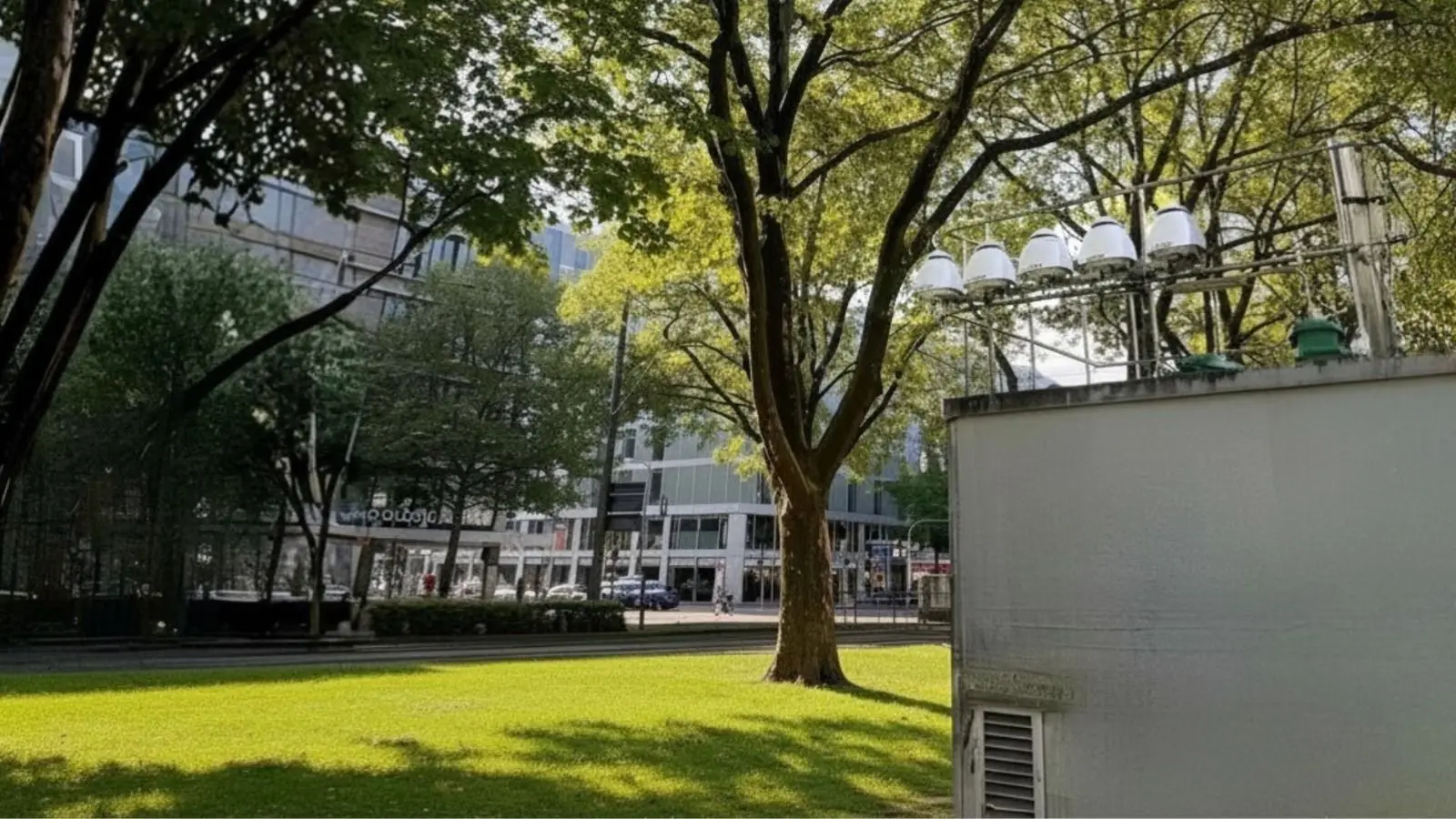
Near-reference air quality monitoring offers comprehensive solutions for characterising atmospheric pollution data, delivering performance equivalent to that of official systems regulated by international standards, but at a lower cost.
From reference stations to low-cost sensor networks
Fixed reference air quality stationsAir quality stations are systems dedicated to monitoring atmospheric pollution, essential for measuring the concentration of pollutants in a specific area....
Read more are the standard of maximum precision in air quality assessment. Their complex instrumentation, together with strict quality assurance protocols and metrological traceability, supports their role as the regulatory basis for official air quality monitoring. However, this technical excellence has a high cost: it requires bulky installations, specialized maintenance and significant investments, which limits deployment and reduces the spatial resolution of surveillance networks.
Faced with this reality, low-cost sensor networks that have evolved towards near-reference monitoring represent a qualitative leap. Although it does not reach the absolute precision of a reference station, it does offer an optimal cost-to-performance ratio; it is capable of multiplying the density of measurement points and capturing the minimal urban, industrial or peri-urban variations that previously remained invisible. The precision of its near-reference sensors, supported by appropriate calibration and correction models, is sufficiently robust to support operational decisions, perform environmental impact analysis of air pollution and favor municipal management and mitigation strategies.
The transition from a model of air quality measurement based exclusively on reference stations towards hybrid ecosystems that integrate advanced near-reference sensors enables moving from punctual and extremely precise monitoring to distributed, continuous and strategically reliable monitoring by providing air quality data comparable to reference stations. A change that expands atmospheric observation capacity without compromising the quality of data necessary for critical decision-making.
Ultimately, the near-reference air quality monitoring system does not aim to replace reference instrumentation, but to democratize its reach. It is the tool that enables transition from a model of static observation to one of dynamic and proactive surveillance, ensuring that air quality is accessible data, trustworthy and, above all, actionable.
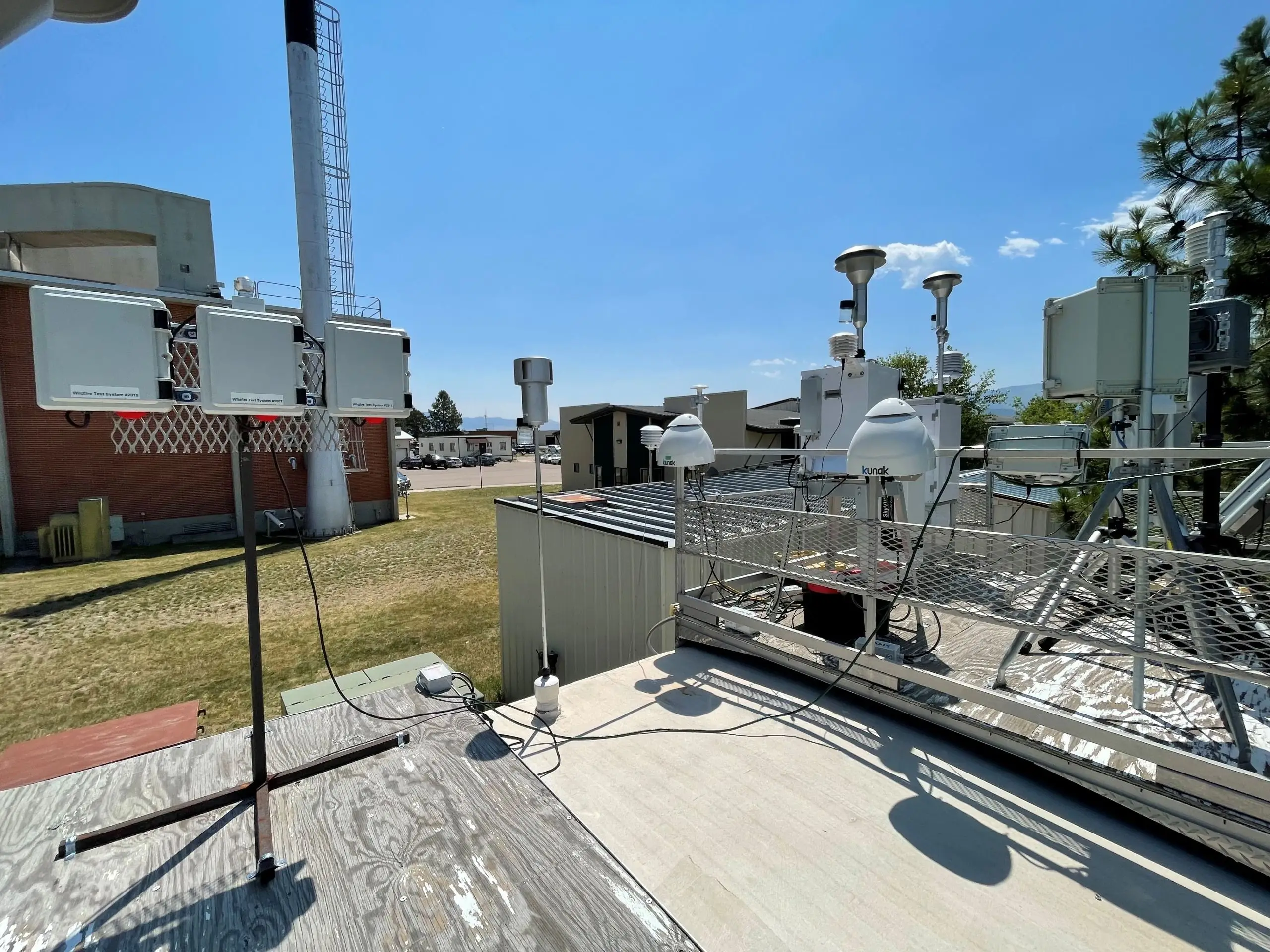
Near-reference air quality monitoring has emerged as an effective technological solution to the need to expand spatial coverage without compromising the accuracy of the systems used at reference stations.
How near-reference sensors work
If reference stations represent maximum metrological fidelity, near-reference air quality monitoring systems act as intelligent field platforms, designed to offer robust measurements in real-world environments. Their ability to approach professional performance does not depend on a single element, but on a hybrid architecture that combines state-of-the-art near-reference sensors for particles and gases with algorithmic models. Thanks to this integration, they can stabilize data in real time and provide reliable information for applications such as environmental surveillance, emission control or detection of local pollution episodes.
Technological principles
Near-reference monitoring systems combine specific sensors for different pollutants with calibration, quality control and data correction processes. In the case of particulate matter, they use optical technologies that enable real-time estimation of PM2.5 and PM10 concentration. For gaseous pollutants, such as NO2, O3, CO or SO2, they integrate sensors designed to detect variations in ambient air concentration, including electrochemical, NDIR (Non-Dispersive Infrared Sensor), PID (PhotoIonization Detector) and other types.
Data quality does not depend solely on the sensor, but on the system as a whole. Therefore, these equipment incorporate specific calibrations, compensation against environmental conditions such as temperature and humidity, drift control and continuous signal validation. This approach enables transforming field measurements into more stable, comparable and useful data for environmental surveillance, monitoring of pollution episodes and support for decision-making.
Data quality and calibration
An environmental monitoring system, to be considered near-reference, depends on several factors such as sensor design, its validation process, metrological traceability and mechanisms for controlling and correcting drift over time.
One of the most solid and widely recognized methods for validating sensor behavior is co-location with an official reference station. In this procedure, the equipment is temporarily installed next to a certified station to compare both signals under the same environmental conditions. This approach enables adjusting sensor behavior and evaluating its performance through objective statistical metrics:
- Coefficient of determination (R2): measures the coherence between variations detected by the near-reference sensor and those of the reference station. Values greater than 0.90 indicate synchronized and reliable response (e.g. R2 > 0.90 for NO2) to ensure that the sensor faithfully follows reference instrumentation trends.
- Mean absolute error (MAE): quantifies the average deviation of hourly measurements.
- Expanded uncertainty (Uexp): enables evaluating compliance with Data Quality Objectives (DQO) defined in European and US regulatory frameworks.
Co-location is, therefore, a proven and technically defensible method. However, it is not the only route to ensuring reliable data.
Beyond co-location: drift control and field verification
In real-world environments, sensors can experience progressive drift phenomena, influenced by temperature, humidity or aging of the sensor element. Therefore, metrological assurance cannot depend exclusively on initial validation.
In the case of Kunak, the reliability of measurements is sustained on several complementary pillars:
- Individual sensor selection and validation, with prior characterization under controlled conditions.
- Own environmental compensation algorithms, developed for each cartridge individually.
- ADC adjustment (Automatic Drift Correction), which enables compensating natural sensor drift over time without need for frequent and/or external interventions.
- Exclusive electronics designed to maintain thermal stability and reduce interference.
Thanks to this approach, stations can maintain consistent and traceable behavior without need to systematically resort to periodic co-locations or external data sources.
Near-reference monitoring ensures precise and traceable data through a comprehensive ecosystem of validation, drift compensation and field verification.
Calibration with standard gas: an additional guarantee, not an obligation
For applications requiring maximum level of in-situ verification, Kunak also offers the possibility of performing calibrations with certified standard gas using gashood system, thus guaranteeing near-reference measurements.
This procedure consists of controlled injection of traceable concentrations of standard gases directly onto the sensor, enabling verification of its physical response under controlled and reproducible conditions.
This is an advanced capability that few manufacturers integrate into compact solutions. It is not a mandatory requirement to maintain near-reference status, but it does constitute an additional industrial traceability guarantee when the project requires it, for example in critical installations or demanding regulatory audits.
A comprehensive data quality approach
Near-reference status does not depend on a single procedure, but on a complete ecosystem of design, validation and continuous performance monitoring.
At Kunak, the combination of:
- recognized metrological validation,
- own compensation algorithms,
- automatic drift control mechanisms,
- and advanced field verification options,
enables offering reliable, precise and technically defensible data in professional environmental monitoring projects.
The objective is not to force application of a single calibration method, but to provide the necessary tools so that each project can achieve the level of rigor it requires.
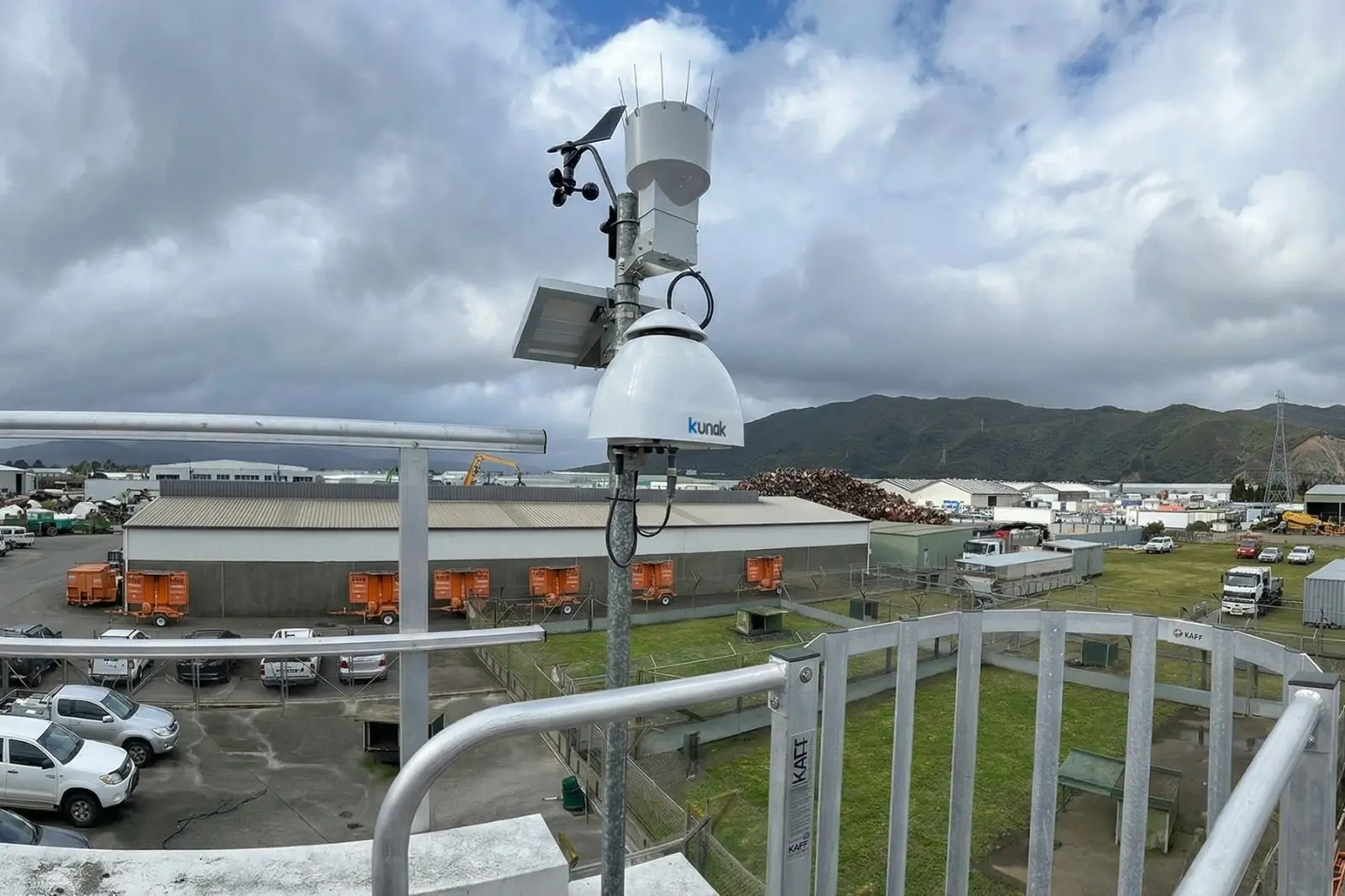
The value proposition of near-reference monitoring systems lies in the calibration of their near-reference sensors, which enables them to be closely aligned with international standards.
Practical applications in industry and cities
Urban networks and public administration
The adoption of continuous air quality monitoring using near-reference sensors in urban environments is transforming how public administrations monitor and manage air quality, as well as informing the mitigation policies they develop to protect citizens. Their ability to be deployed in large quantities and provide high-resolution spatial data enables mapping exposure zones at the hyperlocal level, which traditionally remained as blind spots by being outside the reach of reference stations. Narrow streets, traffic corridors, school zones or areas with intense commercial activity can be characterized in terms of air conditions with a level of detail that was previously unfeasible.
This density of information facilitates early identification of critical points, evaluation of the impact of mobility or urban planning measures, and development of emission inventories more aligned with local reality. Additionally, advanced near-reference data enables feeding dispersion models, early warning systems and citizen information panels, contributing to more proactive and transparent management.
For public officials, this technology becomes a strategic instrument that complements regulatory infrastructure, improves diagnostic capacity and provides solid evidence for designing air quality policies, low-emission zones or specific interventions in vulnerable neighborhoods. Ultimately, its value lies in its ability to protect citizen health, offering information more representative of actual exposure to air pollutantsAir pollution caused by atmospheric contaminants is one of the most critical and complex environmental problems we face today, both because of its global r...
Read more, enabling faster and more precise action.
Near-reference monitoring enables administrations to map critical points and make quick and precise decisions to protect urban health.
Industries: leaks, emissions and environmental compliance
In the industrial field, pollutant measurement with near-reference system precision provides decisive operational advantage by enabling surveillance of emissions and detection of anomalies in real time at a cost significantly lower than that of reference equipment. This makes them an indispensable tool for sectors where operational continuity and environmental compliance are critical.
Among the most relevant use cases for near-reference monitoring are:
- Perimeter monitoring (Fenceline monitoringFenceline monitoring is the continuous measurement of air quality along the boundary of an industrial facility using environmental monitoring technologies ...
Read more): Installation of monitoring systems with near-reference sensors at the perimeter of industrial facilities enables detection of leaks, odor episodes or emissions associated with specific operations. Their ability to record minute-to-minute and multi-point variations facilitates source attribution and rapid activation of mitigation protocols. - Tunnels and confined spaces: In infrastructure such as traffic tunnels or service galleries, data comparable to reference stations provided by near-reference sensors enables monitoring reactive gas concentrations and particles with sufficient precision for managing ventilation, safety and maintenance without resorting to more costly instrumentation.
- Production processes: In industrial lines where gases, volatile organic compounds or suspended particles are generated, near-reference sensors enable optimizing processes through detection of deviations and leaks, and reducing operational losses associated with uncontrolled or unexpected emissions.
- Environmental remediation: In soil decontamination or waste management projects, near-reference monitoring systems distributed across the area enable evaluating the effectiveness of interventions and ensuring that activities do not generate secondary environmental impacts.
- Wastewater treatment plants: The presence of odorous compounds or reactive gases in wastewater treatment plants can be managed more efficiently using near-reference monitoring systems, which enable alerting quickly to odor episodes, adjusting processes and improving relationship with inhabited surroundings by reducing complaints and sanctions.
In all these scenarios, the precision provided by near-reference air quality monitoring systems offers optimal balance between technical reliability and economic viability, enabling industries to reduce monitoring costs, improve traceability of their emissions and act quickly against any deviation. We are facing a technology that not only fulfills an environmental function, but also provides operational and reputational value.
The ability to detect emissions and anomalies in real time makes near-reference monitoring a strategic ally for operational efficiency and environmental compliance.

Near-reference air quality monitoring enables a shift from static and limited monitoring models to proactive environmental management strategies, based on continuous, granular and operationally useful information.
Advantages over other solutions
Coverage, cost and scalability
The primary strength of near-reference monitoring lies in its balance between precision and operational viability. While reference stations offer maximum accuracy, their installation, operation and maintenance costs drastically limit the number of measurement points an administration or industry can deploy. In contrast, near-reference monitoring systems, due to their ease of deployment, affordable cost and reduced maintenance needs, enable multiplying spatial coverage with significantly lower investment, without sacrificing appropriate data quality for decision-making.
Their compact and modular architecture facilitates installation on streetlights, building facades, industrial perimeters or critical infrastructure without need for civil works or specialized electrical supply. This reduces both initial and recurring costs, enabling scaling near-reference monitoring networks with tens or hundreds of devices with a budget that, in the case of traditional stations, would barely cover one or two pieces of equipment.
Additionally, maintenance is simpler and more predictable since near-reference sensors can be replaced or calibrated quickly, and most technical supervision tasks are performed remotely. This combination of low cost, high density and flexible deployment makes near-reference air quality monitoring a complete solution for pollution control ideal for cities, industries and operators needing to expand their observation capacity without compromising economic sustainability.
Against rigid networks or unreliable sensors, near-reference technology combines density, precision and operability to better monitor air pollution.
Data quality and reliability
Although its economic cost is lower, near-reference air quality monitoring stands out for its ability to generate robust, traceable data compatible with reference systems. The key lies in integration of correction algorithms, calibration and continuous validation, enabling data obtained and comparable to reference stations to remain stable even under changing environmental conditions.
This data does not remain in the device but integrates natively with analytical platforms, SCADA systems, digital twins and atmospheric modeling tools, enabling operators and administrations to work with real-time information. The availability of high-resolution time series facilitates pattern detection, identification of anomalous events and automation of operational responses, such as adjustments in industrial processes, ventilation activation or issuance of citizen alerts.
Reliability in near-reference data is reinforced through automated quality control mechanisms, which detect drift, sensor failures or statistical inconsistencies. This ensures that near-reference data are abundant as well as consistent and defensible, capable, thanks to their precision approaching reference, of integrating into environmental audits, regulatory reports or decision-support systems.
Overall, these advantages position near-reference air quality monitoring systems as a solution that combines density, precision and operability, surpassing limitations of traditional networks and uncalibrated low-cost sensors.

With near-reference monitoring systems, public authorities can identify critical issues more quickly, assess the impact of urban policies and design interventions that are better tailored to local circumstances.
Challenges and considerations
Calibration and data maintenance
Although near-reference systems offer a very attractive combination of data quality, flexibility and greater spatial coverage, their performance depends on continuous management of the information they generate. In this type of monitoring, reliability is not based only on the sensor, but on the entire process that accompanies it: initial calibration, drift correction, remote supervision, periodic verification and preventive maintenance.
Calibration enables adjusting equipment response against reference values and, when necessary, provides traceability and quantifies measurement uncertainty. It can be performed through co-location with a reference or equivalent station, or through certified standard gases in the case of specific gas sensors. In parallel, correction tools help compensate for common field effects, such as sensor drift or the influence of environmental conditions like temperature and humidity.
Data maintenance also requires continuous operational supervision. Review of alarms, connectivity, trends and possible anomalies enables detection of installation issues, hardware failures or signal deviations before they compromise information quality. In demanding applications, this supervision must be complemented with functional verifications, scheduled recalibrations or replacement of cartridges and sensors at end of useful life.
Therefore, near-reference monitoring should be understood as a managed system, not as passive measurement. Its value lies in combining advanced sensors with operation and quality control procedures that enable maintaining stable, comparable and technically defensible data over time.
Integration with policies and regulations
The value of near-reference monitoring is not limited to technical operation but also plays a growing role in the European and national regulatory landscape. Although these sensors do not replace official methods, they can integrate as complementary information source to support regulatory compliance and improve diagnostic capacity of administrations and agencies.
The new European Air Quality Directive 2024/2881 (advancing towards stricter limits and greater rigor in characterizing actual population exposure to air pollutants) opens the door to establishment of denser and more flexible near-reference monitoring networks. In this scenario, near-reference data can prove useful for:
- Identifying zones exceeding limit values with greater spatial resolution.
- Feeding emission inventories and pollutant dispersion models.
- Evaluating impact of policies on mobility and low-emission zones.
- Reinforcing surveillance in sensitive areas (schools, hospitals, traffic corridors).
- Providing supplementary evidence in urban and industrial planning processes.
For industries, this data enables fulfilling environmental due diligence, anticipating deviations and documenting episodes with sufficient traceability to comply with audits or inspections. Although regulations require that official decisions be based on reference methods, near-reference information is consolidating as a regulatory support instrument, particularly useful for continuous surveillance, trend analysis and preventive air pollution management.
Ultimately, integration of near-reference air quality monitoring systems in the regulatory framework improves compliance capacity and also drives a transition towards more dynamic, representative and health-protection-oriented monitoring systems.
Why Kunak is the reference in near-reference technology
In an environment where air quality has become a critical factor for public health and industrial sustainability, Kunak positions itself as the definitive technological bridge thanks to its near-reference monitoring systems. With a mission to democratize access to air quality data with near-reference precision by combining scientific rigor with operational agility of its complete solutions.
Kunak near-reference monitoring systems
Having Kunak AIR near-reference systems is more than a technical term; it is offering the optimal balance between economic cost and reliability in air quality monitoring. Kunak AIR systems are designed to offer:
- Metric rigor: guaranteeing measurement uncertainty below 25% for gas measurement and 50% for particles, complying with data quality objectives of European standard CEN/TS 17660 (Class 1).
- Total traceability: unlike conventional sensors, Kunak equipment enables calibrations with certified reference gases, ensuring compliance with international standards.
- Operational versatility: they are compact, low-power and easily relocatable equipment, ideal for points where reference station infrastructure is impractical.
A transparent, independent and traceable calibration model
One of the elements that differentiates Kunak in the near-reference field is its calibration approach. Its systems align with the concept of Processing Level 2A and Independent Sensor Measurement (ISM) described by Diez et al. (2025), according to which measured concentration should derive primarily from the sensor’s own signal, applying only justified corrections related to the physical measurement principle.
This means that data generated by Kunak does not depend on predictive models trained with local environmental data, but on an independent measurement based on the equipment’s internal signal. Corrections applied, for example, against temperature, humidity, drift or known interference, are performed in real time, traceable and explainable, enabling maintenance of transparency in the data generation process.
This difference is key against machine learning approaches. Although these models can approximate well to a reference station under conditions similar to those used during training, they can also introduce uncontrollable dependencies: lower transparency in concentration derivation, need for local datasets, loss of measurement independence, hidden biases in time series and poorer response to atypical pollution episodes. In those cases, the model may tend to predict what it has previously learned, rather than responding strictly to the sensor’s physical signal.
Kunak avoids this limitation through a deterministic calibration and correction model, supported by physical sensor principles and verifiable procedures. Thus, Kunak combines metrological quality, transparency and scalability, offering a solid response to one of near-reference monitoring’s major challenges: maintaining reliable, comparable and technically defensible data during real and prolonged deployments.
Reference: Diez, S., Bannan, T. J., Chacón-Mateos, M. et al. (2025). A framework for advancing independent air quality sensorMeasuring air quality is essential for improving human and environmental health. Changes in the natural composition of the air we breathe are common in ind...
Read more measurements via transparent data generating process classification. npj Climate and Atmospheric Science, 8, 285.
Kunak AIR solutions, technology tailored to your needs
The range of Kunak solutions is designed to cover everything from dense urban networks to critical industrial monitoring:
| Model | Key characteristic | Typical application |
| AIR Pro | Multi-pollutant station of maximum precision with MCERTS certification and US EPA validations. | Urban networks, industry, ports, mining. |
| AIR Lite | Compact and robust design for hyperlocal deployments. | Network complement, specific projects. |
| Smart cartridges | Patented plug and play system with individual calibration. | Quick parameter change, QA/QC traceability. |
| AIR Cloud + Kunak API | Web platform for visualization, analysis and data export. | Remote management and reporting. |
Why choose Kunak technology over other approaches?
Drastically reducing investment and maintenance costs is Kunak technology’s primary advantage over traditional reference stations. In addition to enabling deployment of near-reference air quality monitoring networksAir quality monitoring networks consist of an organised system of monitoring stations distributed across various locations to measure and assess air pollut...
Read more with much greater spatial resolution without, therefore, sacrificing data validity in both quality and accuracy, conditions useful for comparisons and validations.
Kunak near-reference systems address the main challenges associated with electrochemical sensors, such as drift, sensitivity to temperature and humidity, cross-interference or loss of long-term stability, through a combination of calibration, compensation algorithms, automatic drift correction, remote supervision and functional verification.
This approach enables transforming the sensor signal into more stable, traceable and technically defensible data. Additionally, its performance has been tested in various independent evaluations, reinforcing its ability to complement reference networks, detect relevant pollution episodes and support activation of early warnings with high confidence level.
Kunak near-reference monitoring systems comply with performance objectives, metrics and target values established by the US Environmental Protection Agency EPA/600/R-20/279 for O3, EPA/600/R-23/146 for NO2, CO and SO2, and EPA/600/R-20/280 for PM2.5 and EPA/600/R-23/145 for PM10. Meanwhile, international validations (CEN/TS 17660-1:2021/2022, MCERTS Certification and Kotiti certification for South Korea) that Kunak solutions hold are not merely seals in a catalog, they are Kunak’s commitment to air truthfulness that we breathe.
Frequently asked questions
What is near-reference air quality monitoring?
Near-reference monitoring refers to a category of air quality measurement systems positioned between official reference stations and conventional low-cost sensors. Its objective is to offer high-quality data through equipment more compact, flexible and deployable than an official air quality station, but with performance far superior to basic sensors.
These systems combine advanced detection technologies with specific calibrations, environmental condition compensation algorithms and continuous data quality control. This way, they can reduce the effect of factors such as temperature, humidity, sensor drift or interference between pollutants.
Near-reference monitoring does not aim to replace reference stations or assume their legal role in official air quality assessment. Its value lies in complementing that infrastructure, providing greater spatial and temporal resolution. This enables better observation of how pollution varies between streets, neighborhoods, industrial environments or sensitive points, something traditional networks often cannot capture due to their cost, size and maintenance requirements.
Its primary advantage lies in the possibility of deploying denser and more scalable networks, capable of generating consistent, traceable data sufficiently robust to support technical decisions, activate early warnings, evaluate environmental measures or identify local pollution episodes.
What benefits does a near-reference sensor provide compared to basic solutions?
The technical superiority of a near-reference sensor lies in its stability in obtaining data with scientific rigor and precision and its ability to mitigate possible environmental interferences that may arise. While basic or low-cost sensor solutions tend to be vulnerable to cross-sensitivity and extreme weather conditions (for example, interpreting high relative humidity as false PM2.5 peaks), near-reference monitoring systems integrate systems with specific algorithms to compensate effects from environmental conditions, sensor drift and cross-interferences. This drastically reduces raw sensor signal limitations and guarantees high inter-comparative consistency. By offering controlled expanded uncertainty, these near-reference monitoring systems transform measurement, converting a simple qualitative trend into a high-reliability quantitative record because near-reference data are comparable to reference standards.
The great technological advance represented by near-reference air quality monitoring systems enable, through actionable data and with technical traceability, that decision-making be carried out as evidence-based solutions. A strength that enables compliance with regulatory measures, changes in mobility policies or public health protocols.
What pollutants can be measured with near-reference data?
Near-reference monitoring systems enable simultaneous measurement of a wide variety of atmospheric pollutants with high spatial and temporal resolution. These include suspended particles in different fractions, such as PM1, PM2.5 and PM10, as well as regulated gases of interest for air quality, such as CO, NO2, O3 and SO2.
Additionally, these platforms can incorporate surveillance of unregulated or less common compounds, yet relevant in particular urban, industrial or emergency environments. This includes gases such as H2S, NH3, CH4, Cl2, HCN or other compounds specific to industrial processes, leaks, port activities, waste treatment or accidental episodes. They can also include monitoring of volatile organic compounds, useful for characterizing chemical emissions, odors or complex pollution sources.
What is relevant about near-reference monitoring is not only the quantity of pollutants it can measure, but the capacity to generate consistent and comparable data for each parameter. Through specific calibrations, interference compensation, drift control and continuous validation, these systems enable building more complete contamination profiles in real time. This information is especially useful for identifying sources, monitoring the evolution of local episodes, feeding dispersion models and supporting early warning systems.
Can near-reference monitoring replace an official reference station?
No. From a legal and metrological perspective, near-reference monitoring systems are not designed to replace official reference stations. These stations constitute the basis of regulatory air quality monitoring, as they perform fixed measurements using reference methods or equivalent methods recognized by applicable regulations, such as those established in Directive (EU) 2024/2881 and its technical annexes.
Their function is to ensure measurements with high traceability, controlled uncertainty and temporal continuity, indispensable for official air quality assessment, regulatory compliance and generation of robust historical series. However, their high cost, size and operational complexity limit deployment to strategic points, which may leave certain urban, industrial or highly variable local areas without sufficient spatial detail.
Near-reference monitoring provides value precisely as a complement to that infrastructure, not as a substitute. It enables development of hybrid monitoring models in which official stations act as reference, calibration or validation nodes, while near-reference systems are deployed as distributed points that expand territorial coverage. This way, it is possible to better observe pollution variability at street scale, generate dynamic maps, detect local episodes and support more agile urban and industrial management.
Ultimately, reference stations provide the regulatory foundation, traceability and maximum metrological robustness; near-reference monitoring provides greater capillarity, spatial resolution and response capacity for urban and industrial management.
How is near-reference data integrated into analysis and compliance platforms?
Integration of near-reference data into analysis and compliance platforms is based on an API-first architecture and secure and efficient communication protocols (MQTT or HTTPS), designed to ensure fluid connectivity with IoT ecosystems and cloud environments. Unlike closed systems, this equipment functions as edge computing nodes. These process and correct the signal locally (for example, applying thermal compensations) before transmitting encrypted data using TLS/SSL in standardized formats such as JSON. This approach favors massive and real-time ingestion towards corporate data lakes, where data undergo algorithmic validation and quality control processes, ensuring that each recorded value is intact, traceable and technically reliable.
But the true value of this integration goes beyond storage or visualization. Near-reference data flows feed digital twins and dynamic atmospheric dispersion models, enabling correlation of pollutant concentrations with traffic or meteorology variables. This way, transition occurs from purely reactive monitoring to predictive management based on data. Additionally, advanced platforms transform these records into automated performance indicators, compatible with ISO standards and ESG frameworks, simplifying preparation of regulatory reports and preventive decision-making with a statistical confidence level that lower precision sensors cannot provide.
Near-reference standard, the definitive leap towards intelligent environmental management
Near-reference air quality monitoring represents a tangible advance in how we measure, interpret and manage air quality. Its ability to offer data with precision comparable to reference methods, yet with more optimized cost and scalability, makes it a decisive environmental tool for expanding spatial coverage and obtaining a more representative vision of actual population and industrial environment exposure to air pollution.
These are monitoring systems that enable transition from static and limited surveillance models to proactive environmental management strategies, based on continuous, granular and operationally useful information. This way, administrations can identify critical points more quickly, evaluate the impact of urban policies and design interventions more aligned with local reality. Industries, for their part, find in near-reference air quality monitoring an operational ally with which to optimize processes, detect leaks or deviations in real time and reinforce their regulatory compliance with useful air quality data comparable to reference stations, making them always defensible and traceable.
Consequently, near-reference air quality monitoring systems complement reference stations, but also notably expand observation and response capacity to air pollution. Their balance between technical rigor, operational flexibility and economic sustainability highlights near-reference monitoring as the transition towards denser, more intelligent monitoring systems and, above all, focused on protection of health and the environment.