LDAR programmes are technical plans for detecting and repairing industrial fugitive emissions that allow operators to locate, measure, prioritise and correct emissions of gases, vapours or volatile compounds from facilities. Their effectiveness depends on how inspections are designed, which measurement technologies are used, how frequently critical points are reviewed and how data is recorded to make operational decisions and ensure regulatory compliance.
Between periodic inspection and continuous monitoring there exists an operational gap with measurable impact on emissions, economic costs and regulatory compliance.
Programmes with three inspections per year reduced detected emission sources by 51% in practice, compared to 67.7% predicted in simulations. Wilde et al. (2025).
Closing that emissions gap is the central problem addressed by current fugitive emissions monitoring.
This article focuses on technologies for detecting fugitive emissions and the steps required for their implementation. For a comprehensive overview of an LDAR programme – what leak detection and repair is based on, the elements to consider, the regulatory framework it must comply with and its impact on economic costs and labour and environmental safety – we recommend consulting our main article.
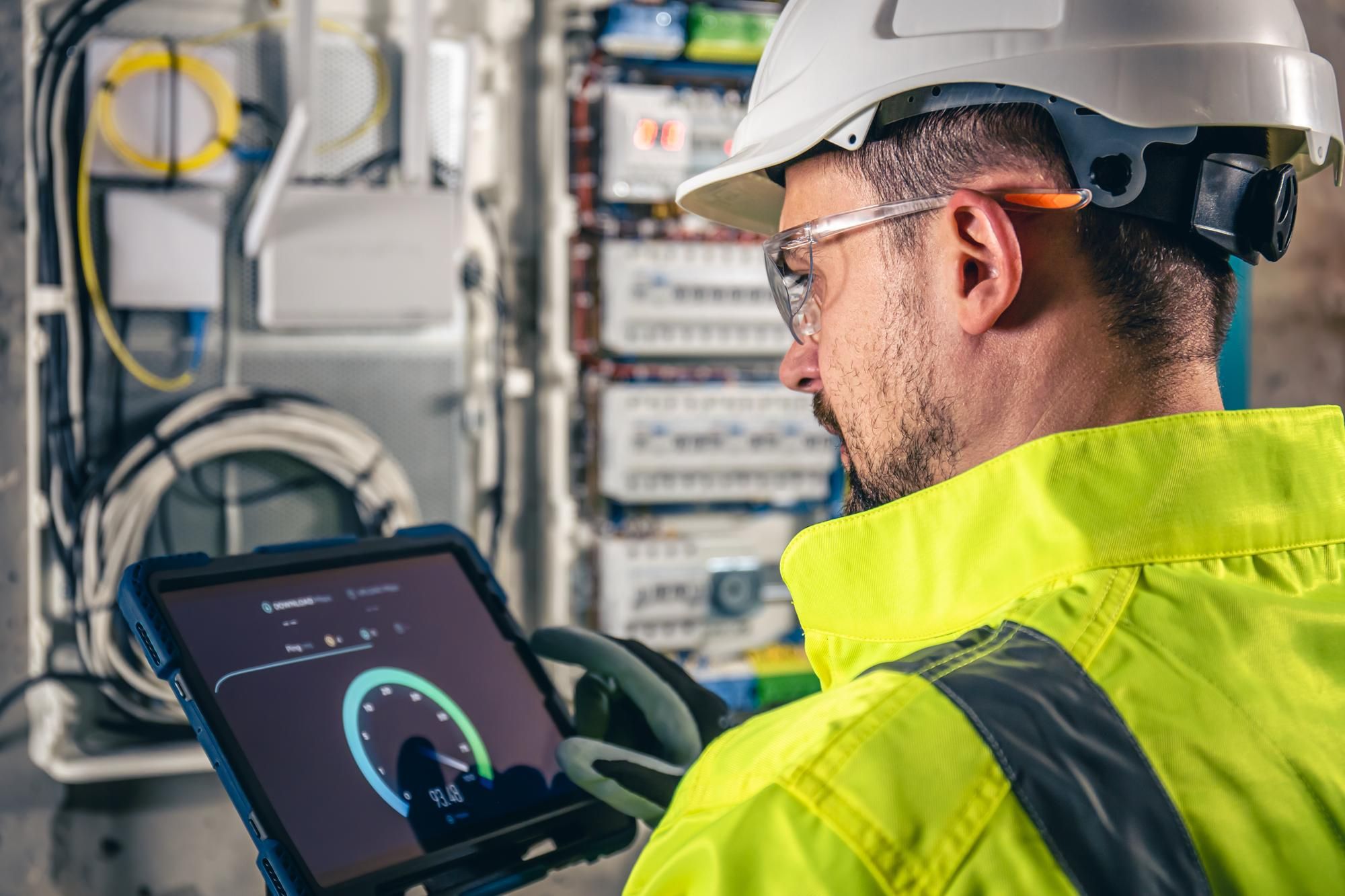
LDAR programmes define the technical and operational dimension of control of industrial fugitive emissions.
Detection technologies for LDAR programmes: technical comparison
The choice of sensor to be used in monitoring an LDAR programme is not a minor technical decision. It is the component that determines which leaks are detected, with what anticipation and what is the operational cost.
Air Quality Innovation in Just 1 Click
Stay informed about the air you breathe!
Subscribe to our newsletter to receive the latest updates on environmental monitoring technology, air quality studies, and more.
Understanding the differences between the main types of LDAR sensors makes it possible to design a detection architecture suited to the compound being monitored, the conditions of the application environment and the required inspection frequency.
Electrochemical sensors
Electrochemical sensors operate by reaction of the target gas with an electrode. They do this in the presence of an electrolyte that generates an electrical signal proportional to the concentration of the compound. This principle makes electrochemical sensors especially suitable for detecting toxic inorganic gases such as HF, HCl, Cl2, NH3, H2S and CO.
They operate with typical detection ranges in the order of ppb (parts per billion) to ppm (parts per million). In the field of LDAR monitoring this scale difference is especially relevant. A sensor working in ppb range allows detection of incipient leaks before they reach the regulatory threshold, opening a window of preventive intervention that a ppm-range sensor does not offer.
The main advantages of electrochemical sensors are their high selectivity for specific compounds, affordable cost compared to optical technologies and simplicity of integration into industrial IoT networks.
However, their limitations are real and should not be minimised. Electrode lifespan ranges from 1 to 3 years, and accuracy is affected by variations in temperature and humidity. Without active compensation algorithms, the signal can drift noticeably in variable industrial environments, compromising measurement reliability.
In turn, Kunak equipment integrates temperature, humidity and atmospheric pressure sensors that enable real-time corrections, compensating for these effects and correcting cross-interference under field conditions.
NDIR optical sensors
NDIR (Non-Dispersive Infrared) sensors detect pollutant gases by measuring the absorption of infrared radiation at wavelengths characteristic of each compound. They are the reference technology employed in LDAR programmes for detecting volatile organic compounds (VOCs), methane (CH4) and carbon dioxide (CO2).
The main advantage of NDIR sensors over electrochemical ones is their greater stability over time and lower signal drift, with consumables such as electrolytes or membranes requiring replacement periodically. However, their main limitation appears when the environment contains complex gas mixtures. This is when the spectral resolution of NDIR can generate interference between compounds with overlapping absorption bands. Additionally, unit cost is generally higher than electrochemical sensors.
TDLAS sensors
Tunable Diode Laser Absorption Spectroscopy (TDLAS) uses a diode laser whose wavelength is precisely tuned to a specific absorption line of the target gas. This ultrafine spectral resolution makes TDLAS the reference technology for compounds such as HF or CH4 in scenarios where selectivity and sensitivity are critical and admit no ambiguity.
Compared to NDIR sensors, TDLAS virtually eliminates cross-interference and enables more accurate quantification in complex gas mixtures. Its limitations are also the most restrictive. Unit cost is high and integration into distributed continuous monitoring networks is significantly more complex than electrochemical or NDIR sensors.
OGI cameras
Optical Gas Imaging (OGI) cameras are not fixed-point sensors, but rather visual inspection tools that enable real-time visualisation of leaks through specialised infrared thermography. The specific function they provide to an LDAR programme is the rapid survey of large areas, the quick pre-selection of critical points and the inspection of zones with difficult physical access.
OGI cameras complement fixed sensors in the initial detection phase, but do not replace them. They do not generate automatic quantitative data, are not suitable for unattended continuous surveillance and their effectiveness depends directly on the qualifications of the operator using them. Environmental conditions introduce additional variability that is far from negligible.
The detection sensitivity of OGI cameras under field conditions varies significantly with wind speed, ambient temperature and leak rate; median detection limits under real conditions can reach 20 g CH4/h at 6 m image distance, an order of magnitude above previous laboratory estimates. Ravikumar et al. (2018).
Consequently, the industrial sensor technology selected to detect fugitive emissions of pollutant gases in an LDAR programme must start from the target compound and the level of precision required. In turn this technology depends on its ability to integrate into facilities and on acquisition cost.
Sensor technology selection is not a neutral decision; it directly determines programme cost and the real capacity to meet detection thresholds required by regulations.
| Target compound | Recommended sensor technology | Typical range | Primary use |
|---|---|---|---|
| HF, HCl, Cl2, NH3, H2S, CO | Electrochemical | ppb – ppm | Continuous monitoring at fixed point. |
| CH4, CO2, VOCs (general) | NDIR | ppm | Distributed networks and long-term stability. |
| HF, CH4 (high selectivity) | TDLAS | ppb | Critical points and complex mixtures. |
| Multi-compound, wide area | OGI | Qualitative | Periodic inspections and pre-selection of sources. |
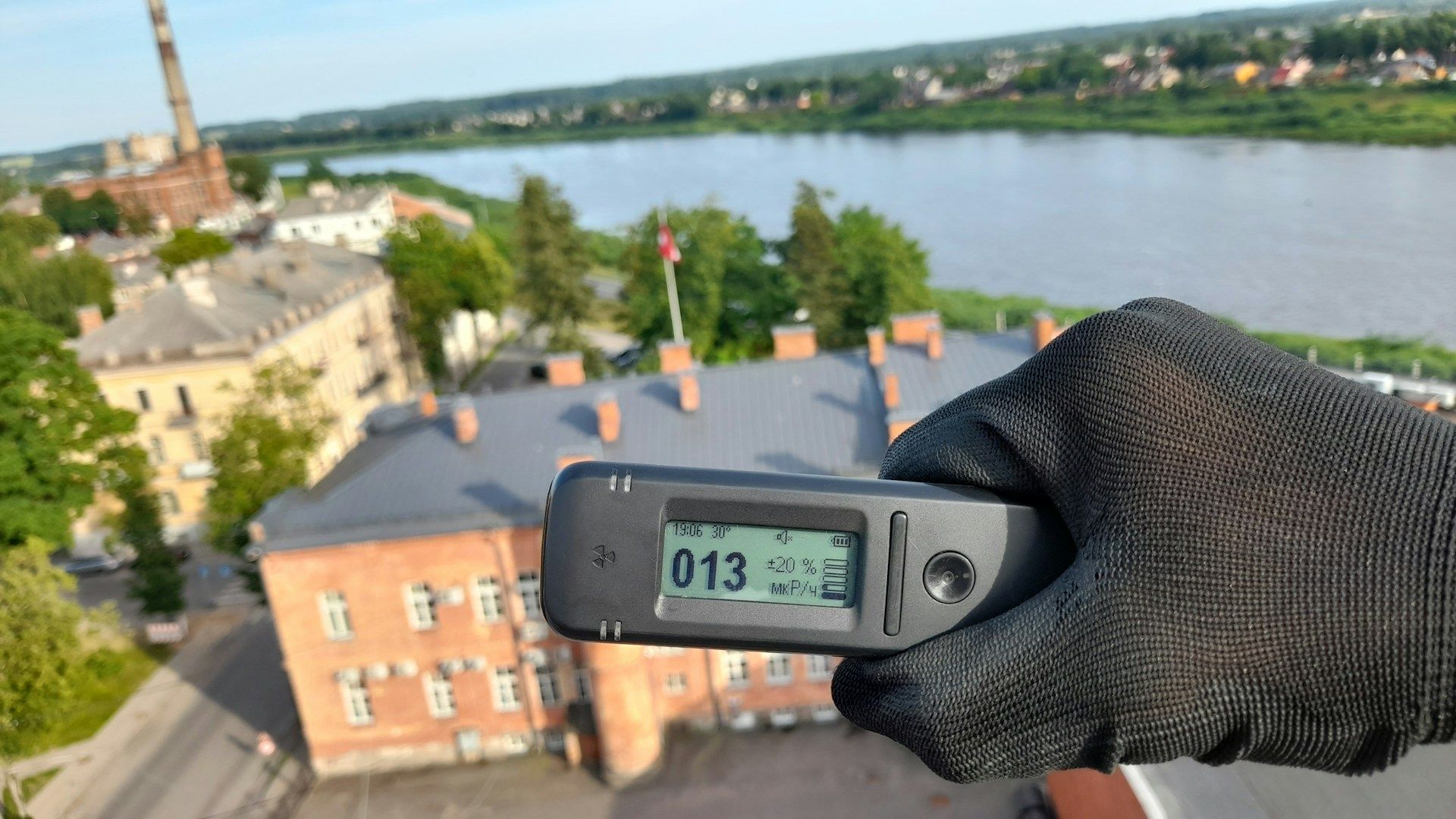
LDAR programmes detect fugitive emissions, with what technology and under what inspection and control architecture they are monitored.
Continuous monitoring versus periodic inspection
An LDAR programme based exclusively on periodic inspections has a structural limitation that no field protocol can eliminate: the invisibility interval. Any leak that emerges between two consecutive inspection campaigns can remain active for weeks or months without being detected or recorded. In programmes with quarterly or semi-annual cycles, this interval represents the majority of facility operating time.
Continuous monitoring does not replace mandated periodic campaigns, but covers the intervals that regulations do not cover. Its operational value is realised in three measurable advantages:
- Reduced detection time: from weeks or months to minutes from leak onset, enabling intervention before emissions accumulate environmental impact, cause public health damage or become economically noticeable.
- Uninterrupted documentary evidence: continuous recording of concentrations, with timestamp and traceability at each sensor location, generates the most robust documentary basis available for LDAR programme compliance audits, more comprehensive than point campaign records.
- Database for predictive maintenance: accumulated measurement history enables identification of equipment with progressive degradation, recurrent leak trends and correlations with operating conditions, transforming reactive LDAR into a preventive programme.
This combined architecture (mandated periodic inspection plus continuous LDAR monitoring between cycles) is especially relevant in facilities with large-scale component inventories.
In refinery applications, LDAR programmes with structured monitoring protocols achieved measurable VOC reductions in inventories of several thousand component points. Ke, J. et al. (2020).
At the same time, current regulations, EPA 40 CFR Part 60/63 in the USA and the Industrial Emissions Directive IED 2010/75/EU in Europe, continue to require periodic inspection campaigns based on mandated methodologies as the basis of formal compliance. Continuous monitoring does not replace or make them dispensable, it complements them by covering the operational space that regulation, by design, cannot cover with point inspections.

Understanding the differences between the main types of LDAR sensors makes it possible to design a detection architecture suited to the compound being monitored, the conditions of the application environment and the required inspection frequency.
How to implement an LDAR programme: step-by-step guide
Knowing how to implement an LDAR programme requires sequencing five interdependent technical decisions. Each step determines the next. An incomplete inventory invalidates technology selection and poorly defined thresholds make it impossible to audit any subsequent record.
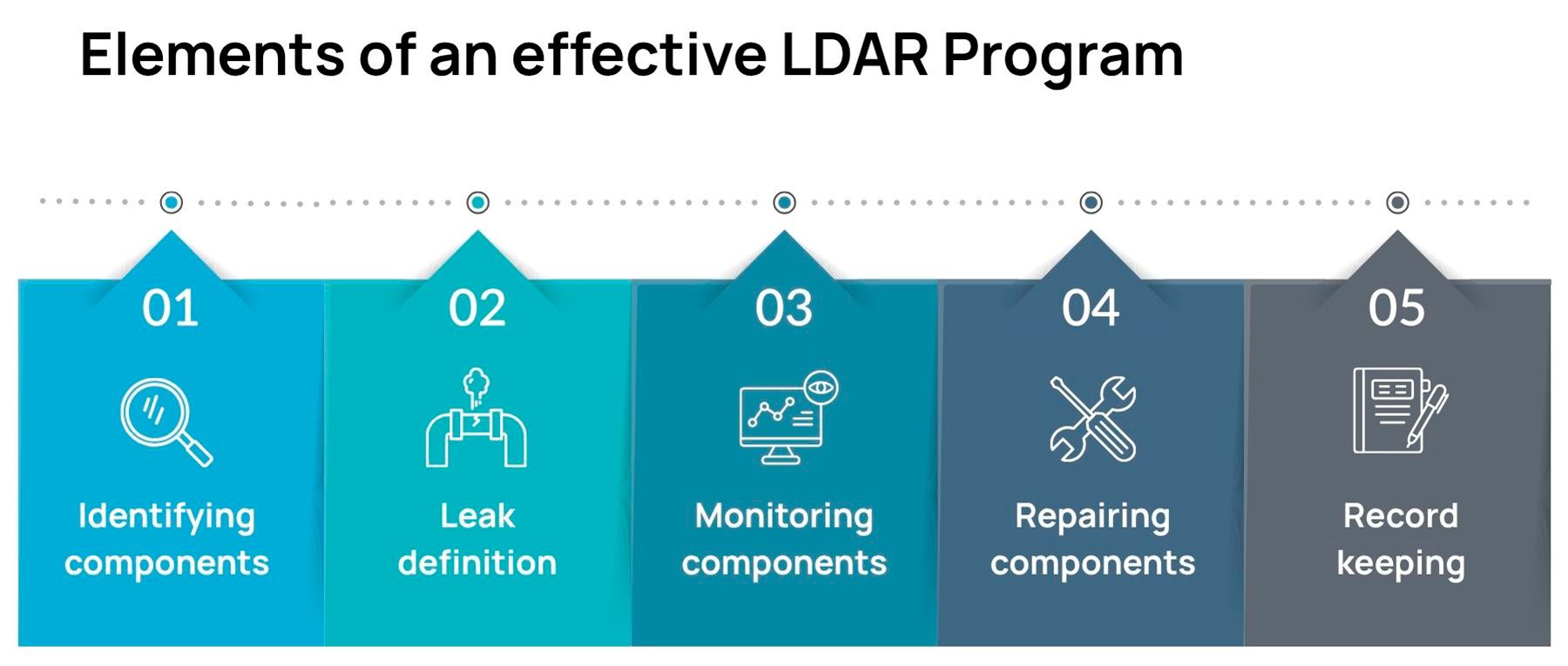
Step 1: LDAR point inventory
The inventory is the operational basis of the entire programme. Without it, there is no structured LDAR, only random inspections. For each component it must record the equipment type (valve, flange, pump, compressor, tank), its physical location, the service it provides (fluid, pressure, temperature), the material and its accessibility for inspection.
Each LDAR point receives a unique identifier to which its inspection history, measurements and repair records are linked. Criticality classification combines three factors:
- Risk of the compound (toxicity, flammability).
- Estimated magnitude of the leak.
- Relevance of the equipment for process continuity.
This classification determines the inspection frequency and repair timelines applicable to each point. A well-structured LDAR campaign yields measurable results.
A structured LDAR campaign at an Italian refinery reduced leaking components by 12% and VOC emissions by 23% after one maintenance cycle. Lotrecchiano et al. (2025).
Step 2: Detection technology selection
Detection technology is selected based on four criteria:
- compound profile of the process,
- point density in the inventory,
- regulatory requirement for sensitivity and
- available budget.
There is no single solution valid for all industrial scenarios.
For a detailed analysis of each technology (electrochemical sensors, NDIR, TDLAS and OGI cameras) with their ideal compounds, detection ranges and real limitations, it is advisable to carry out a technical comparison. Industrial LDAR programmes with IoT-connected sensors also enable direct integration of detection into the facility’s network architecture, closing the cycle between detection and real-time alert.
Step 3: Definition of thresholds and timelines
The leak threshold is the measured concentration value (in ppm or mg/m3) above which a component is declared to be leaking and enters mandatory repair process. Its definition is not discretionary; it is set by applicable regulations.
Reference frameworks are EPA 40 CFR Part 60 and 63 for installations in the USA and IED 2010/75/EU for Europe, which establish specific thresholds by compound type and industrial sector. Repair timelines are structured in three levels according to criticality: immediate repair for leaks with acute risk, within 15 days for significant leaks with no immediate risk, and at the next scheduled shutdown for minor leaks in non-critical components. Defining these timelines with precision is essential for the programme to be auditable.
Step 4: Network architecture and communications
The communications architecture determines latency, range and integration of the LDAR monitoring system. Protocol selection must be suited to the physical characteristics of the facility and the operational requirements of the programme:
- 4G/LTE: high speed, low latency, suitable for immediate alert systems and dense time series.
- LoRaWAN: long range and low power consumption, ideal for large-scale installations (refineries, tank farms) with battery-powered nodes; not suitable when real-time response to critical alerts is required.
- Wi-Fi: high speed within facility perimeter, no tariff cost, requires existing access infrastructure.
- Modbus / OPC-UA: direct integration with plant control systems (DCS/SCADA).
| Protocol | Ideal for | Primary limitation |
|---|---|---|
| 4G/LTE | Immediate alerts and dense time series. | Cost associated with data tariff. |
| LoRaWAN | Large-scale installations such as refineries, tank farms or battery-powered nodes. | Not suitable for real-time response to critical alerts. |
| Wi-Fi | High-speed transmission within perimeter, no mobile data cost. | Requires existing access infrastructure. |
| Modbus / OPC-UA | Direct integration with DCS/SCADA systems. | Limited to facility’s wired perimeter. |
Step 5: Data management, KPIs and traceability
The documentary record is the backbone of LDAR compliance programme. Each event must be recorded with timestamp and authorship including inspections performed, measurements obtained, interventions executed and post-repair verifications that confirm effective closure of the leak.
The auditable KPIs that the system must generate are:
- Active leak rate: percentage of LDAR points with declared leak at any given moment.
- Average repair time: from leak declaration to post-repair verification.
- Points with recurrent leaks: identification of components with history of repeated failure, basis for root cause analysis.
- Repair effectiveness: percentage of retests with satisfactory result on first intervention.
This set of indicators are structured evidence that simultaneously addresses two requirements: regulatory compliance inspections for regulatory adherence and ESG audits that require traceable, time-comparable and third-party verifiable data.
A solid record of an LDAR compliance programme not only demonstrates that the programme exists, but that it works.

Between periodic inspection and continuous monitoring of LDAR programmes there exists an operational gap with measurable impact on emissions, economic costs and regulatory compliance.
Kunak AIR for LDAR programmes
Kunak AIR Pro is a multi-parameter monitoring station designed to meet the technical requirements of a modern LDAR programme such as continuous detection, multi-compound coverage, industrial robustness and direct integration into facility network architecture.
Its architecture is based on a proprietary system of intelligent interchangeable plug & play cartridges that enables monitoring of up to 5 gases simultaneously across a range of over 20 pollutants. Compounds covered include the most relevant in industrial LDAR inventories: HCl, HF, NH3, H2S, Cl2, CO, CO2, NO2, SO2, CH4 and VOCs, among others.
For demanding industrial environments, the equipment operates in a temperature range of –40 °C to 60 °C, with humidity from 0 to 100% RH and IP65 protection rating, suitable for installation in outdoor areas and process zones with dust or water presence. Connectivity is addressed via integrated eSIM, Wi-Fi or Modbus RTU, enabling both autonomous deployment in remote locations and direct integration with DCS/SCADA systems.
Field data is managed on the Kunak AIR Cloud platform, which provides geolocated visualisation with heat maps, automatic alerts configurable by gas and criticality threshold, statistical analysis with OpenAir tools and a CMMS module for traceable recording of calibrations and interventions. The platform also has an API that enables bidirectional communication for data sending and receiving, facilitating integration with external management systems, ERP platforms or ESG reporting tools. This set of functionalities generates the documentary evidence required in regulatory and ESG audits. MCERTS certifications (PM10 and PM2.5) and KOTITI Grade 1 (PM2.5) support its analytical validity before regulatory bodies.
For more information on Kunak solutions for LDAR programmes, enter here.
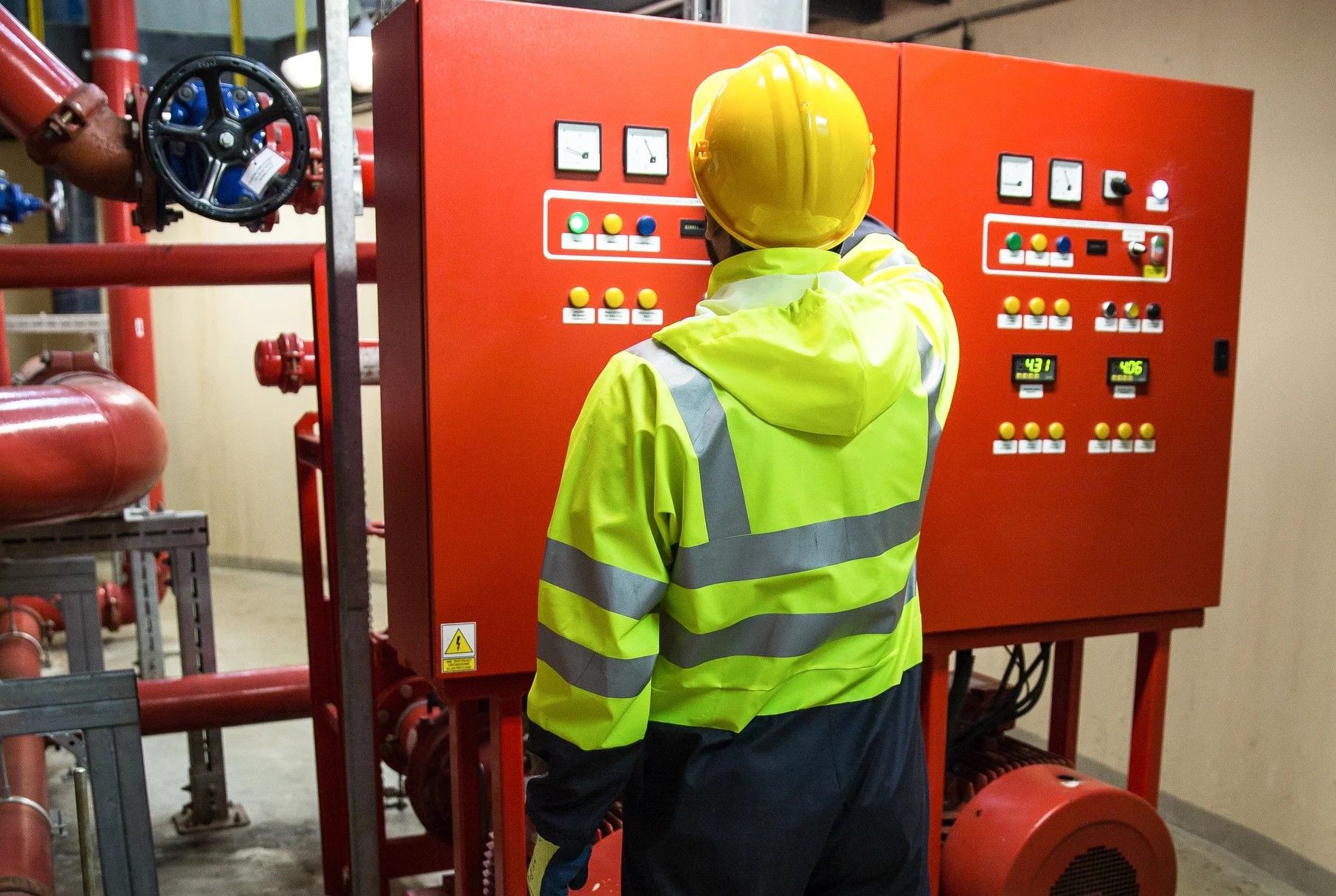
The choice of sensor to be used in monitoring an LDAR programme is essential because it is the component that determines which leaks are detected, with what anticipation and what is the operational cost.
From sensor to system, why LDAR architecture defines the outcome
The choice of sensor type and communications protocol is not an infrastructure decision. It is the decision that determines whether an LDAR programme operates in a reactive manner (detecting leaks that have already been active for weeks) or predictively, intervening before emissions accumulate measurable impact. A robust inventory, well-calibrated thresholds and a continuous monitoring network integrated into the facility’s control system are the three elements that transform regulatory compliance into real operational management.
The difference between an LDAR programme that complies and one that works lies in its architecture.
 Tunnel air quality monitoring: sensors, ventilation and safety
 Fugitive emissions management: detection and control of industrial leaks
 Fenceline monitoring at industrial sites: continuous monitoring and emission detection
 Near-reference monitoring: advanced accuracy in air quality measurement
 Data center air quality controlling: applications, parameters and sensors