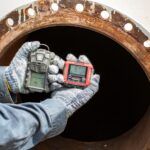

Ultrafine particlesAt first glance, the air around us may seem clean, but beware, it hides an almost imperceptible danger: ultrafine particles (UFP). With a size so small the...
Read more (UFPs) are atmospheric pollutants that expose the challenge of measuring the infinitely small. With a diameter smaller than 100 nanometres (PM0.1), their danger does not stem from their weight (almost negligible) but from their numerical concentration. Their enhanced toxicity also comes from their larger surface area relative to their volume, which makes them ultra-efficient vectors for reactions with other pollutants such as volatile organic compounds and heavy metals. Moreover, they evade biological barriers like alveolar epithelia, penetrating the bloodstream through which they are systemically distributed, reaching vital organs.
Below, we analyse the technical complexity of quantifying the invisible and explain why UFPs represent the most critical blind spot in current air qualityAir quality refers to the state of the air we breathe and its composition in terms of pollutants present in the atmosphere. It is considered good when poll...
Read more management. We explore the frontiers of precision instrumentation in air quality monitoringControlling air quality is an essential task in order to enjoy optimal environmental conditions for healthy human development and to keep the environment i...
Read more and unpack the regulatory gap that still prioritises particle mass over number concentration (PNC). Ultimately, this article proposes a roadmap towards continuous and rigorous monitoring, essential for public health to stop depending on a metric that ignores the smallest yet most invasive pollutants.
| 10 µm (Coarse) | 2.5 µm (Fine) | 0.1 µm (Ultrafine) | |
|---|---|---|---|
|
|
|
|
|
| Total mass | 1 | 1 | 1 |
| Particle number | 1 | 64 | 1,000,000 |
| Surface area per particle | 1 | 0.0625 | 0.0001 |
| Total surface area per mass | 1 | 4 | 100 |
|
|
|
What ultrafine particles are and why they matter
To grasp the environmental challenge posed by UFPs, we need to focus on the nanometric scale. Ultrafine particles are technically classified as PM0.1 because their aerodynamic diameter is below 100 nanometres or less than 0.1 micrometres (µm). To visualise this, a single grain of sand could contain millions of these particles.
However, their environmental relevance does not lie in their tiny, invisible size but in a physical paradox: while their contribution to total particulate mass in the air is almost negligible, their number concentration and active surface area are immense.
Although air quality monitoring has historically been based on mass (µg/m3, or micrograms per cubic metre) and works well for PM10 (dust and pollen) and PM2.5 (coarse soot or black carbon), this measurement method is blind to UFPs.
Air Quality Innovation in Just 1 Click
Stay informed about the air you breathe!
Subscribe to our newsletter to receive the latest updates on environmental monitoring technology, air quality studies, and more.
For example, a single PM10 particle can weigh as much as millions of ultrafine particles. However, the latter have a far greater capacity for cellular penetration and chemical reactivity than larger particulate fractions.
At the atmospheric level, while fine particles settle by gravity, UFPs do not fall to the ground. Instead, they remain in a state of perpetual, random and erratic motion in the air (Brownian motion), making them particularly hazardous due to their high dispersion capacity and short lifetime before coagulating with each other or other surfaces.

Road traffic combustion is one of the main sources of UFP.
Why measuring ultrafine particles (UFPs) is necessary
UFPs are not a single pollutant but a complex cocktail whose danger varies according to their high mobility, atmospheric reactivity, and source of formation:
- Dominant anthropogenic sources: combustion is the main source of UFPs. Road traffic (especially direct-injection and diesel engines), aircraft turbines (emitting particles as small as 10–20 nm), industrial activities (foundries and refineries) and domestic heating (biomass and gas) are the largest emitters.
- Secondary chemical processes: not all UFPs are directly emitted; many form in the atmosphere through the nucleation of precursor gases such as nitrogen oxides (NOx) and sulphur dioxide (SO2)Sulphur dioxide (SO2) is a colourless gas with a pungent odour that causes an irritating sensation similar to shortness of breath. Its origin is anthropoge...
Read more, which, under solar radiation, produce secondary pollutants such as particulate nitrates and sulphates. This chemical transformation increases their impact both on air quality (by contributing to smogSmog, beyond that dense fog Smog is a mixture of air pollutantsAir pollution caused by atmospheric contaminants is one of the most critical and complex environmental problems we face today, both because of its global r...
Read more that accumulate in the atmosphere, especially in urban areas. This phenomenon is character...
Read more and PM2.5 formation) and on public health, as it facilitates their penetration into the respiratory and circulatory systems. - Highly toxic chemical composition: their structure usually consists of a black carbon (soot) core on which heavy metals, volatile organic compounds (VOCs), and polycyclic aromatic hydrocarbons (PAHs) condense.
The ability to predict the morphological changes that occur in soot particles as their composition evolves in the atmosphere is crucial for accurately assessing their impact on climate, air quality and human health. Chen, Ch., Zakharov, D.N. and Khalizov, A.F. (2023).

UFP are a challenge that threatens the integrity of organic systems.
Invisible but critical for health and climate
While PM10 represents a respiratory challenge confined to the lungs, UFPs pose a threat to the integrity of entire biological systems. Their nanometric size gives them a unique biological property: translocation. Unlike larger particulate fractions that are filtered by cilia or phagocytised by alveolar macrophages, particles smaller than 100 nm cross the alveolar epithelium by passive diffusion, reaching the bloodstream within minutes.
- Systemic impact and blood–brain barrier: once in the bloodstream, UFPs are distributed throughout the body. They have been detected in cardiac tissue, the liver, and, most alarmingly, the brain. Their ability to travel along the olfactory nerve allows them to bypass the blood–brain barrier, directly linking them to inflammatory processes and neurodegenerative diseases.
- Synergistic effects: UFPs rarely travel alone. Their large surface area makes them the ideal substrate for adsorbing heavy metals and organic compounds. When coexisting with high levels of ozone (O3) and nitrogen dioxide (NO2), their toxicity multiplies. They act as a Trojan horse, enabling oxidising gases to weaken cellular barriers and allowing an even more aggressive penetration of the toxic ultrafine load.
Beyond their health impacts, UFPs create a connection to climate change through their reaction under solar radiation. They act as cloud condensation nuclei, altering the clouds’ optical properties and ultimately Earth’s albedo. Depending on their composition (rich in black carbon or sulphates), they can either accelerate local warming or cool the atmosphere erratically, complicating climate prediction models.
A key parameter for assessing real air quality
Environmental management has historically relied on gravimetric reductionism. For decades, we have assumed that if PM2.5 mass was under control, the air was safe. Today we know this metric is insufficient. Legal mass limits can be met while breathing a mix of billions of weightless particles per cubic centimetre that still affect health and climate.
In modern urban settings, where fleets of low-emission vehicles circulate, PM2.5 sensors often register excellent levels. Yet, UFP monitoring reveals massive number concentration peaks at specific times of atmospheric nucleation (the physicochemical process where gaseous vapours condense to form new solid or liquid particles) or near airports. The result is that the perception of clean air is misleading.
“The rise in UFP emissions relative to fine particles may cause less consistent rainfall or prolonged droughts in some areas, and intense downpours and flooding in others thousands of kilometres away, impacting public health worldwide.” Kwon, H.S., Ryu, M.H. & Carlsten, C. (2020).
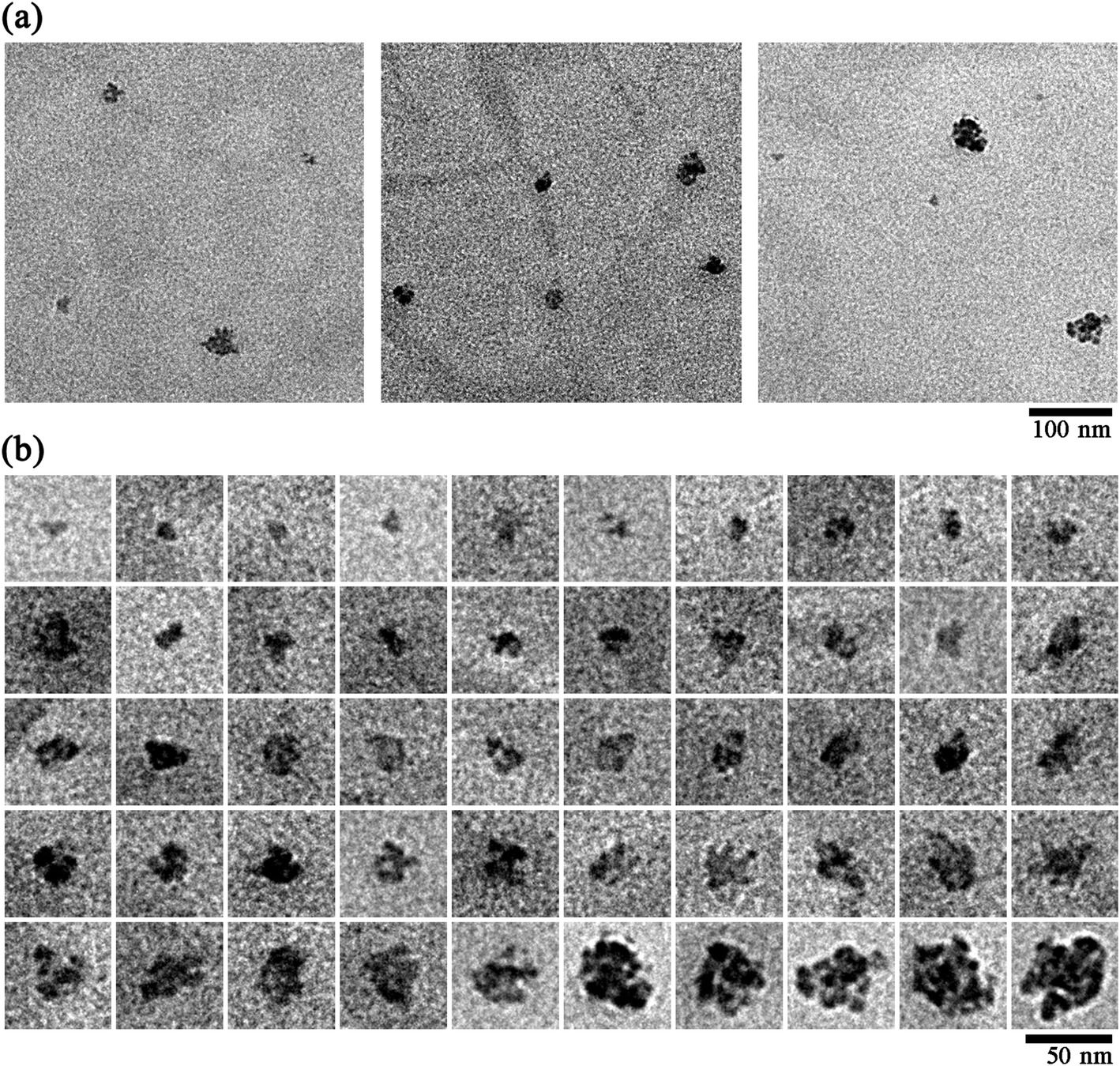
Transmission electron microscope analysis of ultrafine particles (UFP). Source: Springer Nature
How ultrafine particles are measured
The detection of UFPs poses a greater technological challenge than that of fine particles. Lacking significant mass, they cannot be measured using gravimetric methods (filter weighing). Their monitoring requires instrumentation capable of identifying individual entities and classifying their morphology.
Main measurement methods
Currently, both the scientific community and technical expertise rely on three main measurement methods:
- Condensation Particle Counters (CPC): the standard method for determining the Particle Number Concentration (PNC). Since UFPs are too small to be detected by conventional light, the CPC enlarges them optically by condensing a vapour (usually alcohol or water) onto them, allowing an optical sensor to count them one by one.
- Electrical Mobility Spectrometers (SMPS/EEPS): instruments that act as true microscopes of the atmosphere. They use electric fields to separate particles according to their mobility (inversely proportional to size) and provide a detailed particle size distribution. They are essential for research studies, although their high cost and technical complexity limit widespread deployment.
- Miniaturised sensors (IoT): representing the frontier of current monitoring. They use diffusion charging or optimised light scattering to detect nanometric ranges. These systems, including solutions such as those developed by Kunak, enable continuous monitoring without the maintenance constraints typical of laboratory-grade equipment.
Kunak’s miniaturised sensors for UFP monitoring offer a key competitive advantage by eliminating the need for periodic calibration, significantly simplifying their operation. With an estimated lifespan of four years, the UFP sensor stands out for its robustness, though it still requires structured preventive maintenance to ensure maximum accuracy.
Under standard conditions, it is recommended to clean the inlet mesh and replace both the main filter and the pump filter annually, performing a complete replacement of filter components after the second year. However, this schedule is flexible and should be adapted to the surrounding environment. In high-pollution contexts such as construction sites or demolitions, cleaning and replacement frequency should be increased to avoid clogging and ensure that the equipment continues to provide reliable data. This results in monitoring systems that guarantee real-time data accuracy.
Advanced and continuous monitoring
The true revolution in air quality monitoring goes beyond measuring accurately; it is about measuring everywhere. To achieve this, distributed sensor networks enable monitoring that eliminates the blind spots of fixed stations.
Hybrid solutions such as the Kunak AIR Pro equipped with an advanced UFP sensor combine the robustness of a professional station with the specificity provided by an ultrafine particle detector. Its design offers unprecedented portability, enabling impact studies in microenvironments (such as school entrances, loading bays, or areas near airports) with reliable, auditable data traceability.
Measurement is only the first step; the real value lies in data analysis. The Kunak Cloud data intelligence platform enables real-time data visualisation, smart alerts for emission peaks and, most importantly, trend analysis and source identification of pollution events. This allows distinguishing, for example, between a local traffic incident and a regional nucleation phenomenon.
Moreover, these monitoring systems are designed to integrate strategically into Sustainable Urban Mobility Plans (SUMP) and epidemiological studies. Together, they provide decision-makers with a tool based on scientific evidence rather than estimations.

With the spatial dynamics of ultrafine particles, the quality of the air we breathe can change dramatically just 50 metres away from a main road or industrial chimney.
Where and why to measure UFPs: the challenge of spatial resolution
Unlike coarser particles that can remain suspended and travel long distances, ultrafine particles display a spatial dynamic directly linked to nearby sources. Their short lifetime, due to coagulation and deposition processes, creates steep concentration gradients. In practical terms, this means that the air quality we breathe can change drastically within just 50 metres of a main road or industrial chimney.
To deploy effective environmental surveillance, it is not enough to measure averages. Identifying critical exposure points is paramount.
Urban environments
In cities, the main source of UFPs is road traffic, particularly internal combustion engines and because asphalt acts as a chemical reactor. The main focus points for urban analysis are:
- Emission peaks and diesel engines: despite modern particulate filters, acceleration phases and older diesel engines produce UFP number densities that can even exceed 100,000 particles/cm³ during rush hours.
- Sensitive areas (schools, hospitals and care homes): current urban planning prioritises measurements in vulnerable environments. The proximity of schools to heavy-traffic arteries exposes children to combustion aerosols that directly affect lung and cognitive development. In hospitals and nursing homes, pollution poses a risk to patients and elderly individuals with pre-existing conditions, exacerbating diseases and increasing morbidity and mortality.
- Epidemiological correlation: recent scientific studies confirm that urban respiratory morbidity correlates more closely with particle number count (PNC) than with particle mass, validating the need to establish air quality monitoring micromesh networks.
Airports
Airports stand out as hotspots of high UFP concentrations due to the combination of combustion at altitude and ground level. These conditions affect both airport personnel and populations located kilometres away but aligned with aircraft approach cones.
The main sources of UFPs originate from aircraft engines, whose kerosene combustion generates extremely small particles (often smaller than 30 nm) with a greater systemic penetration capacity than road traffic emissions.
There is growing interest in measuring UFPs around airports, and several (Amsterdam, Berlin, Brussels, Copenhagen, Frankfurt, Helsinki, Paris, Vienna and Zurich) already do so. Although the pollutant concentration data vary notably among them, they consistently demonstrate how particle plumes can be detected far from runways, driving demand for specific monitoring perimeters to protect nearby communities. Likewise, wind direction significantly influences UFP dispersion, causing airport impacts to be detected over longer distances, sometimes, as in Berlin, showing a greater influence than road traffic.
Ports
Port environments exhibit a unique aerosol chemistry due to the type of fuels used and the high level of logistical activity. Port areas are affected by multiple emission sources such as national and international shipping, road and non-road traffic, industry and energy consumption.
The use of heavy fuel oil and marine diesel releases large quantities of chemical precursors. These emissions contain primary UFPs and simultaneously promote the formation of secondary particles through interactions with ozone and other corrosive gases present in sea breeze.
Therefore, monitoring air quality within port facilities is highly relevant. Measuring in ports also helps assess the direct impact on coastal cities, where the mixture of industrial and marine pollutants creates a highly toxic cocktail that conventional air quality networks tend to underestimate.
Industries: from metallurgy to the energy transition
The industrial sector is a massive source of thermally and mechanically generated UFPs, with a chemical composition often more hazardous than in urban environments. Metallurgy must lead the energy transition particularly in:
- Foundries and refineries: where high-temperature processes are true factories of metallic and black carbon particles, compounds that act as neurotoxins once they enter the bloodstream.
- Battery manufacturing: with the rise of electric mobility, new lithium cell and chemical component production plants pose a new challenge in controlling diffuse emissions or leaks not channelled through chimneys.
- Diffuse emission control: scientific rigour demands that industries monitor their main emission points but also implement perimeter sensors to detect nanoparticle leaks that could go unnoticed by traditional air quality control systems.

We need regulatory mandates to regulate the invisible, such as ultrafine particles.
International regulatory framework on ultrafine particles
The latest assessment by the European Environment Agency (EEA) on progress towards the objectives of the 8th Environment Action Programme (EAP), the legal and strategic roadmap guiding European environmental policy until 2030, published at the end of 2025, delivers a bittersweet conclusion. Although the European Union is on track to meet its target of reducing premature deaths caused by PM2.5 by 55% by 2030 compared to 2005, mortality figures remain significant. Despite a downward trend, the burden of mortality persists, with approximately 180,000 premature deaths per year linked to exposure to fine particles across Europe.
This persistence underlines a limitation in the current management framework: the regulatory vacuum surrounding ultrafine particles (UFPs). However, the global legislative landscape is beginning to shift towards tighter control.
European Union
The recent adoption of the Directive (EU) 2024/2881 on ambient air quality represents the most significant paradigm shift in two decades. For the first time, Europe establishes a clear mandate to address the invisible:
- Mandatory measurement: the directive requires the monitoring of UFPs at strategic locations before 2030, obliging Member States to deploy super monitoring stations, defined in the legislative text as enhanced sampling points.
These super monitoring stations form the cornerstone of the new European strategy, not because they are physically larger, but because they serve as technically advanced hubs for in-depth monitoring that goes beyond conventional pollutants. The legislation mandates their installation in areas representative of real population exposure and requires the establishment of one superstation per 10 million inhabitants in urban zones. Each acts as a fixed scientific benchmark of truth. Monitoring networks such as Kunak’s extend this intelligence across the urban and industrial landscape.
Superstations function as calibration standards for the rest of the monitoring network. The high-precision data they generate help validate the measurements from IoT sensor networks (such as those from Kunak) deployed across cities, feed atmospheric prediction models and provide the European Commission with robust scientific evidence to adjust health-based legal thresholds in the coming decades.
- Number concentration as the leading metric: abandoning the traditional focus on UFP mass to prioritise particle number concentration (PNC), measured in particles per cubic centimetre (#/cm3), the only metric capable of capturing the true magnitude of PM0.1 pollution.
- Integrated national surveillance: monitoring networks must evolve from sporadic sampling to systemic integration, enabling continuous modelling of UFP dispersion across urban and industrial environments.
In this context, Kunak technology enables the deployment of a capillary network that expands the reach of national surveillance. Integrating high-precision sensors with reference stations creates a hybrid system where the superstation guarantees data accuracy while Kunak’s distributed nodes provide the spatial resolution needed to model air pollution, particularly the dispersion of UFPs, street by street or around specific industrial perimeters. This systemic integration transforms a static snapshot of a city into a dynamic, continuous heat map, a real-time data mosaic that turns atmospheric modelling into a true prevention tool rather than a mere statistical record.
However, although the recent revision of European legislation increases the ambition of thresholds, the deployment of mandatory UFP monitoring stations remains limited and focused on observation sites rather than strict immission limits.
Furthermore, the alignment of source regulations still lags behind. Although frameworks such as Euro 7 for vehicles aim to restrict particle emissions by number (PN), outdoor air quality regulation has not yet been fully harmonised with these source-based emission standards. Nevertheless, the EU’s new monitoring requirements will help strengthen the evidence base and support future policy development on UFP exposure and public health protection.
United States (EPA)
In the United States, the Environmental Protection Agency (EPA) maintains an active observational stance, although it has not yet set a primary health standard for UFPs under the Clean Air Act. The current approach includes:
- Risk assessment: in its periodic reviews, the EPA is evaluating the inclusion of PM0.1 based on growing scientific evidence linking short-term exposure to acute cardiovascular effects.
- Urban exposure benchmarks: the US currently leads reference studies on occupational exposure (in mining and nanotechnology) and in high-traffic corridors, which serve as a foundation for forthcoming regulations in the EU and other jurisdictions.
World Health Organization (WHO)
The WHO, through its Air Quality Guidelines (2021), acts as the driving force behind global regulatory change, formally classifying UFPs as an emerging high-priority pollutant due to:
- Cumulative effects: because of their systemic translocation capacity, UFPs require dedicated monitoring that goes beyond fine particle fractions such as PM2.5.
- Pilot monitoring: the WHO not only recommends limits (currently qualitative) but also actively promotes pilot research programmes to standardise counting methods globally, ensuring that data collected in Berlin are comparable with those from Tokyo or Madrid.
The WHO considers UFPs to be a pollutant of growing concern, despite the absence of formal reference values. A high PNC is considered to exceed 10,000 particles/cm³ over 24 hours or 20,000 particles/cm3 per hour.
Technologies for ultrafine particle monitoring
Until recently, the measurement of UFPs was confined to bulky and extremely costly reference stations. However, technological progress has enabled a shift from isolated sampling to continuous and distributed surveillance through the following advances:
Advanced sensors and environmental IoT
The transition from laboratory-grade scientific instrumentation to smart urban networks is based on sensor miniaturisation and connectivity made possible by:
- Real-time detection: current systems integrate particle-counting sensors that operate using advanced optical or diffusion charging principles, enabling second-by-second data acquisition. This is vital for capturing transient pollution events that would otherwise be missed in daily averages.
- Remote maintenance and calibration: the deployment of IoT sensors allows each node in the network to be remotely monitored. Through algorithms, systems can detect sensor drift and adjust calibration without constant physical intervention, dramatically reducing the operational costs of monitoring networks.
Applications of Kunak solutions
Kunak stands out in high-precision air quality monitoring thanks to its ability to integrate multiple parameters within compact and robust devices. Unlike conventional sensors, Kunak stations provide a 360° view of air quality. Their multiparametric monitoring enables the precise tracking of ultrafine particles while integrating measurements of PM2.5, PM10, and critical gases such as NO2, SO2, and O3, allowing the identification of whether detected UFPs are primary (e.g. from traffic) or secondary (formed through gas nucleation).
Raw data are transformed into environmental intelligence through the Kunak Cloud platform, which ensures:
- Full traceability: with auditable data ensuring compliance with regulations such as the new Directive (EU) 2024/2881.
- Smart alerts: through automated notifications when critical thresholds are exceeded.
- Advanced reporting: generating customised reports ready for data-driven political or industrial decision-making.
The versatility of Kunak’s solutions enables their deployment in the most demanding UFP emission scenarios previously discussed, such as airports, by creating safety perimeters to monitor turbine plume dispersion and protect nearby populations. In low-emission zones (LEZs), Kunak systems help evaluate the real effectiveness of traffic restrictions, not only by particle mass but also by number density. They are also used in industrial areas for monitoring diffuse emissions during foundry or battery manufacturing processes, where early nanoparticle leak detection is critical for occupational health.

Ultrafine particles behave similarly to a gas, moving chaotically and saturating the air in concentrations of billions of units per cubic metre.
Frequently asked questions about ultrafine particles (FAQs)
What is the difference between ultrafine particles and PM2.5?
To understand the difference between the various suspended particles in the atmosphere, imagine a scale of sizes: if a PM2.5 (fine) particle were the size of a basketball, an ultrafine particle would be no larger than a marble. While PM2.5 are measured by mass and tend to become trapped in the pulmonary alveoli, UFPs are so small that their mass is almost negligible, but their number is overwhelming. This lightness allows them to behave like a gas, moving chaotically and saturating the air in concentrations of billions per cubic metre.
The key to their danger lies in their invasive and reactive capacity. Being much smaller and more numerous, UFPs have an immense surface area relative to their volume, making them perfect magnets for toxins and heavy metals. While PM2.5 may cause respiratory inflammation, UFPs go a step further, as their size allows them to cross directly into the bloodstream and travel to the heart or brain, turning an air quality issue into a systemic health challenge that traditional mass-based measurements simply cannot detect.

Comparison of the size of ultrafine particles (UFPs) with other particles that are more familiar to us – Source: Visual Capitalist
Why are UFPs not yet regulated?
Despite strong scientific evidence of their toxicity, ultrafine particles have remained in a legal limbo mainly due to the technical challenge of their nanoscale size. Until recently, the technology required to reliably and continuously count trillions of nanoparticles was expensive, complex, and limited to laboratory environments. Now, however, this has changed thanks to advanced monitoring systems that deploy extensive and more cost-effective networks.
It is also important to consider the extremely volatile nature of UFPs. Unlike the more stable PM10, UFPs appear and disappear rapidly depending on traffic, weather, or solar radiation, making it difficult to establish legally robust daily averages for enforcement or regulation.
However, the landscape is changing rapidly. The European Union, aware that ignoring these particles poses an unacceptable public health risk, has already laid the groundwork in the new Air Quality Directive. This legislation marks the beginning of a necessary transition—from measuring dust by weight to counting particles by number. Thanks to the emergence of more accurate and affordable monitoring solutions such as the Kunak UFP sensor, authorities no longer have technological excuses for excluding UFPs from public protection plans.
What diseases are caused by UFPs?
Unlike larger particles, which act mainly mechanically in the lungs, ultrafine particles act as systemic inflammation agents. After crossing the alveolar barrier and entering the bloodstream, they trigger a constant immune response that accelerates oxidative stress throughout the body. This directly links them to the development of cardiovascular diseases such as hypertension and atherosclerosis, as they can deposit on arterial walls and promote plaque formation, significantly increasing the risk of heart attacks and strokes.
From a respiratory perspective, their impact extends well beyond asthma or chronic bronchitis. Medical studies identify them as a key factor in the long-term reduction of lung function among children growing up in urban environments.
How are ultrafine particles measured in the field?
Measuring ultrafine particles under real-world conditions (outside controlled laboratory environments) is an engineering challenge addressed by three main technologies. The reference method remains the Condensation Particle Counter (CPC), a device that grows nanometric particles by vapour saturation so they can be counted by an optical sensor. For a more detailed analysis, SMPS spectrometers are used, acting as size scanners that classify particles according to their electrical mobility. However, due to their high cost and complexity, these instruments are typically reserved for reference stations or specific research campaigns.
The real revolution in field and large-scale measurement has come with highly sensitive UFP sensors and IoT devices. These monitoring systems, such as those developed by Kunak, deploy dense networks that operate continuously and autonomously under any weather conditions. Thanks to stations based on miniaturised light-scattering and diffusion-charging technologies, it is now possible to capture real-time data with scientific precision, enabling municipalities and industries to identify exposure peaks at critical locations (narrow streets, industrial perimeters, or school zones) that traditional equipment could not reach due to size or cost limitations.
How do Kunak systems help control them?
Kunak monitoring systems act as a technological bridge between the complexity of particle physics and the practical need for environmental management. Their main value lies in their ability to transform an invisible and volatile phenomenon into real-time actionable data. By integrating high-sensitivity sensors into robust stations, Kunak enables the identification not only of how much polluted air is present but also when and where emission peaks occur. This is essential for industries and municipalities to activate immediate response protocols or adjust operational processes before levels exceed safety thresholds.
Beyond single-event detection, the power of Kunak’s solutions lies in their trend analysis and regulatory compliance capabilities. Through the Kunak Cloud platform, data are processed to generate detailed reports that fully comply with regulatory traceability requirements. This allows managers not only to monitor but to demonstrate, with scientific evidence, the effectiveness of their emission reduction policies—placing their organisations at the forefront of international regulation and ensuring measurable and genuine protection for public health.

Ultrafine particles represent one of the greatest challenges in air quality assessment.
Conclusion: measuring the invisible to protect what matters
Ultrafine particles are imperceptible to the naked eye, yet their impact on public health makes them impossible to ignore. Today, while we reduce the mass of visible pollutants, we are facing a rise in respiratory, cardiovascular, and neurological diseases linked to the infinitely small elements of air pollution. Unless we optimise industrial efficiency and update regulations to mandate particle number counting for UFPs, we will continue managing only half the problem.
Ultrafine particles represent one of the greatest challenges in air quality assessment, but the message must be one of action, not alarmism. Although invisible, their impact is now measurable and manageable. The solutions already exist, relying on the integration of advanced technology such as that developed by Kunak, which allows exposure risks to be anticipated with a level of precision previously only achievable in high-cost fixed laboratories.
The democratisation of this technology, thanks to its affordability and high accuracy, aligned with international regulations, means that UFP monitoring is no longer an unattainable challenge for cities and industries. Ultimately, we all want to breathe clean air, but we must also have the capability to know what we breathe to reduce the pollutants we cannot see.
References
- Schraufnagel, D. E. (2020). The health effects of ultrafine particles. Experimental & Molecular Medicine, 52(3), 311–317. (Reviewed with additional epidemiological data in 2024). https://pubmed.ncbi.nlm.nih.gov/32203102/
- Braithwaite, I., Zhang, S., Kirkbride, J. B., Osborn, D. P. J., & Hayes, J. F. (2019). Air Pollution (Particulate Matter) Exposure and Associations with Depression, Anxiety, Bipolar, Psychosis and Suicide Risk: A Systematic Review and Meta-Analysis. Environmental Health Perspectives, 127(12), 126002. https://pmc.ncbi.nlm.nih.gov/articles/PMC6957283/
- Chen, Ch., Zakharov, D.N. & Khalizov, A.F. (2023). Drastically different restructuring of airborne and surface-anchored soot aggregates. Journal of Aerosol Science, 168, 106103. https://www.sciencedirect.com/science/article/pii/S0021850222001392
- Kwon, H.S., Ryu, M.H. & Carlsten, C. (2020). Ultrafine particles: unique physicochemical properties relevant to health and disease. Experimental & Molecular Medicine, 52, 318–328. https://www.nature.com/articles/s12276-020-0405-1#citeas
- Wiedensohler, A., Weinhold, K., Schladitz, A., Pfeifer, S., Müller, T., Birmili, W., & Tuch, T. (2023). Standardisation of particle number concentration measurements: Challenges and solutions for national monitoring networks. Journal of Aerosol Science, 168, 106103. https://doi.org/10.1016/j.jaerosci.2022.106103
- Yang, J.B., Yun, H.J., Yeon, M.J. et al. Electron microscopic and spectroscopic analysis of airborne ultrafine particles: its effects on the cell viability. J Anal Sci Technol 11, 33 (2020). https://doi.org/10.1186/s40543-020-00233-7