
Air quality sensor accessories – more data for better decisions
Want to get the most data about air pollution?

Attached externally to the device, they collect and provide:
- Meteorological and atmospheric information (wind direction and speed, precipitation, heat stress, solar radiation, UV-A ultraviolet radiation, etc.)
- Energy independence, thanks to the internal battery with which the stations are equipped and the possibility of connecting a solar panel. The Kunak AIR units can also be connected to mains electricity.
The collection of meteorological variables also makes it possible to analyse the impact of the weather on the concentration or immission levels of various pollutants.
Power packs
Different power packs are available to power the devices.

Solar panel
The high-efficiency monocrystalline solar panel is robust, waterproof (IP67) and has been designed for prolonged outdoor use in any environment. The photovoltaic panel makes the device autonomous from the power grid, allowing the installation anywhere without civil works or in remote locations. All solar panel models include a mounting kit.
| Power | Dimensions | Weight | Installation notes |
| 6W | 320 x 190 x 110 mm | 1.250 kg | Air Lite: between 0-50ºN/S parallels |
| 12W | 340 x 220 x 110 mm | 2.350 kg | AIR Pro: between the 0-50ºN/S parallels AIR Lite: above the 50ºN/S parallels |
| 26W | 450 x 350 x 110 mm | 3.150 kg | Above the 50ºN/S parallels |
| Dimensions without box. Each solar panel ensures sufficient power supply depending on the application and project location. | |||

Outdoor charger
An outdoor charger must be used when the Kunak AIR station is going to be installed outdoors. It is small, lightweight, waterproof (IP67) and has been designed for prolonged outdoor use in any environment. AC cable not included.
| Dimensions | Weight | Input voltage | Output voltage |
| 200 x 85 x 95 mm | 750 gr | 100-240V AC 50-60 Hz | 12V DC |

Indoor Charger
An indoor charger with global plugs is available for testing and verification. Not for outdoor use. Only available with the purchase of a power pack.
| Dimensions | Weight | Input voltage | Output voltage |
| 75 x 35.8 x 65.6 mm | 170 gr | 100-240V AC 50-60 Hz | 9V DC |
Meteo sensors

Mechanical anemometer
| Wind speed range | 0.5 to 89 m/s |
|---|---|
| Wind speed resolution | 0.5 m/s |
| Wind speed accuracy | ± 1 m/s or ± 5% |
| Direction resolution | 1º on compass rose |
| Direction accuracy | ± 3º |
| Operating temperature | -40ºC to 65ºC |
| Weight | 1.3 kg |
| Dimensions | 381 x 38 x 457 mm |

Ultrasonic anemometer
- Max. wind speed
- Average wind speed
- Wind direction
| Wind speed range | 0.13 to 40 m/s |
|---|---|
| Wind speed resolution | 0.05 m/s |
| Wind speed accuracy | 0.12 m/s |
| Weight | 0.2kg |
| Direction resolution | 1º |
| Direction accuracy | ± 1.5º |
| Operating temperature | -15ºC to 55ºC |
| Dimensions | 300 x Ø16 mm |

Rain gauge
| Typical accuracy | ±0.2 mm |
|---|---|
| Resolution | 0.2 mm |
| Weight | 0.5 kg |
| Operating temperature | 0 ºC to 60 ºC |
| Orifice area | Ø200 cm² |
| Dimensions | 255 x Ø165 mm |
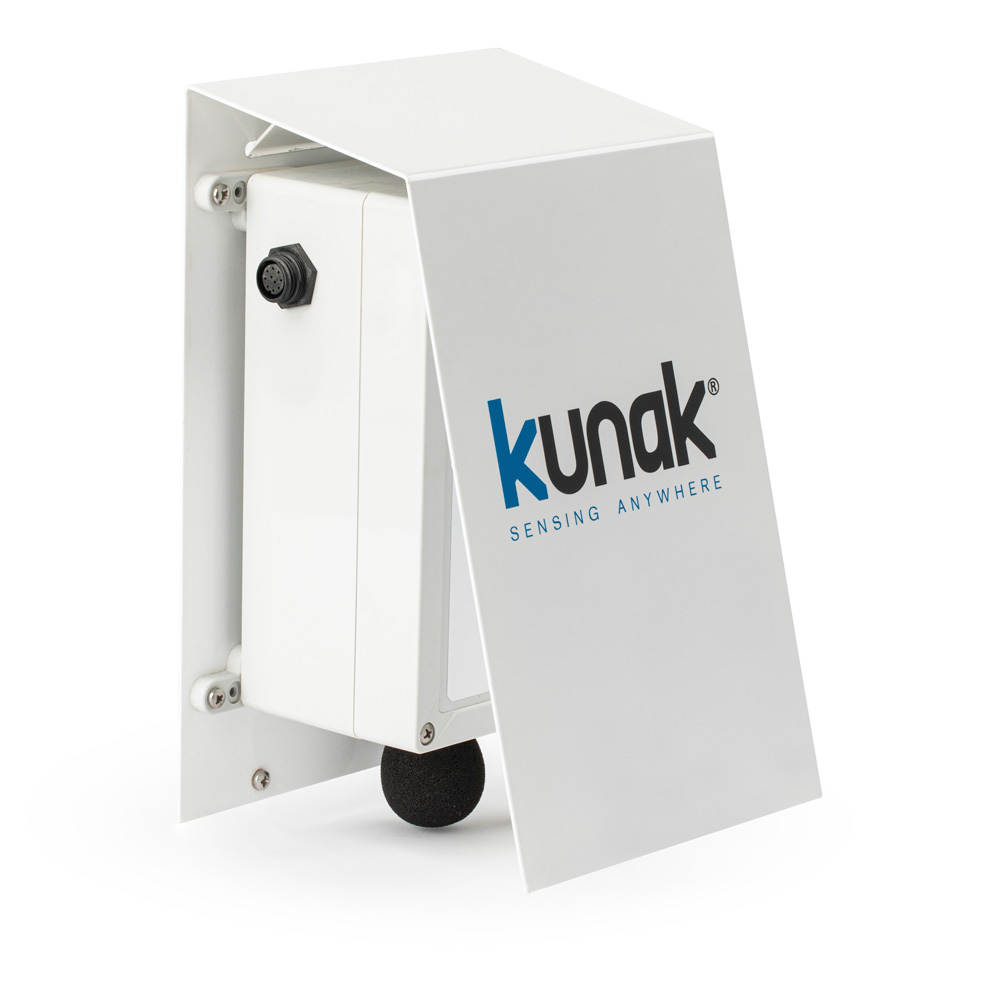
Sound level meter
| Measuring range | 40-130 dB(A) 20 - 12,500 Hz |
|---|---|
| Operating temperature | -10 to 50 ºC |
| Weight | 2.5 kg |
| Resolution | 0.1 dB |
| Typical accuracy | ±1 dB(A) |
| Dimensions | 191 x 296 x 168 mm |
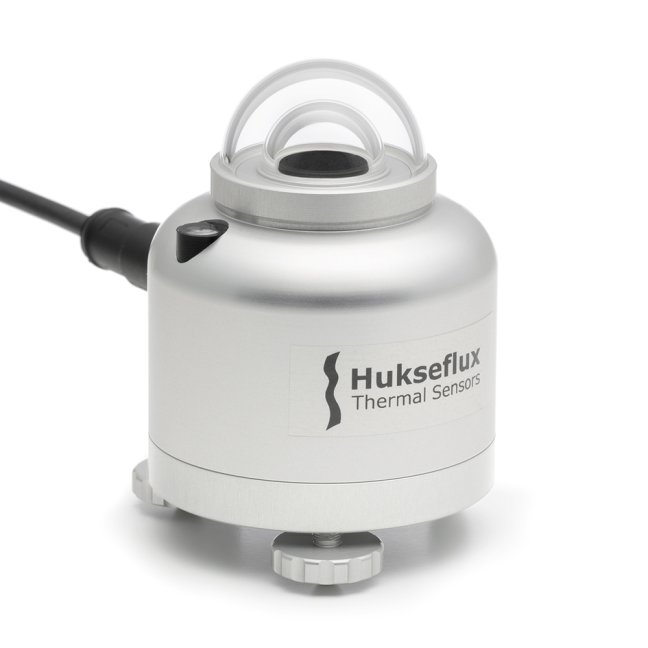
Pyranometer
| Range | 0 to 1600 W/m² 285 to 3000 nm |
|---|---|
| Typical accuracy | ± 0.2 W/m² |
| Weight | 0.5 kg |
| Resolution | 0.2 W/m² |
| Operating temperature | -40 to 80 ºC |
| Dimensions | Ø56 x 70 mm |
| Protocol | Modbus RTU (RS-485) |

Radiation sensor
| Range | 0 to 200 W/m² 280 to 400 nm |
|---|---|
| Accuracy | ±5% rdg |
| Weight | 150 g |
| Response time | ≤1s |
| Operating temperature | -40 to 85 ºC |
| Dimensions | Ø64 x 33.5 mm |
| Protocol | Modbus RTU (RS-485) |
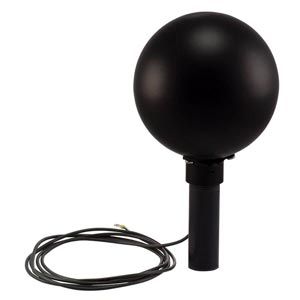
Wet Bulb Globe Thermometer (WBGT)
| Range | -40 to 80 ºC |
|---|---|
| Accuracy (0°C to 60°C) | ±0.2 ºC |
| Weight | 780 g |
| Resolution | 0.05 ºC |
| Operating temperature | -40 to 60 ºC |
| Dimensions | 15 x 15 x 25.9 cm |
| Protocol | Modbus RTU (RS-485) |

Gashood


Frequently asked questions
What area does each device cover?
Regarding coverage, it is important to understand that Kunak devices perform point measurements. There is no defined “coverage radius”, as they measure the concentration at the exact location where they are installed. The spatial representativeness of that measurement depends on multiple factors, such as terrain, nearby emission sources and meteorological conditions.
Are Kunak devices ATEX certified?
Kunak devices are designed for the perimetric monitoring of diffuse emissions or leak detection in areas not classified as ATEX.
They can be adapted to operate in explosive-risk environments, complying with ATEX Zone 1 requirements, provided the system is properly configured.
How often are the cartridges replaced and software renewed?
The lifespan of each cartridge depends on the sensor type and environmental conditions, typically ranging from 12 to 36 months. More details can be found in the catalogue.
Kunak Cloud services are renewed annually to maintain updated analysis, calibration, and data traceability.
Is the device portable or fixed?
Kunak devices can be installed on lamp posts, walls, masts, or tripods.
Thanks to their lightweight and modular design, they can be easily relocated by detaching the base and reattaching it elsewhere.
How often should the device be calibrated?
Sensors are factory-calibrated and supplied with an official calibration certificate.
To maintain accuracy, a remote calibration or adjustment is recommended every three months or after relocation or seasonal changes.
What calibration options are available?
Calibration can be performed through:
- co-location with a reference station,
- gas hood calibration with standard gas cylinders, or
- remote adjustment using historical data.
The method depends on the project requirements and available budget.
Can data be obtained locally (Modbus)?
Yes. All Kunak devices include Modbus RTU RSxx protocol, allowing local data transmission and reading without relying on internet connectivity.
How does the device communicate?
The system transmits data via cellular (4G/3G), Ethernet, Wi-Fi, or Modbus, adapting to the available network infrastructure at each site.
What is the battery life?
Devices include an internal backup battery providing between 3 and 30 days of autonomy, depending on the configuration and active sensors.
At what height should the device be installed?
Installation is recommended at a height of 3–4 metres above ground to ensure representative measurements and prevent interference or vandalism.
Does the device have internal memory?
Yes. It features high-speed internal memory capable of storing data for up to 15 days without an internet connection, ensuring data continuity.
Can meteorological probes be connected?
Yes. Kunak AIR Pro supports up to 6 meteorological probes, and Kunak AIR Lite up to 2, depending on the model.
This allows correlation between environmental variables and pollutant concentrations.
Can it be installed on a vehicle or drone for mobile monitoring?
Yes, provided the speed does not exceed 20 km/h. This ensures measurement stability and accurate environmental data capture.
Does this technology have certifications?
Sensor-based devices are not governed by a single certification.
Kunak continuously validates its devices in the field alongside independent bodies.
These tests ensure that the data complies with the European Air Quality Directive and US EPA standards.
Is the Kunak AIR Cloud platform mandatory?
Yes. Kunak AIR Cloud is essential for temperature and humidity compensation, remote maintenance, auto-diagnostics, baseline correction, data validation, and ensuring data traceability.
Can the devices be used indoors?
Yes. The devices can be used in industrial, agricultural, or logistics environments, providing accurate pollutant control even indoors.
What is the difference between the AIR Pro and AIR Lite particle sensors?
- Kunak AIR Pro: 24-channel, MCERTS-certified sensor that measures fine and coarse particles (PM1, PM2.5, PM10) with indicative measurement quality.
- Kunak AIR Lite: 5-channel, non-MCERTS sensor specialised in detecting fine particles.
How are the data integrated with third-party platforms?
Data can be automatically integrated via REST API, Modbus, or FTP, facilitating connection with external environmental or industrial management systems.
What is the difference between calibration and correction?
- Calibration adjusts the sensor’s response against a traceable reference (reference station or certified gas) to determine uncertainty.
- Correction modifies the sensor’s response without an external reference to reduce error or drift but doesn’t quantify uncertainty.
In summary, calibration uses an external reference, while correction is an internal adjustment to maintain sensor reliability. More information on page 35 of the catalogue.