Chlorine (Cl2) and chlorine dioxide (ClO2) are gases with a powerful oxidising capacity, which is why they are mainly used as disinfectants and bleaching agents. Chlorine has been used for more than a century in water purification and in the production of plastics, solvents and chemicals, while chlorine dioxide stands out for its effectiveness in destroying resistant microorganisms and its lower potential to generate halogenated by-products (chemical substances that increase the risk of cancer).
A recent chlorine dioxide release incident at a waste treatment plant in the United States, caused by an incorrect chemical discharge from a tanker truck, raised concerns about toxic fumes and prompted evacuations within a half-mile perimeter.
The release of these gases into the air is a known but still underestimated risk. Although both compounds are essential for disinfection and as agents in multiple industrial processes, their high reactivity can cause serious health and environmental effects if their presence in the air is not detected in time. Despite their widespread use, both compounds present high toxicity even at low concentrations, which requires rigorous monitoring of their presence in occupational and outdoor environments. For this reason, their continuous monitoring becomes an essential tool to anticipate incidents, ensure regulatory compliance and keep emissions under control.
Below we will look at their properties, main uses and environmental impact, the current regulations governing them and the exposure limits for occupational safety. Finally, we identify the main industrial sectors where these gases originate and how their continuous environmental monitoring, such as that provided by Kunak solutions, enables real-time detection, providing accuracy, traceability and full confidence in sound environmental management.

In the paper industry, chlorine is mainly used for bleaching pulp, nowadays almost always in the form of chlorine dioxide and increasingly less as elemental chlorine, due to its environmental impact.
What are chlorine and chlorine dioxide
Cl2 and ClO2 are gases with strong oxidising properties that make them essential chemicals used in industry and water treatment. However, due to their high toxicity and reactivity, a precise understanding of their properties is required to manage the potential health and environmental risks of their use. Below we explore their chemical characteristics, key applications and the environmental and health hazards associated with their handling.
Chlorine (Cl2): an essential disinfectant and highly toxic gas
Chlorine is a gas with the following characteristics:
- Appearance: yellowish-green colour.
- Properties: highly reactive and toxic.
- Origin: easily released as a gas during industrial processes.
- Uses: disinfection of drinking and wastewater, as well as in the manufacture of plastics such as PVC, bleached paper, textiles and various chemicals.
- Emissions: chemical plants and wastewater treatment facilities.
- Risks: accidental emissions or leaks cause chlorine contamination that affects the respiratory system, causing irritation, pulmonary oedema and even severe effects in acute exposures. Environmentally, it contributes to the formation of toxic by-products in water and acidifies soils and water bodies through reactions with organic matter.
Chlorine dioxide (ClO2): a useful but hazardous oxidant
Gaseous chlorine dioxide in air has the following characteristics:
Air Quality Innovation in Just 1 Click
Stay informed about the air you breathe!
Subscribe to our newsletter to receive the latest updates on environmental monitoring technology, air quality studies, and more.
- Appearance: greenish-yellow.
- Properties: unstable and corrosive.
- Origin: generated in situ at wastewater treatment plants.
- Uses: valued as a disinfectant superior to chlorine due to its ability to eliminate resistant microorganisms without generating as many halogenated by-products. It is also commonly used in pulp bleaching and industrial disinfection.
- Emissions: water treatment plants.
- Risks: its volatility poses high health and environmental risks on-site due to its proven acute toxicity even at low concentrations, causing irritation of the eyes, nose, mucous membranes and lungs.
| Characteristic | Chlorine (Cl2) | Chlorine dioxide (ClO2) |
|---|---|---|
| Appearance | Yellowish-green gas. | Greenish-yellow or reddish-yellow gas. |
| Key properties | Highly reactive, toxic, forms halogenated by-products. | Unstable, corrosive, 2.5× stronger oxidising power, lower halogenated by-product formation. |
| Main uses | Water disinfection, PVC, paper, textiles. | Water disinfection, pulp bleaching, on-site generation. |
| Water solubility | Moderate. | ~10 times higher, ~3 g/L at 25 °C. |
| Toxic effects | Respiratory irritation, pulmonary oedema. | Eye, mucous and pulmonary irritation at low concentrations. |
| Exposure limits | TLV-TWA ~0.5 ppm. | TLV-TWA 0.1 ppm (ACGIH), REL 0.1 ppm (NIOSH). |
| Environmental risks | Gaseous contamination, potentially carcinogenic trihalomethanes. | Explosive >10–30% in air, lower halogenated by-product generation. |
Industrial sectors generating Cl2 and ClO2 emissions
The toxic gases chlorine and chlorine dioxide are commonly used in several industrial sectors. Their advantage lies mainly in their strong disinfectant and oxidising properties. However, their use carries emission risks that must be properly managed to protect occupational and environmental health. Each industry presents particularities in emission sources and monitoring requirements.
Water treatment and purification plants
Chlorine and chlorine dioxide are essential disinfectants in water treatment and purification plants, eliminating pathogenic microorganisms to ensure safe water supply. The dosing and storage rooms for these gases are the most critical areas of such facilities due to the risk of leaks or accidental releases, which can lead to serious toxic exposure for workers. The installation of continuous detection sensors allows for the rapid identification of elevated concentrations, improving occupational safety and preventing negative environmental impacts caused by accidental emissions.
Pulp and textile industry
In the pulp and textile industries, chlorine dioxide is widely used in bleaching processes due to its effectiveness and lower production of harmful by-products compared with traditional chlorine. However, these processes can generate diffuse emissions of this gas that may accumulate without proper ventilation. Continuous monitoring of these emissions is essential to prevent chronic inhalation risks among workers and control environmental dispersion, while ensuring compliance with occupational and environmental safety regulations.
Chemical and pharmaceutical industry
The production and use of chlorine in the chemical and pharmaceutical industries involves the generation of residual gases containing Cl2, especially in synthesis and cleaning processes. These toxic compounds require strict emission control to reduce environmental impact and ensure regulatory compliance. Through advanced monitoring systems located at emission sources, deviations are detected, corrective actions are activated, and both occupational and environmental safety are ensured.

In the textile industry, chlorine is mainly used as a bleaching and disinfecting agent.
Environmental and regulatory risks associated with Cl2 and ClO2
The presence of chlorine or chlorine dioxide in industrial and urban environments poses major challenges for human health and environmental protection. Although these gases have valuable disinfection applications, their use entails complex toxic effects that require strict regulation and, above all, continuous monitoring to prevent accidents and harmful exposure.
Approximately 5% of water treatment plants serving more than 100,000 people in the United States use chlorine dioxide to treat drinking water. This means that about 12 million people could be exposed to chlorine dioxide and chlorite ions in the United States. However, the total number of exposed individuals is likely higher if smaller plants (i.e., those serving fewer than 50,000 people) are also included in this estimate. Agency for Toxic Substances and Disease Registry (US), 2004.
Impacts on air qualityAir quality refers to the state of the air we breathe and its composition in terms of pollutants present in the atmosphere. It is considered good when poll...
Read more and human health
Both chlorine and chlorine dioxide are irritant gases that can cause acute or chronic toxicity. Inhalation of these chemical compounds may lead to effects ranging from eye and respiratory irritation to severe pulmonary damage, systemic effects, and even death in cases of high exposure. In addition, in the presence of nitrogen compounds and other reactive agents in the air, chlorine can react to form chloramines and chlorates—also toxic substances that exacerbate atmospheric pollution.
An example of the risks associated with handling gaseous chlorine occurred in July 2021 at the municipal swimming pool of Luna (Zaragoza, Spain), where an explosion during chlorine handling (caused by accidental mixing with hydrochloric acid) released a toxic chlorine gas cloud. The incident resulted in the death of one worker, serious respiratory injuries to another, and medical attention for more than 20 users due to throat and eye irritation. Around 60 people were evacuated, and deficiencies were found in the identification of the chemical storage tanks involved.
Given the wide range of industrial uses of these gases and their high toxicity in the air, the implementation of environmental monitoring systems is essential to detect their presence and enable immediate response.
Legal limits and occupational exposure
To protect workers and communities near industrial facilities where chlorine and chlorine dioxide are used, there are occupational exposure limits set by entities such as OSHA (chlorine and chlorine dioxide), the EPA, the WHO, and the EU-OSHA.
For chlorine, the permissible exposure limit is 0.5 ppm as a time-weighted average (TWA) and 1 ppm for short-term exposure (STEL). For chlorine dioxide, the limit is stricter, with a 0.1 ppm TWA limit.
Compliance with these exposure limits requires the implementation of safety systems, operational protocols and continuous monitoring in risk areas to ensure a safe working environment and regulatory compliance. Real-time mandatory monitoring is particularly crucial for early detection to prevent hazardous exposures.
Altogether, these measures address the serious risks posed by exposure to gaseous chlorine or the toxicity of chlorine dioxide, ensuring a balance between their essential industrial use and the protection of both human health and the environment.
| Organisation | Chlorine (Cl2) in occupational air | Chlorine dioxide (ClO2) in occupational air | Cl2/ClO2 in drinking water (MRDL) |
|---|---|---|---|
| OSHA | PEL: 0.5 ppm TWA; 1.0 ppm STEL | PEL: 0.1 ppm TWA; 0.3 ppm STEL | – |
| EPA | – | – | Cl2: 4.0 mg/L; ClO2: 0.8 mg/L |
| WHO | General guidelines: 0.5 ppm TWA (reference) | General guidelines: 0.1 ppm TWA | Cl2: 5 mg/L; ClO2: 0.4 mg/L (provisional) |
| EU-OSHA | IOELV: 0.15 ppm TWA; 0.5 ppm STEL | 0.1 ppm TWA; 0.3 ppm STEL (Directive 2000/39/EC) | – |
Environmental monitoring technologies for chlorine and chlorine dioxide
Environmental monitoring of chlorine and chlorine dioxide has evolved significantly thanks to advanced technologies that enable precise and continuous detection of these toxic gases in industrial and inhabited environments. The main advantage of these solutions is that they outperform traditional methods by providing real-time responses that integrate with control systems and support efficient regulatory compliance.
Electrochemical and photometric sensors
Sensors used for detecting oxidising gases such as Cl2 and ClO2 are mainly based on electrochemical and photometric technologies. Electrochemical sensors work by reacting the contaminant gas with specific electrodes, generating an electrical current proportional to the gas concentration present. Meanwhile, photometric sensors detect the absorption or interaction of the gas with ultraviolet or visible light at specific wavelengths, allowing for accurate and selective measurement.
Both technologies provide notable advantages over traditional sampling methods, such as reduced response time, real-time detection, and higher precision in industrial environments where toxic gas concentrations can fluctuate rapidly. Furthermore, electrochemical and photometric sensors help reduce bulky equipment and laboratory analysis costs, enabling easy integration into environmental control systems.
Continuous monitoring systems
In industrial plants where the risk of exposure to chlorine and chlorine dioxide is high, the deployment of networks equipped with Cl2 and ClO2 sensors for continuous monitoring is essential. These systems collect real-time data that integrates with automated alarms and SCADA (Supervisory Control and Data Acquisition) platforms, enabling an immediate response to leaks or dangerous increases in toxic gas concentrations.
Technological advancements have enabled integration with IoT solutions, where information on air quality and the levels of harmful gases present in the atmosphere can be viewed, analysed and managed remotely from mobile devices or computers. This enhances preventive capability and environmental control through early alerts that protect both workers and the environment.
Kunak solutions for Cl2 and ClO2 control
Advanced solutions for environmental monitoring of corrosive and toxic gases, such as those offered by the Kunak AIR Pro, are designed to measure with high precision and continuity gases like chlorine and chlorine dioxide, even under adverse conditions and in the presence of chemical interferences common in industrial processes.
Similarly, the Kunak Cloud platform enables comprehensive analysis, custom alerts, and real-time visualisation of data collected by the sensors, accessible from any location. These solutions are applicable to wastewater treatment plants (WWTPs), chemical industries, pulp and paper facilities, and the food sector, ensuring effective environmental control and compliance with sector-specific regulations.
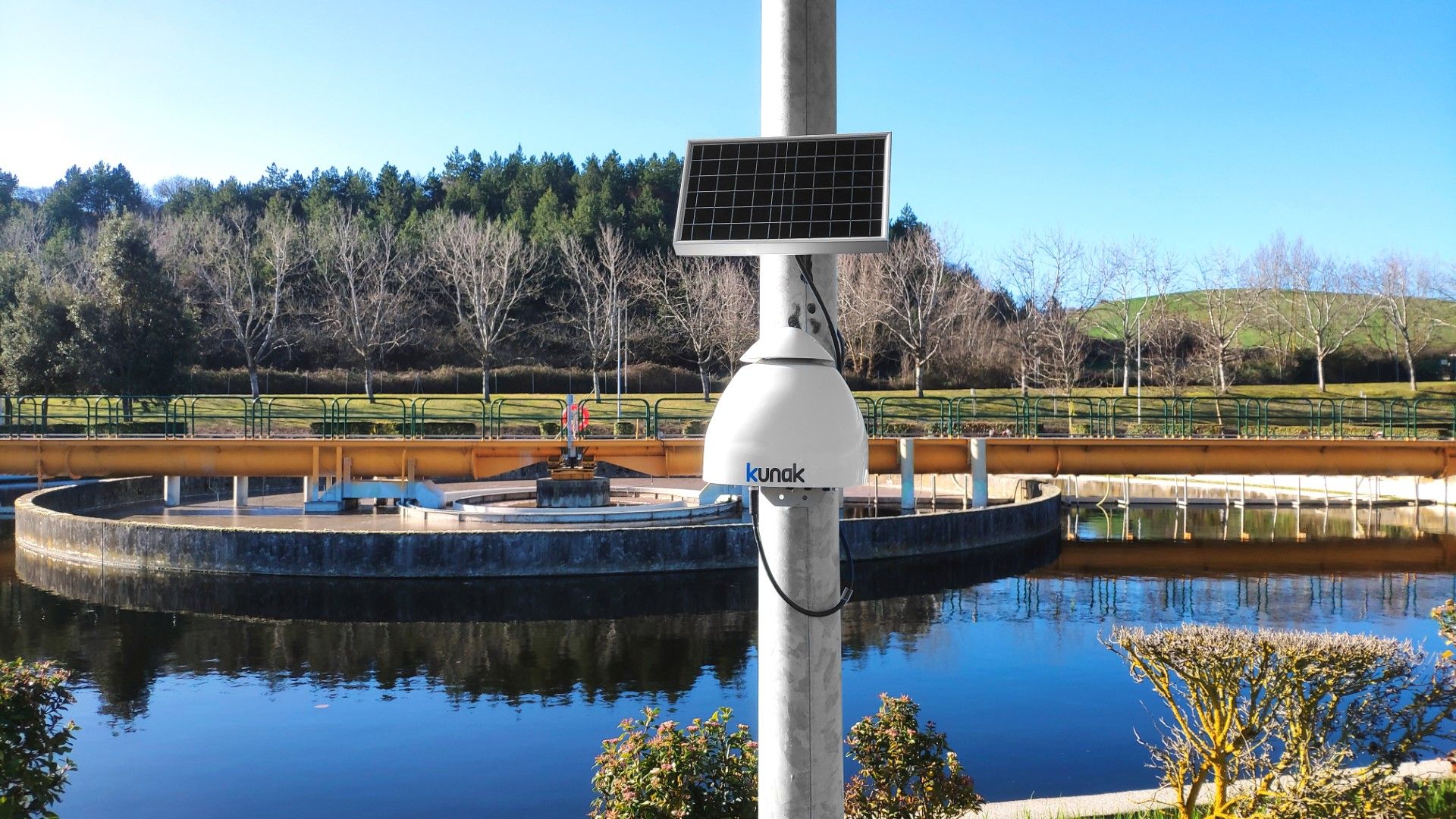
Kunak environmental monitoring of emissions at a wastewater treatment plant.
Benefits of environmental monitoring of Cl2 and ClO2
Environmental monitoring of chlorine and chlorine dioxide is a key factor in the comprehensive management of safety and the environment within industry. A continuous monitoring system has made it possible to shift from a reactive strategy—responding to incidents—to the development of a preventive approach supported by objective and traceable data. This facilitates decision-making, compliance with audits, and promotes sustainability in the industrial sphere.
The most evident advantage of monitoring these toxic gases is the prevention of leaks and occupational accidents. The early detection of abnormal concentration increases activates both local and remote alarms, allowing time to evacuate, ventilate or isolate equipment and personnel before the situation escalates into a serious environmental toxicity event and public health hazard. This leads to a reduction of risk for operators, equipment and industrial process continuity, especially in dosing rooms, storage areas and reaction lines where Cl2 and ClO2 are present.
From a regulatory compliance perspective, continuous monitoring facilitates the implementation and maintenance of management systems such as ISO 45001 (occupational health and safety) and ISO 14001 (environmental management). Automatic records of concentrations, alarms and corrective actions provide clear evidence during inspections, certification audits and environmental licence renewals, demonstrating effective control of emission sources and occupational exposure.
Regarding emission control, continuous data collection helps demonstrate that facilities comply with legal emission and immission limits established in integrated environmental permits and sectoral regulations. This is especially relevant in industries where chlorine is part of identified emission sources—either channelled or diffuse—where any deviation can result in penalties or operational restrictions.
Protection of workers and nearby communities is strengthened by integrating monitoring into internal and external emergency plans. Cl2 and ClO2 data can be linked to staged response protocols (pre-alert, alert, evacuation), to forced ventilation systems and to communication with authorities when necessary. In this way, monitoring ceases to be an isolated tool and becomes an active component of the risk management system for technological hazards.
Finally, the traceable and auditable data generated by these systems represent a valuable asset for industrial ESG strategies: they enable reporting of process safety indicators, emissions avoided, events prevented and actual exposure levels. This information supports transparency commitments, strengthens trust among clients and regulators, and positions the company as a responsible actor in environmental health and human protection.
Chlorine is essential for drinking water disinfection.
Frequently Asked Questions (FAQs) about Cl2, ClO2 and their monitoring
What is the difference between chlorine and chlorine dioxide?
- Chlorine is a highly reactive elemental gas mainly used in water purification and the production of chemical compounds. Its oxidising action makes it a powerful disinfectant, although its handling requires strict safety measures due to its toxicity and corrosive nature.
- Chlorine dioxide, on the other hand, is a more unstable chemical compound that must be generated on-site due to storage difficulties. It is used as a disinfectant for drinking water, industrial systems and surfaces, since it provides strong biocidal action even at low concentrations. Despite its advantages, it is also toxic and a strong oxidant, which is why its use is regulated and limited to specialised technical environments.
Why is it important to monitor these gases in the air?
Monitoring gases such as chlorine and chlorine dioxide is an essential environmental commitment due to their high gaseous toxicity even at very low concentrations. Accidental exposure can cause acute effects on respiratory and ocular health, as well as serious environmental risks. Therefore, detection systems such as environmental monitoring help identify leaks or accumulations before they reach dangerous levels in the air.
In industrial environments and water treatment plants, continuous surveillance of these compounds is a critical occupational safety measure. It ensures worker protection, prevents major incidents and guarantees compliance with occupational health and safety standards. In short, monitoring these gases is a preventive practice that reduces risk and keeps industrial operations under control.
What sensors are used to detect Cl2 and ClO2?
The detection of chlorine and chlorine dioxide in air is carried out using high-sensitivity electrochemical sensors capable of identifying very low concentrations of these gases through controlled chemical reactions. These sensors convert the interaction of the gas with an electrolyte into an electrical signal proportional to the concentration present, allowing for accurate and continuous monitoring.
In professional applications, electrochemical sensors are integrated into advanced monitoring stations such as Kunak AIR Pro, offering periodic and remote calibration, digital platform connectivity and real-time data transmission. This approach ensures reliable surveillance, simplifies remote management and enables compliance with required occupational and environmental safety standards.
In which industries is Cl2 and ClO2 control most relevant?
The control of chlorine and chlorine dioxide is critical in chemical plants, where these gases are used as raw materials or reaction agents, and in wastewater and drinking water treatment facilities, where they act as disinfectants to ensure water quality. Monitoring in these environments prevents leaks and ensures compliance with environmental and occupational safety regulations.
Environmental control is also essential in paper mills, where chlorine dioxide is used as a bleaching agent in production processes, and in other industrial sectors such as textiles, which rely on these compounds as disinfectants or oxidising agents. In all cases, continuous monitoring provided by environmental systems protects workers’ health and prevents environmental incidents associated with their high gaseous toxicity.
What advantages does continuous monitoring offer compared to spot measurements of Cl2 and ClO2?
Continuous monitoring of gases such as Cl2 and ClO2 provides real-time alerts, enabling immediate action in the event of leaks or hazardous concentrations in the air. This approach reduces the risk of incidents and enhances safety in industrial environments and water treatment plants.
It also enables predictive analysis, since historical and real-time data can be combined to anticipate trends and optimise processes. Unlike spot measurements, continuous monitoring ensures constant compliance with exposure limits, guaranteeing worker protection and adherence to current regulations.

In the textile industry, sodium hypochlorite (a widely used chlorine-based bleaching agent) is used to destroy the natural chromophores of cellulose and achieve a higher whiteness before dyeing or finishing.
Towards safer and more sustainable control of chlorine and chlorine dioxide
Environmental monitoring of chlorine (Cl2) and chlorine dioxide (ClO2) is essential to balance the indispensable industrial utility of these gases with the need to protect public health and the environment. As oxidising gases, they play a critical role in disinfection and numerous production processes, but they also represent a persistent challenge due to their acute toxicity once released into the air, the carcinogenic potential of their by-products, and the frequency of incidents occurring in water treatment plants, chemical industries and paper mills, where accidental leaks continue to cause fatalities and local environmental damage.
The use of advanced technologies such as those developed by Kunak allows the detection of these gaseous pollutants in real time with analytical precision, while simultaneously enabling trend analysis, preventive responses and the generation of auditable data that support regulatory compliance and corporate ESG strategies. This represents the path to transforming an inherent industrial risk into an opportunity to optimise processes, reduce emissions and anticipate deviations before a major incident occurs.
In an industrial context focused on sustainability and digitalisation, continuous monitoring systems become strategic allies of responsible management: they protect workers and communities, facilitate environmental permitting and position companies as leaders in technological risk control, contributing to a real and lasting balance between productivity and environmental preservation.
 Odour monitoring in WWTP: how to improve air quality and reduce gas emissions
 Air quality on islands: an invisible challenge for paradise
 Environmental corrosion: causes, factors, and how to prevent it with air quality sensors
 Biomethane and biogas: production, uses and environmental monitoring
 Sargassum: environmental issues and impact monitoring