Case Study

Air quality monitoring in the largest data center corridor in the US

Virginia Department of Environmental Quality (DEQ)
Sector:

Need

The rapid expansion of data centers has raised a question that public authorities in northern Virginia could not leave unanswered: what real impact do these facilities have on the air quality of surrounding communities?

The Virginia Department of Environmental Quality (DEQ) received funding from the U.S. Environmental Protection Agency (EPA) to design an environmental monitoring project specifically targeting this sector. The starting point was community concern over emissions from backup generators and natural gas turbines operating at these complexes, many of which concentrate dozens of facilities within a small geographic area.

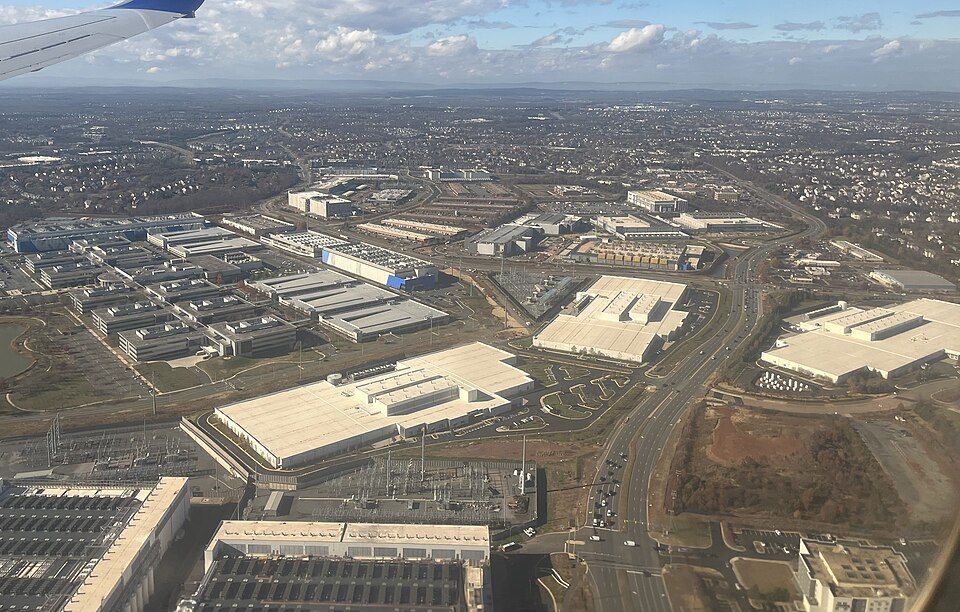
Loudoun and Prince William counties, in northern Virginia, host one of the highest concentrations of data centers in the world. The Loudoun corridor alone, known as “data center alley,” has such a density of installations that the DEQ identified it as the first priority study area.

The objective went beyond meeting National Ambient Air Quality Standards (NAAQS) requirements. The DEQ needed its own continuous, technically sound data to determine whether existing permanent monitoring networks were sufficient or whether the new industrial context required expanding them.

The question was specific: are communities exposed to elevated concentrations of CO, NO2, or PM2.5 from data center activity?

The DEQ followed a phased approach: first deploying Kunak AIR sensors to identify hotspots, and using reference stations only where further analysis was required.

Answering it required a sensor network capable of covering a large territory across multiple sites, generating near-real-time data and enabling geospatial correlation of results.

The challenge: designing a flexible network for an unprecedented sector

Data centers are not a conventional emissions source. They have no stacks with known flow rates, nor continuous industrial processes that are easy to characterize. Their relevant emissions come primarily from diesel backup generators during periodic tests and power outages, and from natural gas turbines at larger facilities. This makes them intermittent sources that are difficult to attribute and highly variable over time.

The technical challenge was twofold. On one hand, sensors had to be installable in diverse locations, from industrial zones to residential areas, with and without access to grid power. On the other, data had to be comparable across sites and verifiable against the DEQ’s reference network for the results to carry regulatory weight.

The project also had an accountability dimension. Citizens had raised concerns and the agency needed objective data to communicate with rigor, not with estimates.
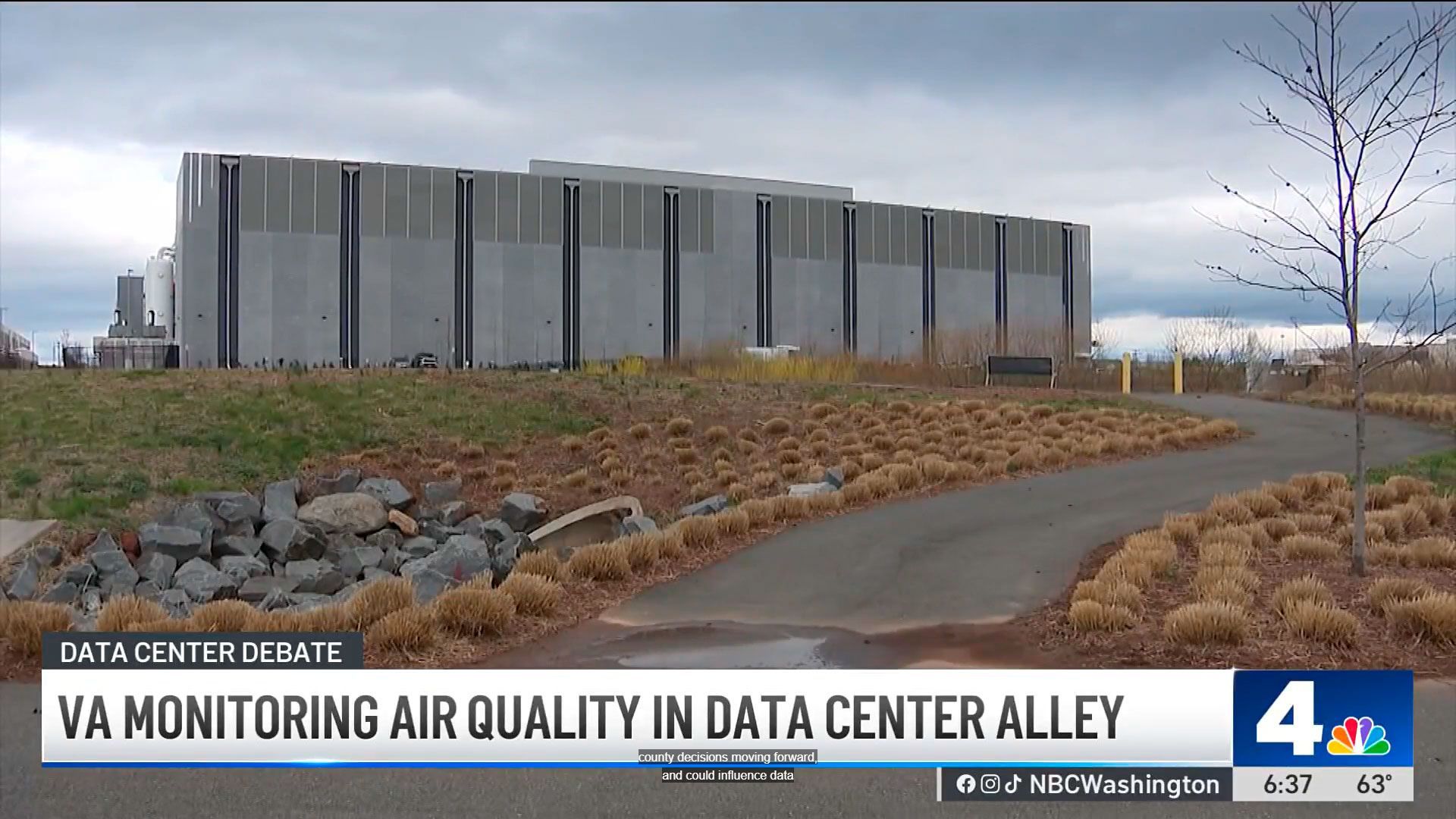
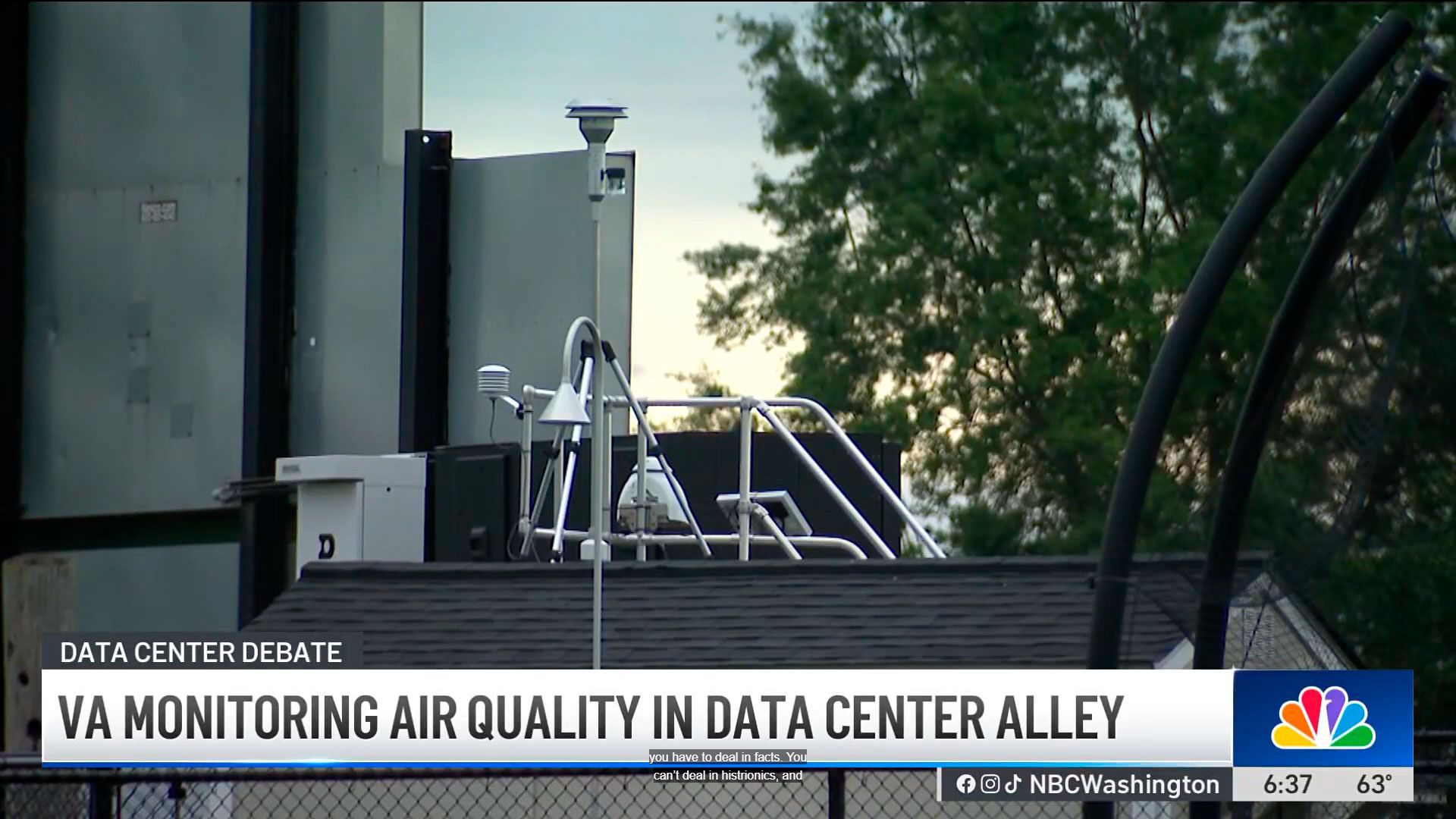
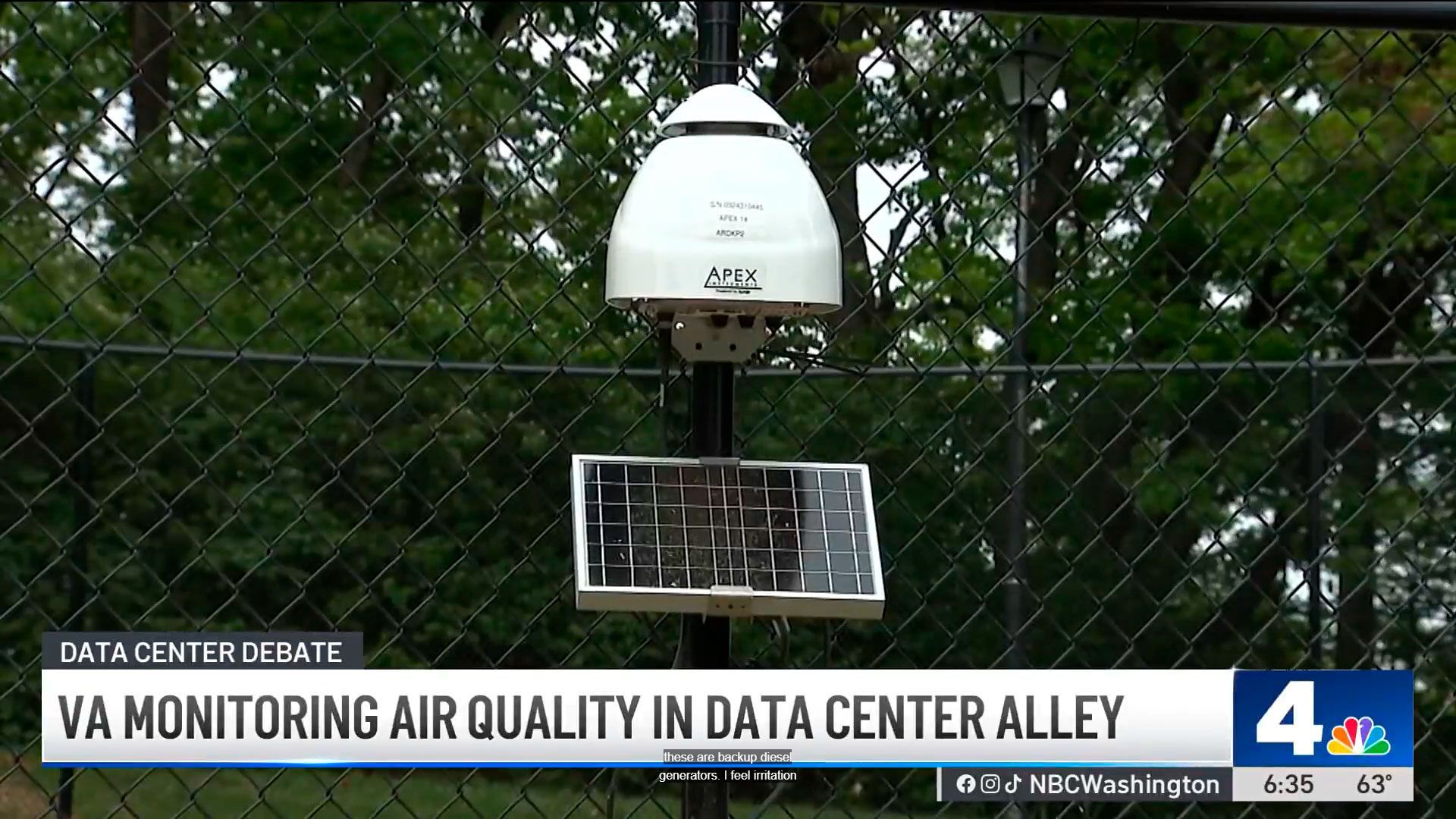
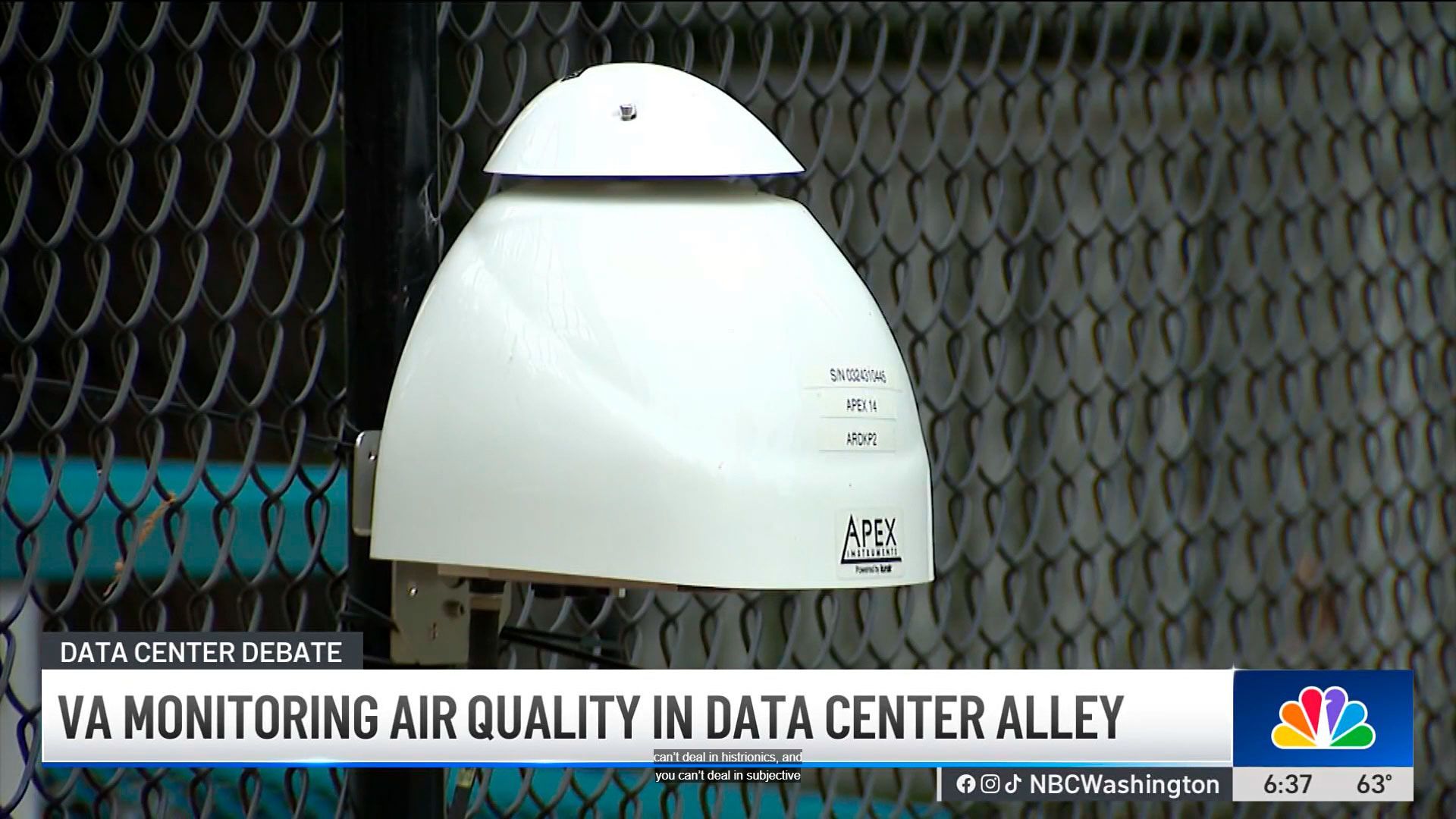
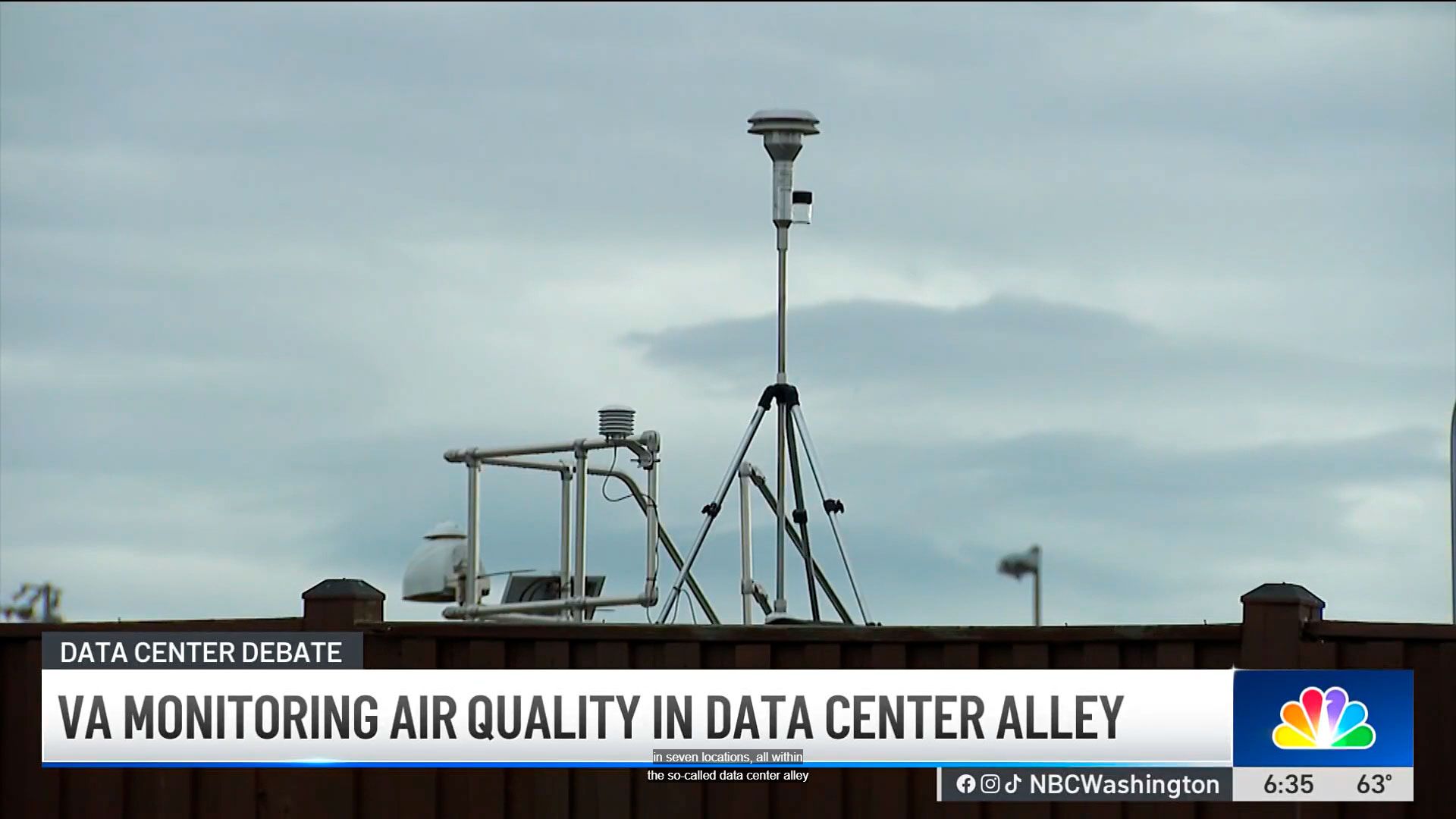
Virginia's DEQ monitors air quality in near-real time across one of the world's largest data center corridors with a network of seven deployed sensors, providing location-specific evidence to decide where and how to act.
Monitorización de la calidad del aire en el corredor de centros de datos de Virginia - KunakMonitorización de la calidad del aire en el corredor de centros de datos de Virginia - KunakMonitorización de la calidad del aire en el corredor de centros de datos de Virginia - KunakMonitorización de la calidad del aire en el corredor de centros de datos de Virginia - KunakMonitorización de la calidad del aire en el corredor de centros de datos de Virginia - KunakMonitorización de la calidad del aire en el corredor de centros de datos de Virginia - KunakMonitorización de la calidad del aire en el corredor de centros de datos de Virginia - KunakMonitorización de la calidad del aire en el corredor de centros de datos de Virginia - KunakMonitorización de la calidad del aire en el corredor de centros de datos de Virginia - KunakMonitorización de la calidad del aire en el corredor de centros de datos de Virginia - KunakMonitorización de la calidad del aire en el corredor de centros de datos de Virginia - Kunak

Solution

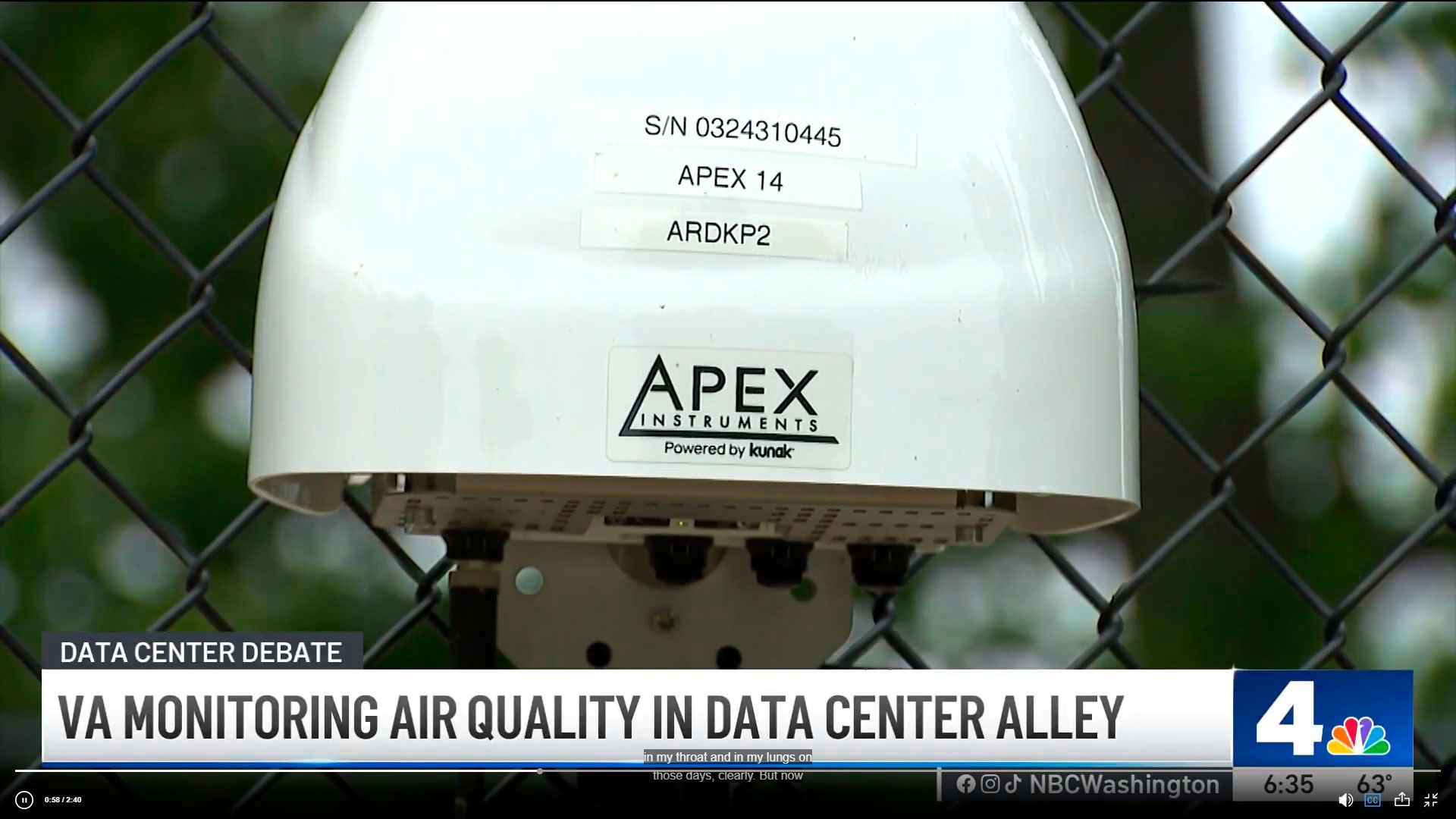
The DEQ selected the Kunak AIR Pro as the reference-grade sensor for phases 1 and 2 of the project, procured through an EPA distribution program.

The U.S. EPA selected the Kunak AIR Pro as the reference instrument for a regulatory program.

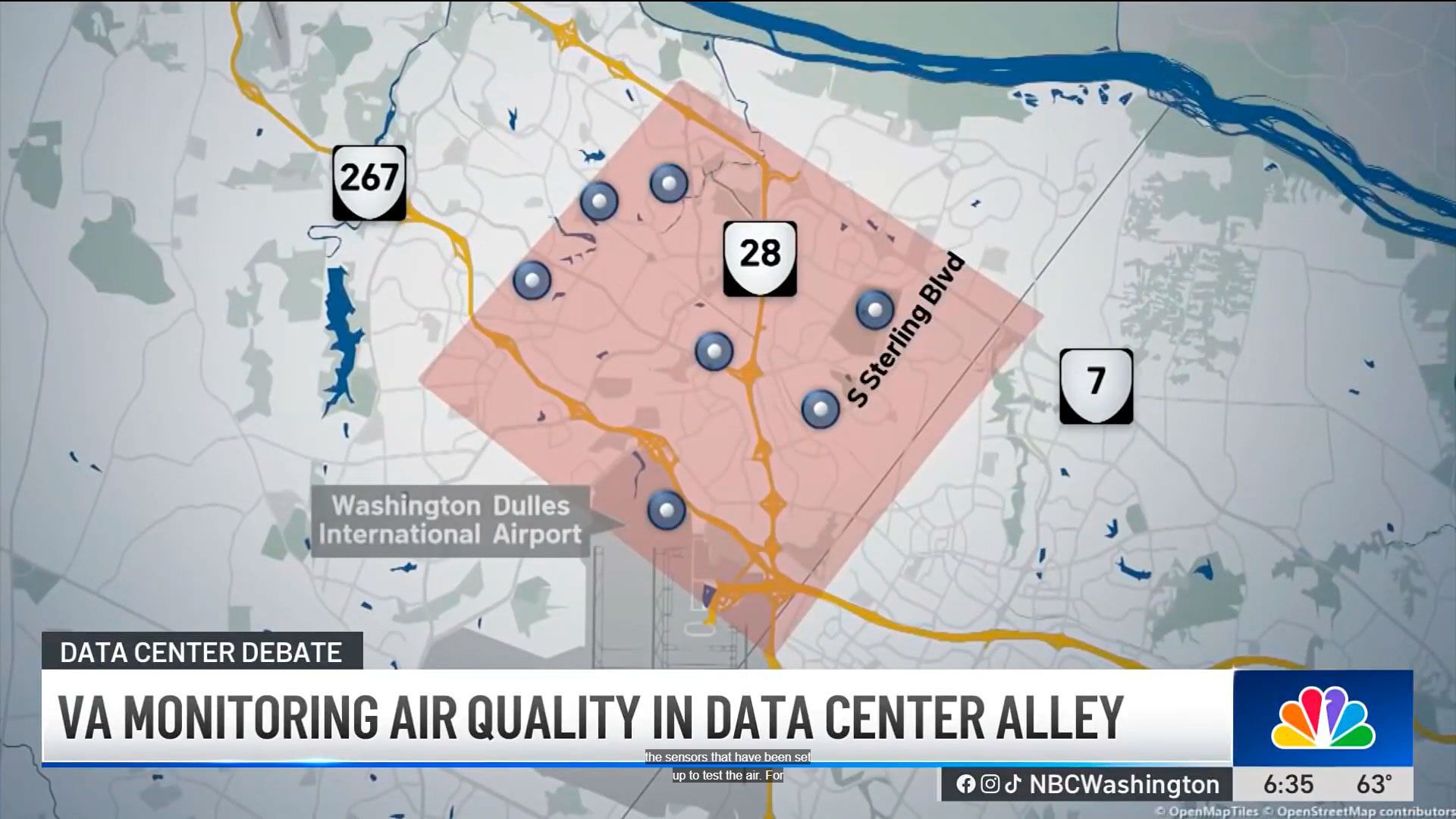
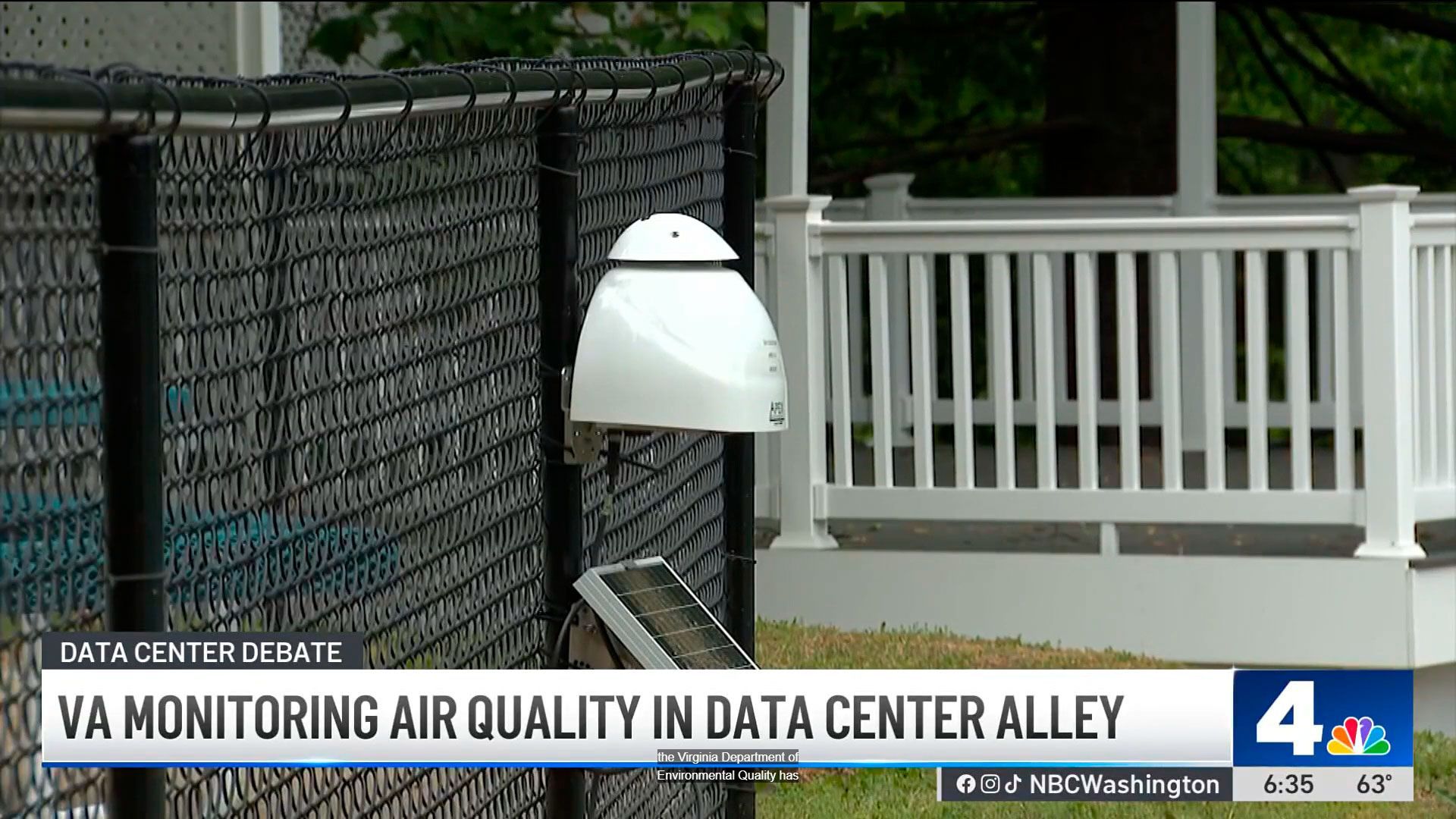
A total of seven units were deployed in Loudoun County in February 2026. Following a seven-day calibration period, data collection began in March 2026.

The DEQ identified 22 potential deployment locations in Loudoun County, selected to cover residential, industrial, and mixed-use areas and to represent downwind, upwind, and interior positions within the study zone. This distribution strategy makes it possible to detect not only the presence of pollutants but also their likely direction of origin, providing full spatial coverage of the area.

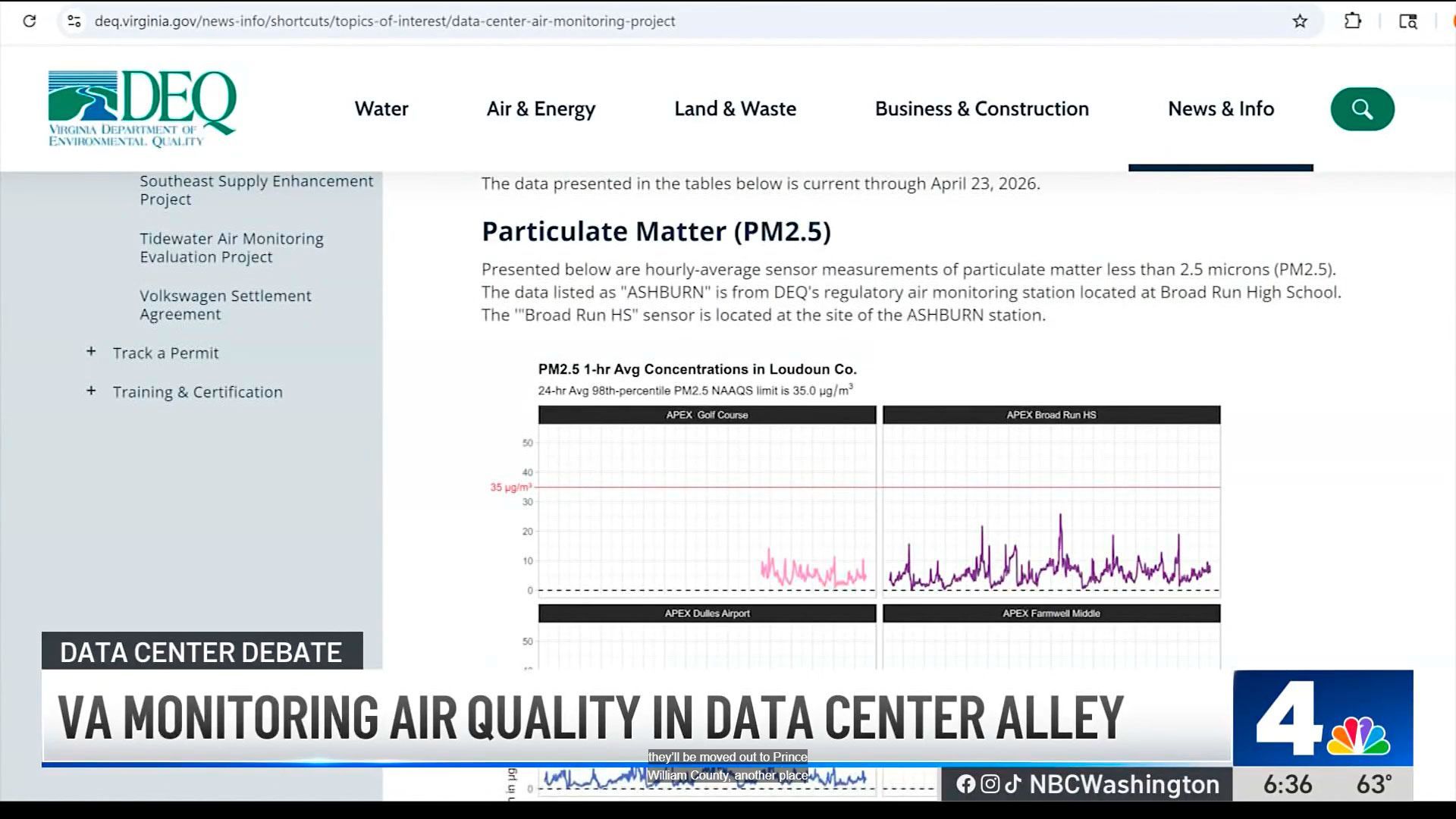
One sensor was co-located with the DEQ reference station in Ashburn (Broad Run High School), enabling direct comparison of sensor data against a regulatory reference instrument. Another was placed near Dulles International Airport to cross-reference readings with the facility’s meteorological data and improve episode attribution.

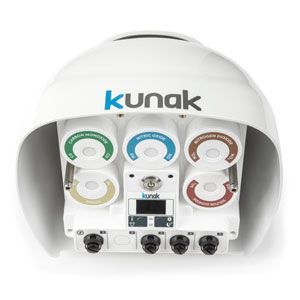
The Kunak AIR Pro measures simultaneously:

  • PM2.5 (fine particles smaller than 2.5 micrometers in diameter), with a NAAQS limit of 35.0 µg/m3 as a 24-hour average (98th percentile)
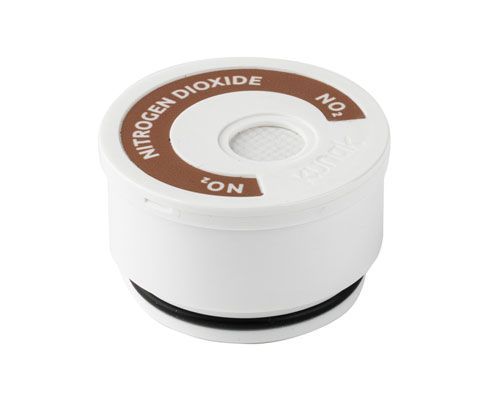
  • NO2 (nitrogen dioxide), with a NAAQS limit of 100 ppb as an hourly average (annual 98th percentile)
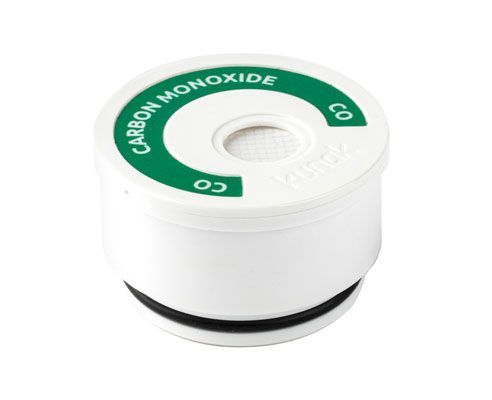
  • CO (carbon monoxide), with a NAAQS limit of 35 ppm as an hourly average

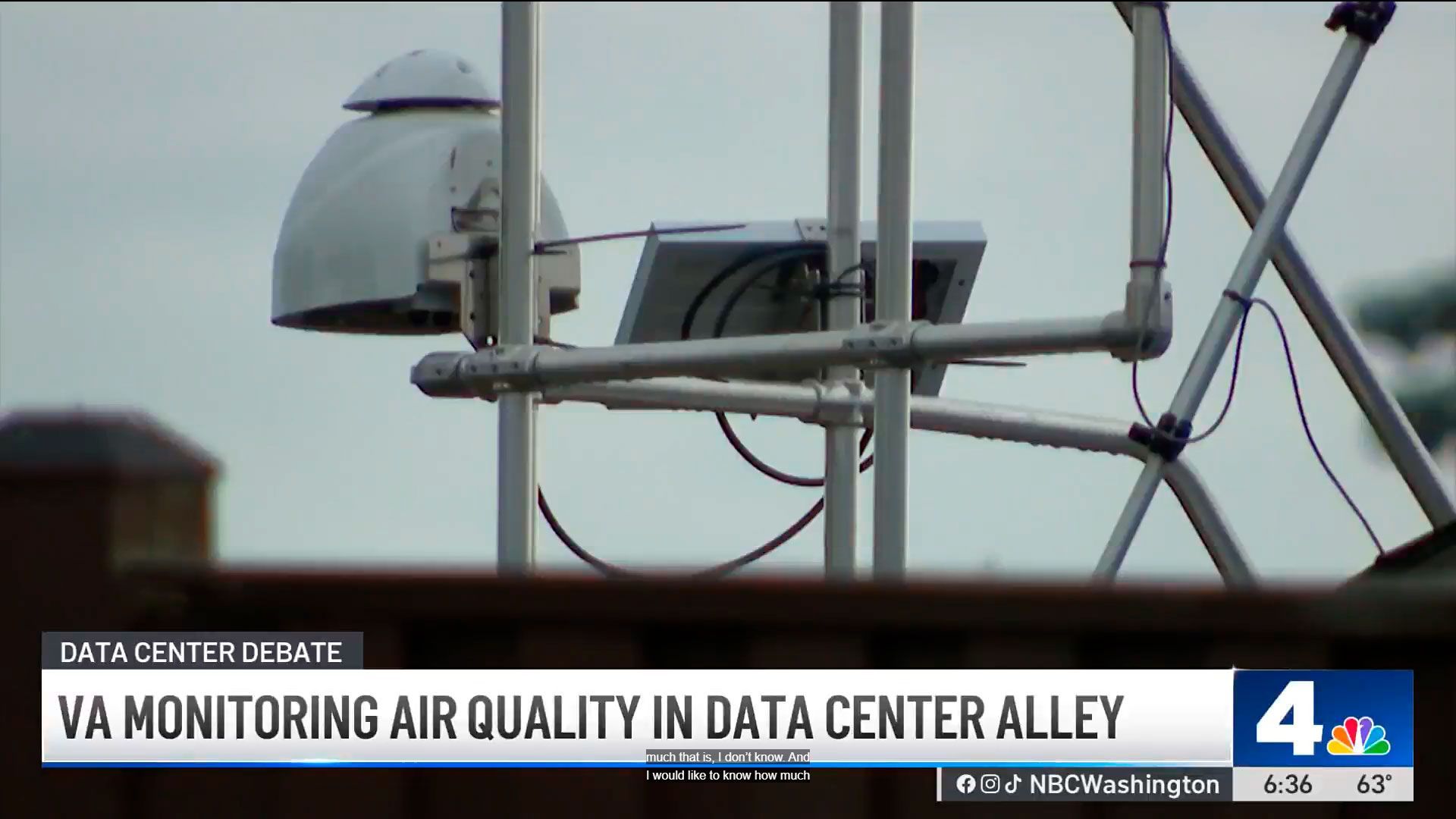
Its interchangeable cartridge system allows the multi-pollutant configuration to be adapted without modifying the base unit. The option to add a solar panel simplifies installation at sites without grid power access, a particularly useful feature in a project with 22 potential measurement points across mixed-use areas.

Data is transmitted in near-real time, allowing the DEQ to publish periodic updates and maintain continuous monitoring without requiring frequent site visits to each measurement point.

The DEQ is also developing a public platform that will provide near-real-time access to readings from each sensor deployed in the study area. While that system is being finalized, the agency publishes data as static charts with periodic updates. This commitment to active transparency, uncommon in regulatory monitoring projects, turns the network into a public communication tool as well as a technical instrument: any citizen, researcher, or public authority will be able to track PM2.5, NO2, and CO readings at each measurement point without requesting data access.

Results

Based on data available through May 2026, PM2.5, NO2, and CO readings across all measurement points in Loudoun County remain clearly below NAAQS limits. Hourly NO2 concentrations have not exceeded 35 ppb at any of the seven sensors, against the 100 ppb limit. CO values have stayed below 2.6 ppm at all points, well under the 35 ppm threshold. PM2.5 readings have not exceeded the 35.0 µg/m3 reference limit at any point.

The sensor co-located with the ASHBURN station allows the DEQ to validate the consistency of Kunak AIR Pro data against its own regulatory network, a key step for the project’s results to hold up to technical scrutiny.

The network has also produced a location-specific historical record that the DEQ can use to assess whether any sites show systematically higher concentrations and therefore justify deploying a permanent reference station in later phases.

Next phases

After completing phase 1 in Loudoun County, the Kunak AIR Pro sensors will be relocated to Prince William County (phase 2), scheduled for June 2026. As in the first phase, sensors will be repositioned twice within the study area to maximize coverage.

If results from phase 1 or phase 2 identify areas with elevated concentrations, the DEQ will activate deployment of a mobile reference monitoring station (phases 3 and 4), whose data will determine whether new permanent stations are needed and where they should be located.

Data centers are, from a regulatory standpoint, a sector still being defined. There is currently no sector-specific environmental monitoring framework in the US for these facilities comparable to those applied to heavy industry or power generation plants. The DEQ project, funded by the EPA, lays the methodological groundwork for that framework: what to measure, where, with what type of equipment, and how to structure the evidence.

The fact that a US state environmental agency has selected the Kunak AIR Pro as the reference instrument for a program with regulatory scope is not a minor detail. It means the device meets the technical and operational requirements that a public authority demands when data will be used to support public policy decisions.

Key project benefits

  • Network deployed across 22 potential locations with nine simultaneous units and centralized data management.
  • Co-location with a DEQ regulatory reference station for cross-validation of results.
  • Simultaneous measurement of PM2.5, NO2, and CO with near-real-time transmission.
  • Installation in off-grid environments thanks to the integrated solar panel option.
  • Data comparable with NAAQS limits, directly usable in regulatory and planning processes.
  • Public access to real-time sensor data through a web portal.
  • Phased methodology that allows scaling the response based on results obtained.

With more than 4,000 active data centers in the US and sustained growth driven by demand for AI infrastructure, cloud computing, and digital services, the number of public authorities that will need tools of this kind is only going to increase.

Project details

Customer: Virginia Department of Environmental Quality (DEQ)

User: Virginia Department of Environmental Quality (DEQ)

Location: Virginia, USA

Sector:

Year: 2026

Parameters:

  • PM2.5 (fine particles smaller than 2.5 µm in diameter)
  • NO2 (nitrogen dioxide)
  • CO (carbon monoxide)

Solutions

  • AIR ProProfessional air quality monitoring station
    Air quality monitor

    AIR Pro

    The most accurate air quality monitoring station

    SENSOR-BASED | BEST AVAILABLE ACCURACY

    Benefits

    • Multi-pollutant
    • Smart cartridge system
    • Fully autonomous
    • Real-time data
    • Proven accuracy
    See more
  • Particulate MatterReliable real-time data on suspended particles

    Particulate Matter

    Reliable information about particulate matter

    GASPLUG TECHNOLOGY | PATENTED DESIGN

    Specs

    • Optical particle counter
    • Up to R2 >0.9
    • Range: 0-1,000 | 0-2,000 | 0-10,000 ppb
    • Resolution: 1 μg/m3
    • 24 months of operating life
    See more
  • Nitrogen dioxideReliable real-time data on NO2
    Nitreogen_dioxide

    Nitrogen dioxide

    Reliable information about nitrogen dioxide

    GASPLUG TECHNOLOGY | PATENTED DESIGN

    Specs

    • Electrochemical
    • R2 >0.85
    • Range: 0-12,000 ppb (Type A) | 0-500 ppm (Type B)
    • Resolution: 1 ppb (Type A) | 0.01 ppm (Type B)
    • 24 months of operating life
    See more
  • Carbon monoxideReliable real-time data on CO
    Carbon-monoxide

    Carbon monoxide

    Reliable information about carbon monoxide

    GASPLUG TECHNOLOGY | PATENTED DESIGN

    Specs

    • Electrochemical
    • R2 >0.85
    • Range: 0-12,000 ppb (Type A) | 0-500 ppm (Type B)
    • Resolution: 1 ppb (Type A) | 0.01 ppm (Type B)
    • 24 months of operating life
    See more
Air quality monitor

AIR Pro

The most accurate air quality monitoring station

SENSOR-BASED | BEST AVAILABLE ACCURACY

Benefits

  • Multi-pollutant
  • Smart cartridge system
  • Fully autonomous
  • Real-time data
  • Proven accuracy
See more

Particulate Matter

Reliable information about particulate matter

GASPLUG TECHNOLOGY | PATENTED DESIGN

Specs

  • Optical particle counter
  • Up to R2 >0.9
  • Range: 0-1,000 | 0-2,000 | 0-10,000 ppb
  • Resolution: 1 μg/m3
  • 24 months of operating life
See more
Nitreogen_dioxide

Nitrogen dioxide

Reliable information about nitrogen dioxide

GASPLUG TECHNOLOGY | PATENTED DESIGN

Specs

  • Electrochemical
  • R2 >0.85
  • Range: 0-12,000 ppb (Type A) | 0-500 ppm (Type B)
  • Resolution: 1 ppb (Type A) | 0.01 ppm (Type B)
  • 24 months of operating life
See more
Carbon-monoxide

Carbon monoxide

Reliable information about carbon monoxide

GASPLUG TECHNOLOGY | PATENTED DESIGN

Specs

  • Electrochemical
  • R2 >0.85
  • Range: 0-12,000 ppb (Type A) | 0-500 ppm (Type B)
  • Resolution: 1 ppb (Type A) | 0.01 ppm (Type B)
  • 24 months of operating life
See more