Need
Air pollution remains one of the most significant environmental health risks in Europe. Yet it is often perceived as abstract, invisible and disconnected from everyday life.
The Clean Air Champions League (CACL) was created to change that perception. The initiative brings together a consortium of European football organisations, including Bohemian FC (Ireland), Real Betis Foundation (Spain), Wolverhampton Wanderers Foundation (United Kingdom), ADO Den Haag (The Netherlands) and the Bulgarian Football Union, with the shared objective of turning air quality into a visible and engaging issue for fans and local communities.
The project leverages the influence of football clubs to make air quality visible, understandable and actionable, positioning clubs not only as sporting institutions but as active civic actors in environmental health.
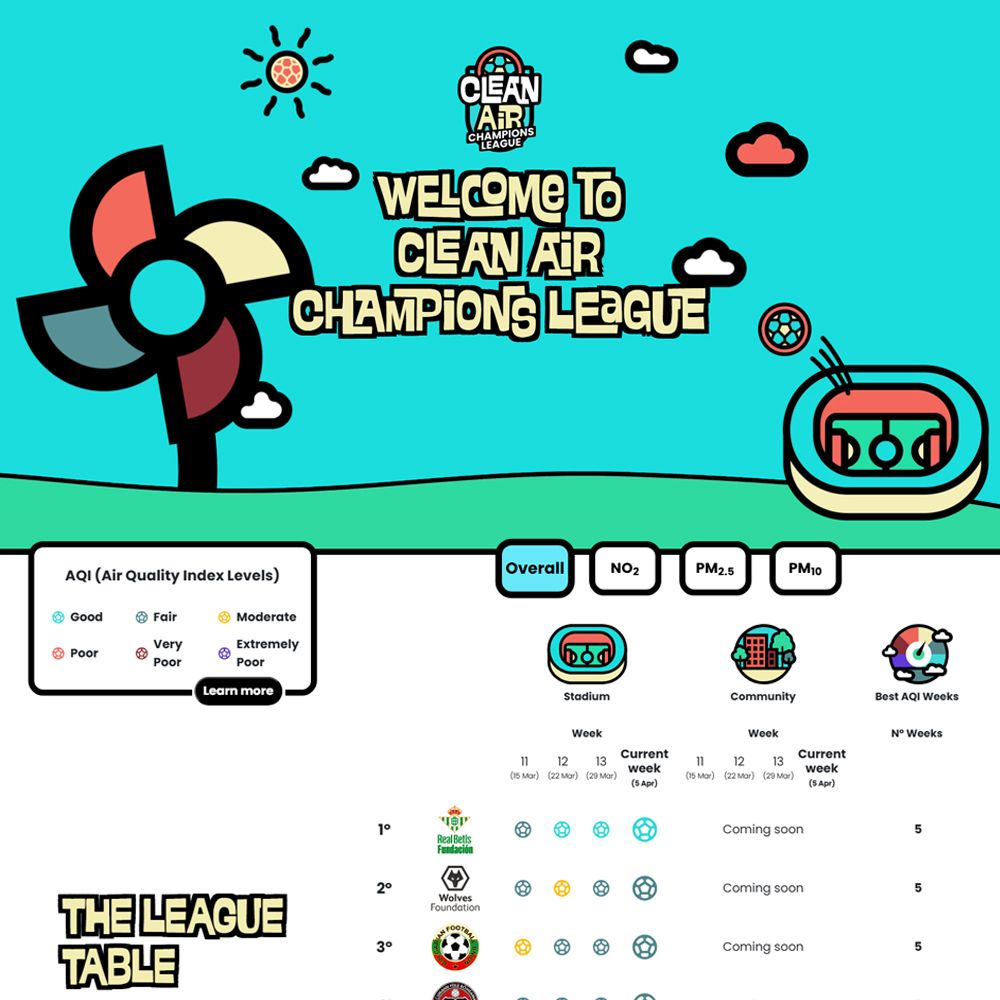
However, the ambition of the project goes beyond environmental monitoring alone. Its core idea was clear: to turn air quality into a competition between clubs. Instead of competing over goals scored or league standings, clubs compete based on which city achieves the best air quality throughout the competition.
This approach transfers the natural logic of football, rivalry, rankings and competitive spirit into the environmental sphere. Although the project introduces a competitive element inspired by football, its primary purpose is awareness and communication rather than competition itself, since air quality depends on complex environmental factors that are not directly controlled by clubs.
If football mobilises emotions, loyalty and collective identity, why not use that same dynamic to address one of the most pressing public health challenges?
Before the project was implemented, participating clubs faced several limitations:
- Lack of localized, real-time air quality data.
- No structured framework to engage communities on air pollution.
- Difficulty translating technical environmental data into clear, accessible messages.
Air quality was typically addressed from an institutional perspective, with limited direct connection to the social environment surrounding football clubs.