Case Study

Clean Air Champions League: turning football into a platform for real-time air quality awareness across Europe

Clean Air Champions League
Sector:

Need

Air pollution remains one of the most significant environmental health risks in Europe. Yet it is often perceived as abstract, invisible and disconnected from everyday life.

The Clean Air Champions League (CACL) was created to change that perception. The initiative brings together a consortium of European football organisations, including Bohemian FC (Ireland), Real Betis Foundation (Spain), Wolverhampton Wanderers Foundation (United Kingdom), ADO Den Haag (The Netherlands) and the Bulgarian Football Union, with the shared objective of turning air quality into a visible and engaging issue for fans and local communities.

The project leverages the influence of football clubs to make air quality visible, understandable and actionable, positioning clubs not only as sporting institutions but as active civic actors in environmental health.

However, the ambition of the project goes beyond environmental monitoring alone. Its core idea was clear: to turn air quality into a competition between clubs. Instead of competing over goals scored or league standings, clubs compete based on which city achieves the best air quality throughout the competition.

This approach transfers the natural logic of football, rivalry, rankings and competitive spirit into the environmental sphere. Although the project introduces a competitive element inspired by football, its primary purpose is awareness and communication rather than competition itself, since air quality depends on complex environmental factors that are not directly controlled by clubs.

The objective of the project was clear: to combine scientific monitoring, community participation and the competitive spirit of football to create a new model of environmental awareness, where victory is no longer measured in goals, but in better air quality.

If football mobilises emotions, loyalty and collective identity, why not use that same dynamic to address one of the most pressing public health challenges?

Before the project was implemented, participating clubs faced several limitations:

  • Lack of localized, real-time air quality data.
  • No structured framework to engage communities on air pollution.
  • Difficulty translating technical environmental data into clear, accessible messages.

Air quality was typically addressed from an institutional perspective, with limited direct connection to the social environment surrounding football clubs.
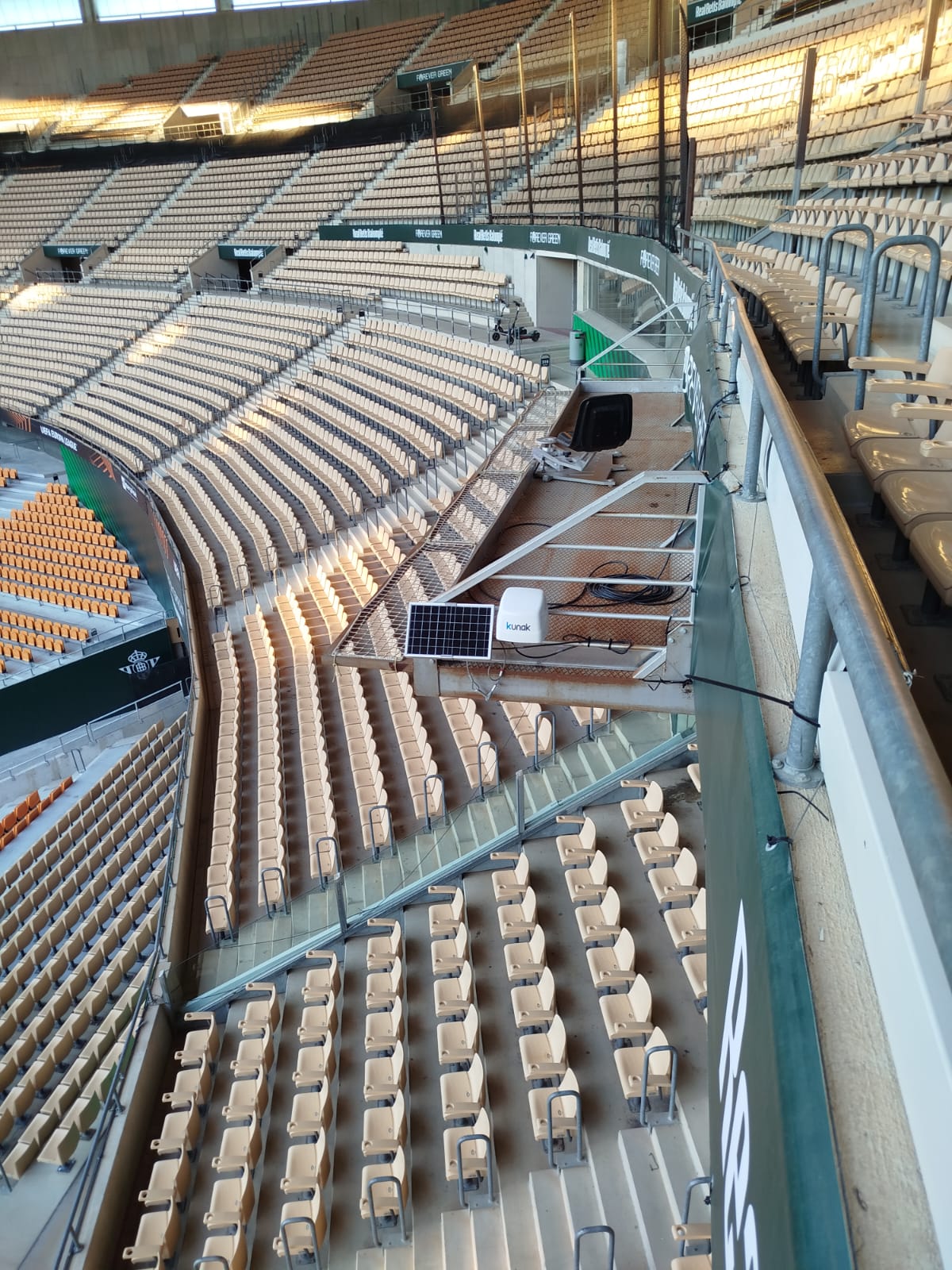
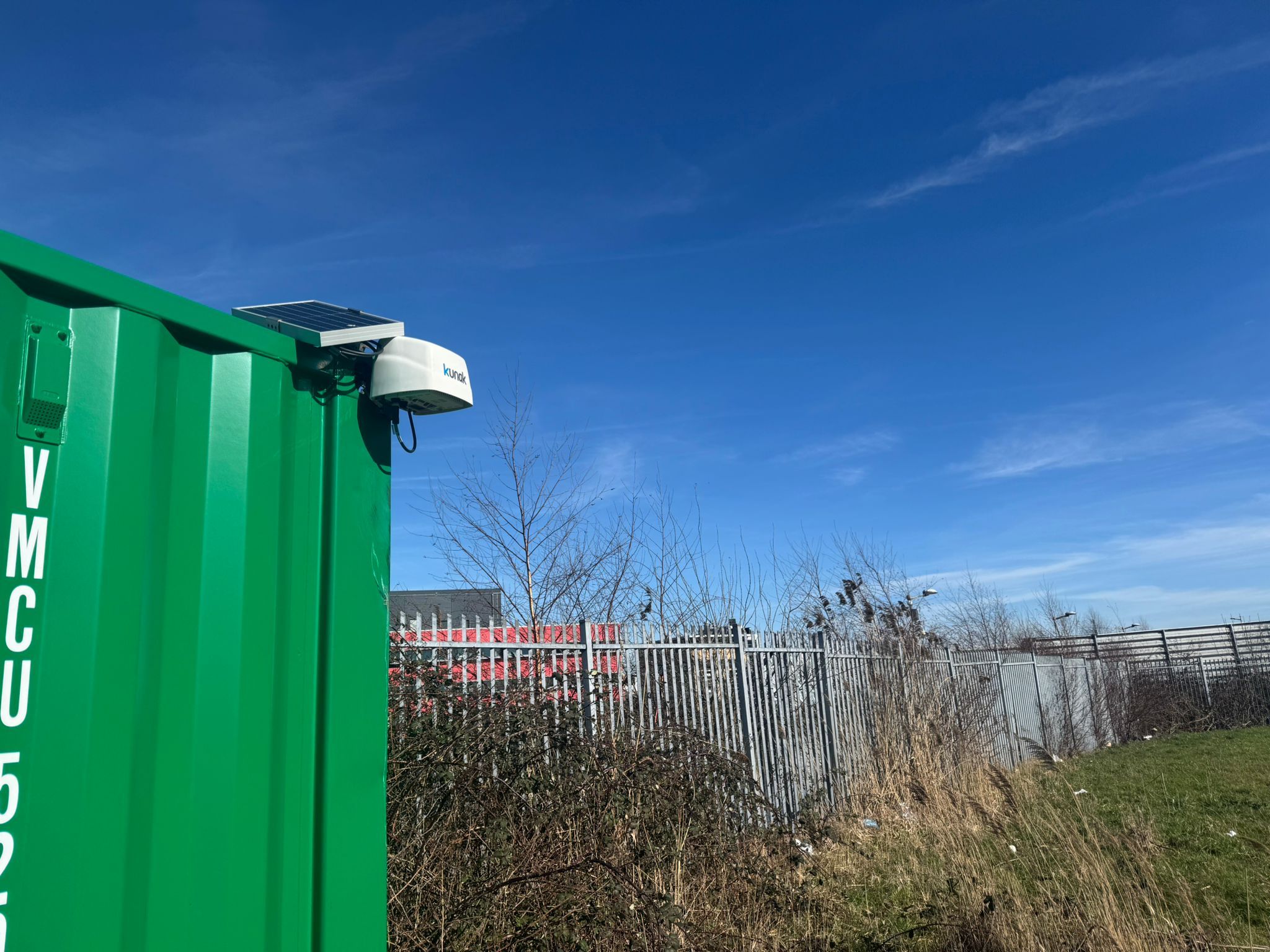
The Clean Air Champions League shows how football can go beyond the pitch, using its influence to make air quality visible, understandable, and actionable for communities across Europe.

Solution

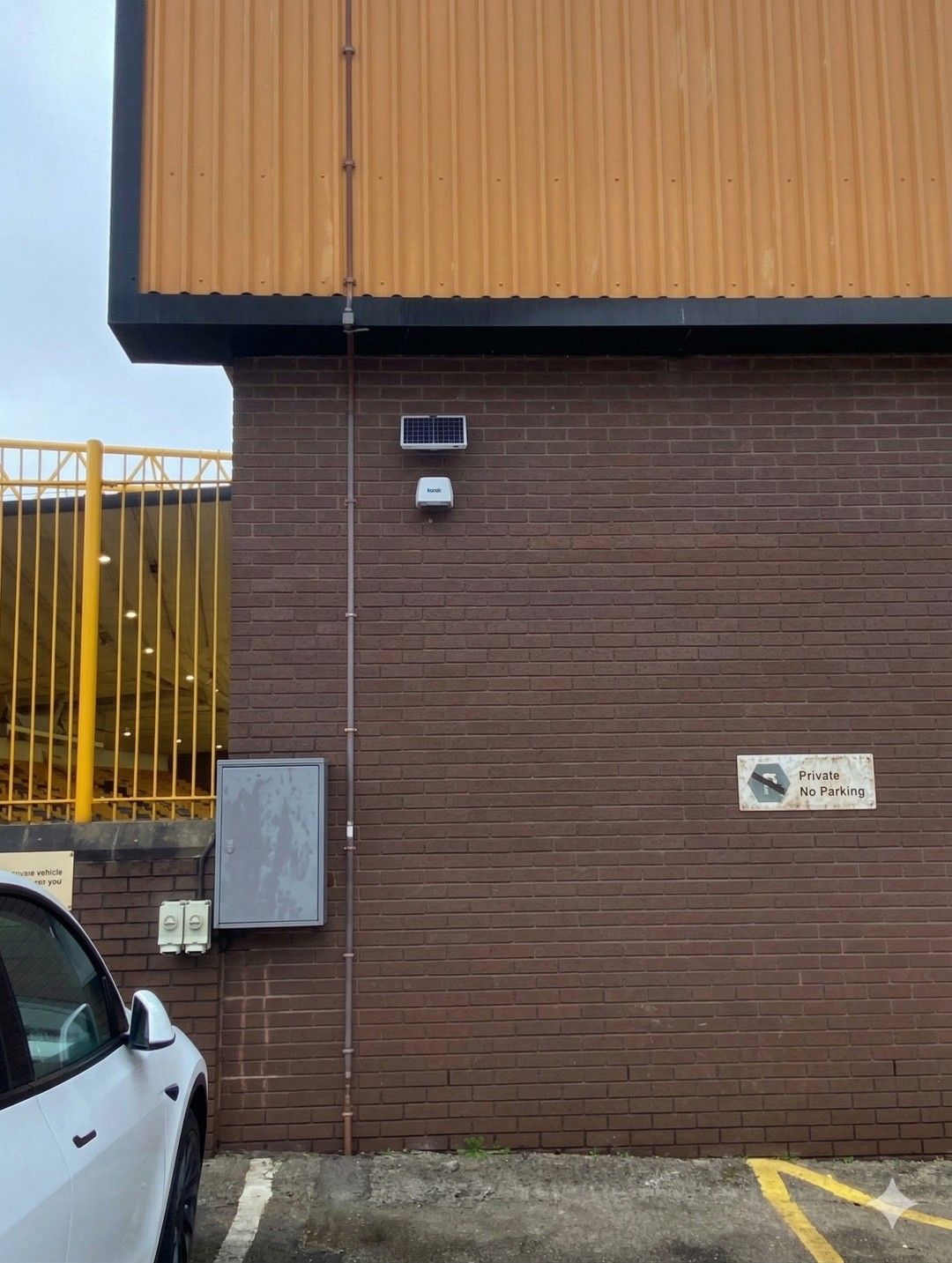
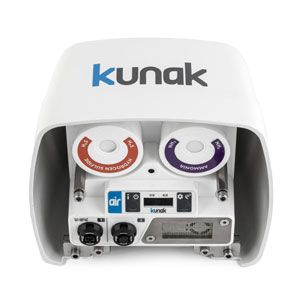
To support the Clean Air Champions League, Kunak supplied the Kunak AIR Lite stations that form the distributed monitoring network, integrated with the Kunak Cloud platform for real-time data visualisation and management.

Each participating club installs:

  • One stadium monitor, placed strategically near or inside the stadium
  • One community monitor, located based on local consultation

This dual-placement approach connects matchday exposure with everyday community air quality conditions, ensuring both visibility and relevance.

Each monitoring device provides continuous measurement of:

  • Nitrogen dioxide (NO2)
  • Particulate matter PM2.5 and PM10
  • Environmental variables such as temperature, humidity and pressure

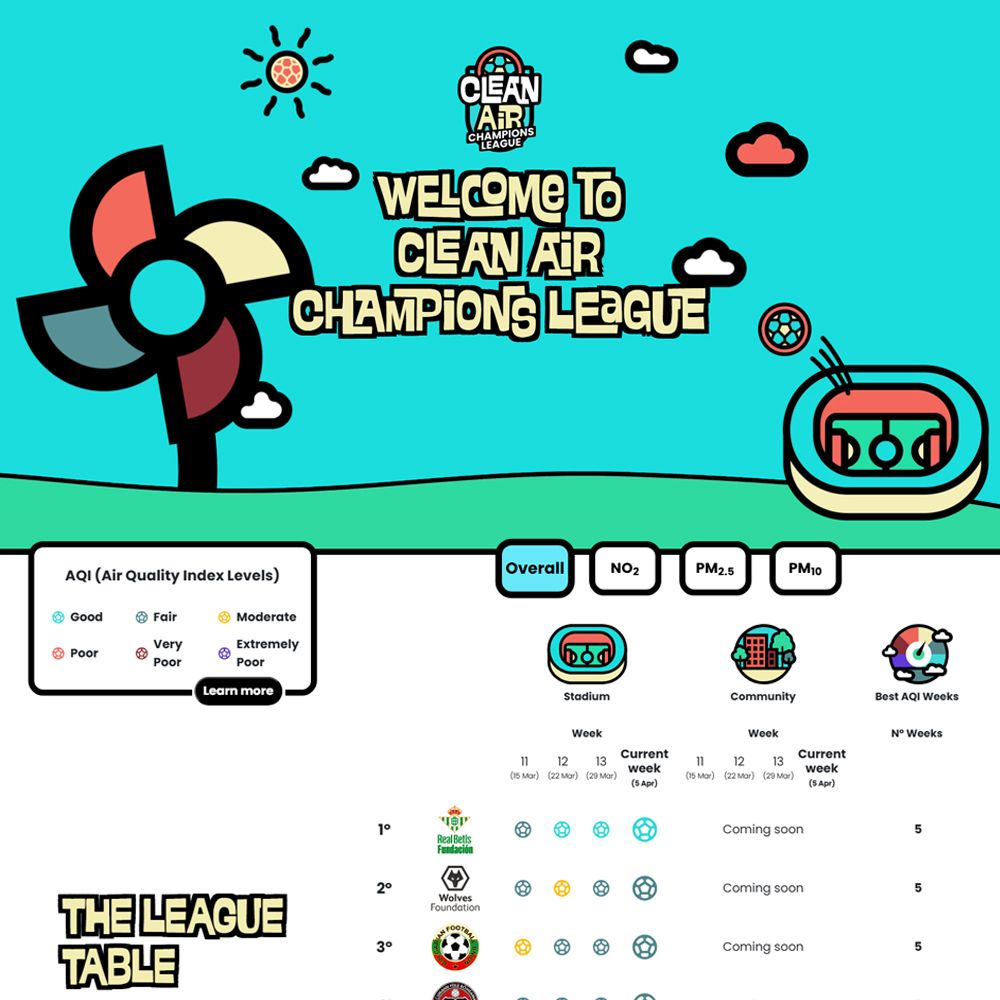
Hourly averages are calculated and aggregated into weekly averages. These results feed the League Table ranking, where clubs compete based on the highest pollutant level recorded during the week, following a colour-coded Air Quality Index (AQI) scale.

The Kunak system enables:

  • Real-time data transmission to the central project platform
  • Public visualization through the official website
  • Weekly rankings based on pollutant averages
  • Clear breakdowns of PM2.5, PM10 and NO2 levels
  • Visual indicators that simplify technical data

The platform transforms environmental monitoring into an engaging, competitive and educational format.

The initiative transfers the logic of football, rankings, rivalry and leadership, into the field of environmental health. In this new model, victory is no longer measured in goals, but in levels of NO2, PM2.5 and PM10. The club that tops the table is not the one that scores the most, but the one that achieves the best air quality performance throughout the competition.

This reinterpretation of the league concept turns environmental data into a tool for social mobilisation. Beyond awareness, the project seeks to connect community engagement with public services and institutional actors already working on structural environmental impact, including municipalities, governments and NGOs.

Results

The project is in its early stages, but several outcomes are already evident:

  • Deployment of a cross-border monitoring network in five European countries
  • Public launch of a dedicated website presenting weekly rankings
  • Integration of air quality data into football communication channels
  • Community consultations to determine monitor placement

While long-term measurable impact is still developing, the project has:

  • Increased visibility of air quality discussions within football communities
  • Positioned participating clubs as active civic actors in environmental health
  • Created a new format that combines data transparency and public engagement

The initiative shifts air quality from an invisible background issue to a visible, competitive and socially relevant topic.

Key benefits

  • Real-time environmental visibility: Continuous monitoring at stadium and community level.
  • Localized data transparency: Public access to weekly pollutant levels.
  • Community engagement model: Consultation processes and educational actions.
  • Competitive awareness mechanism: League table incentivises positive environmental positioning.
  • Cross-country collaboration: Five EU countries participating in a shared environmental framework.
  • Scalable structure: Expandable to additional clubs, countries and environmental indicators.
  • Data-driven communication: Reliable pollutant measurements integrated into public platforms.

The Clean Air Champions League demonstrates that environmental monitoring can go far beyond regulatory compliance or technical reporting. By adopting a competitive format, the project transforms air quality into a shared, measurable and visible challenge.

Continuous monitoring becomes more than a technical system, it becomes a driver of awareness, community engagement and collective responsibility.

By integrating Kunak AIR Lite stations and real-time public visualisation, the project shows that air quality can become part of the sporting narrative, linking environmental performance with local identity. In a context where sustainability is increasingly central, this initiative positions football clubs as active contributors to public health protection.

Project details

Customer: Clean Air Champions League

User: Clean Air Champions League

Location: Ireland, Spain, United Kingdom, The Netherlands, Bulgaria

Sector:

Year: 2026

Parameters:

  • Nitrogen dioxide (NO2)
  • Particulate matter PM2.5 and PM10
  • Environmental variables: temperature, humidity, pressure

Solutions

  • AIR LiteAir quality monitoring station
    air quality monitoring station

    AIR Lite

    The air quality station for hyperlocal monitoring.

    INDUSTRY GRADE DESIGN | HIGH ACCURACY

    Benefits

    • Rugged & compact design
    • Cartridges system
    • Fully autonomous
    • Built-in OLED display
    • Cost-effective
    See more
  • Particulate MatterReliable real-time data on suspended particles

    Particulate Matter

    Reliable information about particulate matter

    GASPLUG TECHNOLOGY | PATENTED DESIGN

    Specs

    • Optical particle counter
    • Up to R2 >0.9
    • Range: 0-1,000 | 0-2,000 | 0-10,000 ppb
    • Resolution: 1 μg/m3
    • 24 months of operating life
    See more
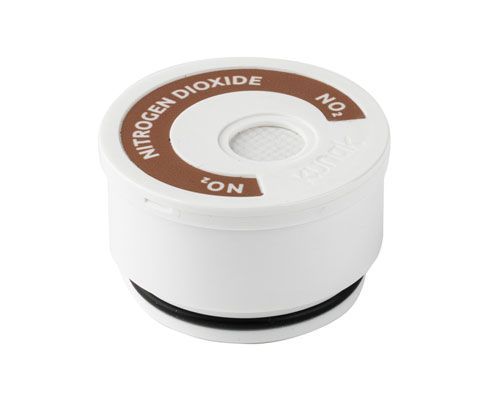
  • Nitrogen dioxideReliable real-time data on NO2
    Nitreogen_dioxide

    Nitrogen dioxide

    Reliable information about nitrogen dioxide

    GASPLUG TECHNOLOGY | PATENTED DESIGN

    Specs

    • Electrochemical
    • R2 >0.85
    • Range: 0-12,000 ppb (Type A) | 0-500 ppm (Type B)
    • Resolution: 1 ppb (Type A) | 0.01 ppm (Type B)
    • 24 months of operating life
    See more
air quality monitoring station

AIR Lite

The air quality station for hyperlocal monitoring.

INDUSTRY GRADE DESIGN | HIGH ACCURACY

Benefits

  • Rugged & compact design
  • Cartridges system
  • Fully autonomous
  • Built-in OLED display
  • Cost-effective
See more

Particulate Matter

Reliable information about particulate matter

GASPLUG TECHNOLOGY | PATENTED DESIGN

Specs

  • Optical particle counter
  • Up to R2 >0.9
  • Range: 0-1,000 | 0-2,000 | 0-10,000 ppb
  • Resolution: 1 μg/m3
  • 24 months of operating life
See more
Nitreogen_dioxide

Nitrogen dioxide

Reliable information about nitrogen dioxide

GASPLUG TECHNOLOGY | PATENTED DESIGN

Specs

  • Electrochemical
  • R2 >0.85
  • Range: 0-12,000 ppb (Type A) | 0-500 ppm (Type B)
  • Resolution: 1 ppb (Type A) | 0.01 ppm (Type B)
  • 24 months of operating life
See more